 Sudden Valley Siding
 Deck Replacement Built for Barkley's Weather, Not Just Its Views
Barkley homes deal with a specific combination of weather that most decking material and installation methods were never designed around: salt-tinged marine air drifting in off the water, long stretches of driving rain through fall and winter, and a moss season that can run eight months or more if a deck sits shaded or under trees. None of that is exotic for Whatcom County — it's just normal Pacific Northwest living. But it's exactly why so many decks in this area fail structurally years before the surface boards even look that bad. A deck can look fine on top while the framing underneath is quietly rotting from the inside out.
This page covers deck replacement specifically for homes in and around Barkley — what the climate does to a deck over time, what a correct replacement actually involves, how we run the job, and why it matters that the crew doing the work already knows this area's conditions instead of treating it like any other job.
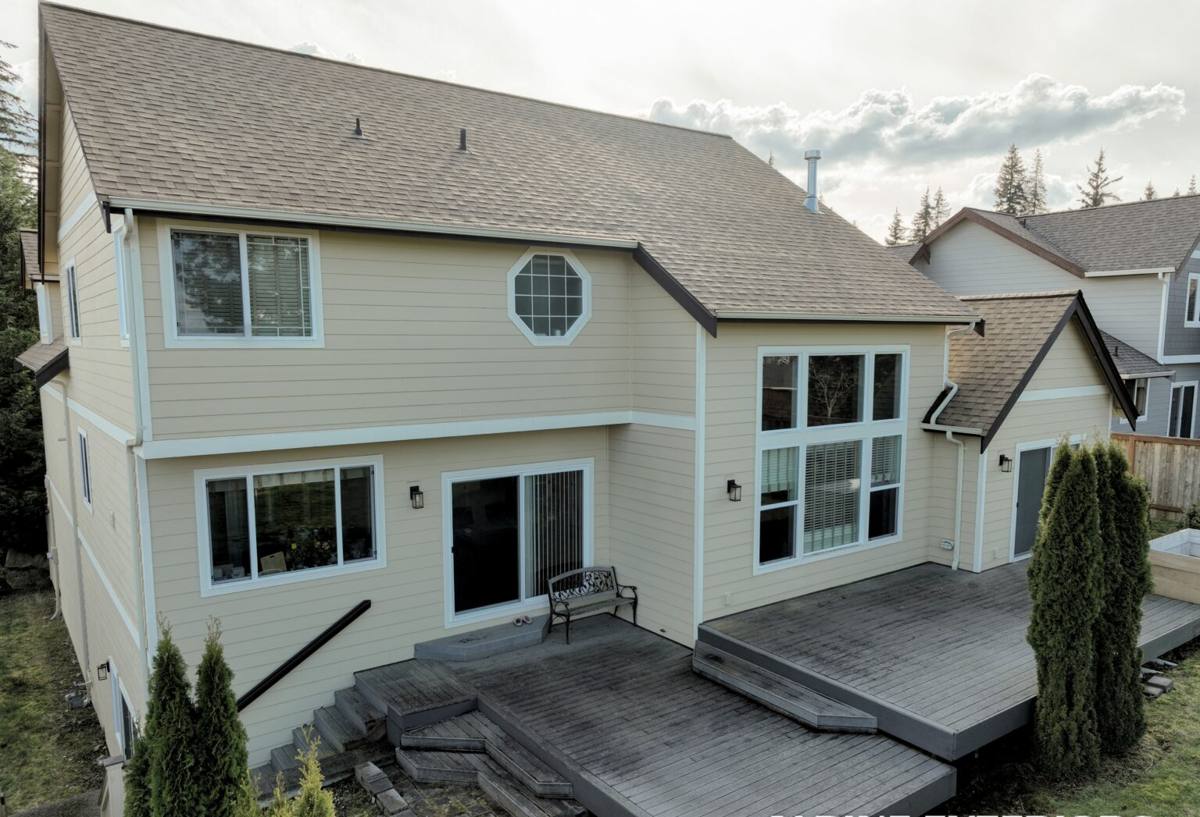
Why Decks in This Area Wear Out the Way They Do
Three things drive most of the deck failures we see in Barkley and the surrounding Sudden Valley area:
Moisture That Doesn't Fully Dry Out
Long rainy stretches mean wood-framed decks rarely get a full dry-out period. Moisture works its way into end grain, fastener holes, and any spot where two pieces of lumber meet tightly enough to trap water. Once wood stays damp for weeks at a time, rot sets in even in pressure-treated lumber, especially at cut ends that were never re-sealed after installation.
Salt-Influenced Air
Proximity to open water means metal hardware — nails, screws, joist hangers, bolts — corrodes faster here than it would further inland. Corroding fasteners lose grip strength long before they look obviously rusted, which is one reason a deck can develop bounce or looseness without any visible sign at the surface.
A Long Moss and Algae Season
Shaded decks, or decks under tree cover, stay damp on the surface for months. Moss and algae aren't just cosmetic — they hold moisture against the board surface constantly, which accelerates rot in wood decking and can stain or degrade the surface of composite products that aren't rated for consistent damp shade.
Signs a Deck Needs Replacement, Not Just Repair
Not every problem deck needs a full tear-off. But there's a point where patching individual boards is just delaying a bigger, more expensive failure. Signs worth taking seriously:
- Soft, spongy, or springy spots when you walk across the deck
- Visible rot or dark staining where the deck attaches to the house (the ledger board)
- Fasteners that are rusted, backing out, or leaving rust streaks on the boards
- Noticeable gaps, cupping, or splitting across multiple boards, not just one or two
- Moss or algae staining that comes back within weeks of cleaning
- Any bounce, sway, or movement in the structure when several people are on it
- Support posts that are soft, sinking, or rotted at the base where they meet the ground or footing
If you're seeing two or more of these, especially anything involving the ledger board or the support posts, that's a structural conversation, not a cosmetic one.
What a Correct Deck Replacement Actually Involves
A deck replacement done right isn't just swapping old boards for new ones. The parts that actually determine how long the deck lasts in this climate are mostly hidden once the job is done.
Framing and Substructure
Joists, beams, and posts need to be sized and spaced correctly for the decking material going on top and the loads the deck will actually see. If the old framing has any rot or undersizing, replacing decking over it just resets the clock on the same problem.
Ledger Board and Flashing
This is the single most common failure point we see on decks attached to the house in wet climates. The ledger needs proper flashing that directs water away from the house band board, not just caulk or sealant, which breaks down over time. A poorly flashed ledger is often the reason a deck that "looks new" on the surface has serious rot right where it meets the house.
Fasteners and Hardware
Given the corrosion factor from salt-influenced air, hardware matters more here than in a lot of inland markets. Structural connectors, screws, and bolts need to be rated for the environment and compatible with whatever decking and framing material is used — mismatched metals can accelerate corrosion at the connection points.
Drainage and Airflow Underneath
Decks built low to the ground or over poorly graded soil trap moisture underneath, which keeps the framing damp longer after every rain. Grading, ventilation gaps, and sometimes a proper under-deck drainage system all factor into how long the new structure holds up.
Choosing a Decking Material for a Barkley Home
There's no single "best" decking material — it depends on how much maintenance you're willing to do, how shaded the deck is, and your budget. Here's how the common options actually behave in this climate:
| Material | How It Handles Moisture & Moss | Maintenance | Typical Lifespan | Relative Cost |
|---|---|---|---|---|
| Pressure-treated wood | Resists rot reasonably well if sealed and maintained; moss and algae grip the surface texture | Needs regular cleaning and re-sealing | Shorter without upkeep, longer with it | Lowest |
| Cedar | Naturally rot-resistant but softer surface; still needs sealing in a wet climate | Moderate to high | Moderate | Moderate |
| Composite decking | Doesn't rot, but shaded, damp spots can still grow surface algae or moss on some product lines | Low — occasional washing | Long | Higher |
| Capped/PVC decking | Best resistance to moisture absorption and surface staining in persistent shade | Lowest | Longest | Highest |
For decks that sit in consistent shade — common on tree-covered lots around Sudden Valley — we lean toward recommending capped composite or PVC over uncapped wood products, simply because the maintenance burden of keeping a shaded wood deck moss-free is real and ongoing. That's a maintenance and moisture-behavior tradeoff, not a knock on wood decking done right with a proper sealing schedule.
Our Deck Replacement Process
- On-site assessment. We inspect the existing deck, framing, ledger connection, and support posts to determine what's actually driving the failure, not just what's visible on the surface.
- Scope and material discussion. We walk through decking material options based on your shade exposure, budget, and how much upkeep you want to take on long-term.
- Written estimate. Clear scope, materials, and timeline before anything is torn out.
- Tear-off and structural inspection. Once old decking is removed, we can fully inspect framing, ledger, and posts that were previously hidden.
- Framing repair or replacement. Any compromised structural components get addressed before new decking goes down — this is not an optional upsell, it's the part that determines whether the new deck actually lasts.
- Ledger flashing and waterproofing. Proper flashing installed at the house connection point, the area most exposed to sustained wet-climate failure.
- Decking, railing, and hardware installation. Installed per manufacturer spacing and fastening specs, with corrosion-appropriate hardware.
- Final walkthrough. We go over the finished deck with you before considering the job done.
What Affects the Cost of a Deck Replacement
Every deck is different, so exact numbers depend on your specific project, but these are the factors that move the price most:
| Factor | Why It Matters Here |
|---|---|
| Deck size and layout | Multi-level decks, curves, or built-in features add labor and material beyond a simple rectangle |
| Condition of the existing substructure | Rot found at tear-off in framing, posts, or the ledger adds necessary repair scope |
| Decking material choice | Pressure-treated, cedar, composite, and PVC all sit at different price points, as shown above |
| Height and access | Elevated decks with stairs require more structural work and code-compliant railing |
| Railing and code requirements | Guard height, baluster spacing, and stair railing requirements affect materials and labor |
| Ledger and flashing repair | Correcting a poorly flashed ledger connection is common in older decks and adds to the scope |
As a rough, honest starting point, a full deck replacement on an average residential deck in this area is generally a five-figure project once you account for proper framing and flashing work — but the range is wide, and the only way to know your actual number is a real on-site assessment.
Permits and Building Code in Whatcom County
Deck replacement involving structural work — framing, ledger attachment, footings, or railings — typically falls under Whatcom County building code and generally requires a permit, particularly for decks above a certain height or attached to the home's structure. Requirements can vary depending on the specifics of your lot and existing structure, so we don't guess on this — permit needs get confirmed as part of scoping the job, not assumed either way. Skipping a required permit on structural work can create real problems later, from insurance issues to complications when you sell the home.
Why a Crew That Already Works in Barkley Makes a Difference
A lot of deck problems in this area trace back to work that was done correctly for a drier climate but not for this one — sealant used in place of proper flashing, standard fasteners where corrosion-resistant hardware was needed, or decking chosen without accounting for how much shade and moisture it would actually sit in year-round. A crew that regularly works Barkley and the greater Sudden Valley area has already seen which details matter here and which shortcuts show up as rot two or three winters later. That's not something you can substitute with a generic install approach, no matter how good the crew is in a different climate.
If your deck is showing any of the warning signs above, or you're just trying to figure out whether repair or full replacement makes more sense for your situation, we're happy to take a look and give you a straight answer. Reach out for a free, no-pressure estimate using the form below.