 Sudden Valley Siding
 Why Sunnyland Windows Take a Different Kind of Beating
Homes in and around Sunnyland deal with a specific combination of weather that most window manufacturers never test for in their glossy brochures. You've got salt-tinged air moving in off the water, driving rain that comes in sideways during winter storms, and a long stretch of the year — often five or six months — when moss, algae, and general damp just sit on every north-facing surface that doesn't get direct sun. None of that is dramatic on its own. It's the combination, repeated year after year, that wears out windows faster here than it would in a drier inland climate.
Wood sashes swell and stick. Aluminum frames pit and corrode faster than they would twenty miles inland. Cheap vinyl gets brittle where it's exposed to constant moisture cycling, and seals that were never rated for this kind of sustained wet exposure fail early. We've replaced windows in Sunnyland that were barely fifteen years old — not because the glass failed, but because the frame and flashing details underneath were never built for this climate to begin with.
A custom window job here isn't about upgrading to something fancier. It's about matching the product and the installation to what Whatcom County actually throws at a house.
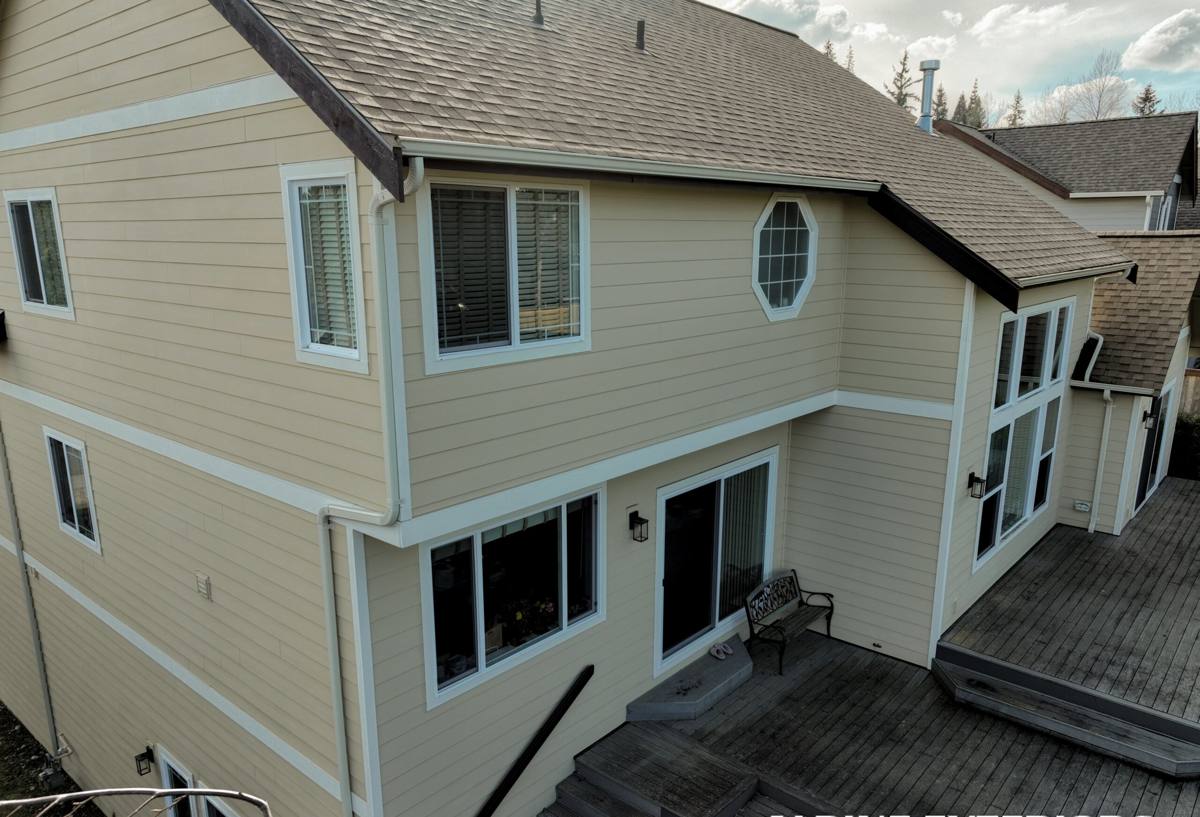
What "Custom" Actually Means on a Job Like This
"Custom" gets used loosely in this industry. On a Sunnyland home it should mean three specific things, not just a marketing word:
Sized to the actual opening
Older homes in this area often have openings that are slightly out of square, or that were built to dimensions no longer standard. Custom-sized windows fit the rough opening you actually have instead of forcing a stock size into a gap with extra shims, foam, and trim to hide the mismatch. A tighter, more accurate fit means fewer places for wind-driven rain to find a way in.
Matched to the exposure
A window on the weather side of a house — facing the prevailing wind and rain — needs a different spec than one tucked under an eave on a protected wall. We look at each elevation separately rather than speccing one window style for the whole house. That's a small thing that makes a real difference in a climate with this much sustained wet weather.
Detailed for moisture management, not just appearance
Custom also means the flashing, sill pan, and sealant details are built for how water actually behaves on this house, not just installed to a generic manufacturer diagram. That part doesn't show up in a photo, but it's the difference between a window that lasts twenty-five years and one that starts leaking into the wall cavity in year eight.
Choosing a Frame Material for This Climate
There's no single "best" window material — there's a best material for your budget, your exposure, and how much upkeep you're willing to do. Here's how the common options actually perform in a marine climate like Whatcom County's, not just in a showroom.
| Frame Material | Moisture Tolerance | Maintenance | Typical Lifespan | Best For |
|---|---|---|---|---|
| Vinyl (quality-grade) | Good — won't rot or corrode | Low — occasional cleaning | 20–30 years | Most homes, best value |
| Fiberglass | Excellent — very stable in wet/dry cycling | Low | 30–40+ years | Weather-side walls, long-term owners |
| Wood-clad (exterior aluminum or vinyl over wood) | Depends heavily on install quality | Moderate — watch cladding seams | 20–30 years if detailed correctly | Homes wanting a wood interior look |
| Bare aluminum | Poor near salt air — prone to pitting/corrosion | Higher — condensation and corrosion checks | 15–20 years in this climate | Not our first recommendation here |
We don't refuse to install any particular material outright, but we're upfront when a product isn't a good match for a given wall. Bare aluminum in particular struggles in areas with salt-laden air moving off the water, and we'd rather tell you that before the sale than after the pitting shows up.
Signs Your Current Windows Are Already Losing the Fight
Most window failure in this climate doesn't show up as an obvious leak right away. It shows up as small signs first. Worth checking before you decide whether you need a repair, a reseal, or a full replacement:
- Visible fogging or moisture between double-pane glass — the seal has failed and the insulating gas is gone
- Soft or discolored trim/sill wood on the interior, especially on north- or west-facing rooms
- Persistent black or green staining on the exterior sill or frame that comes back within weeks of cleaning
- Windows that are noticeably harder to open, close, or lock than they used to be
- A draft you can feel with your hand along the frame edge on a windy day
- Paint or caulk that's cracked or pulled away from the frame-to-siding joint
- Rising energy bills without any other explanation for the change
Any one of these on its own might just need attention, not replacement. Two or three together, especially on the weather-facing side of a Sunnyland home, usually means the window and its flashing are done doing their job.
How the Installation Actually Works
The window itself is maybe half the job. The other half is everything around it, and that's where most long-term problems either get prevented or get built in.
- Assessment. We look at the existing opening, the condition of the sheathing and framing behind it, and how that wall has historically handled water. This tells us if we're dealing with a straightforward swap or a wall that needs repair before a new window goes in.
- Removal. Old windows come out carefully so we can inspect the framing underneath for rot or hidden moisture damage — common on older homes in this area where original flashing details were often minimal.
- Sill pan and flashing. This is the step that gets skipped by crews trying to move fast. A proper sill pan sheds any water that gets past the window itself, out and away from the framing, instead of letting it pool and soak in.
- Setting and shimming. The window is set level, plumb, and square, then shimmed and fastened so it can't rack or bind over time — a big factor in how well it seals years down the road.
- Sealing. Interior and exterior sealant goes in with the right products for this climate's temperature and humidity swings, not a generic caulk that goes brittle after one wet season.
- Trim and finish. Exterior trim is finished to shed water rather than trap it against the wall, and interior trim is finished to match the rest of the room.
- Final check. We test operation, look for gaps, and walk the job with you before we call it done.
Energy Performance in a Marine Climate
Whatcom County doesn't hit the deep-freeze temperatures some inland regions do, so the biggest energy issue for most Sunnyland homes isn't extreme cold — it's constant damp air and near-daily temperature swings between inside and outside. That combination drives condensation on poorly performing glass and steady heat loss through old, leaky frames.
A properly specified custom window addresses both:
- A good U-factor keeps heat from escaping through the glass and frame during our long stretch of cool, wet months
- Warm-edge spacers between panes reduce condensation risk on the interior glass near the edges — a common complaint in older single-pane or early double-pane windows
- Proper air sealing at the frame stops the drafts that make a furnace run longer than it should
We'll talk through glass and gas-fill options based on which walls of your home take the most weather, rather than upselling the same package for every window regardless of exposure.
Moss Season and Salt Air: Ongoing Maintenance
Even the right window with a correct install still needs some seasonal attention in this climate. A few habits go a long way:
During moss season
Keep sills and tracks clear of built-up debris and organic growth. Moss and algae hold moisture against the frame far longer than open air would, and that sustained dampness is what eventually breaks down sealants and finishes — not a single rainy day.
Near the weather side
Rinse salt residue and grime off exterior frames a couple of times a year, especially on walls that face open wind. It's a five-minute job with a hose that meaningfully extends the life of the exterior finish.
Hardware
Locks, hinges, and rollers benefit from an occasional check and light lubrication. Sticking hardware is often the first sign that a frame has shifted slightly or that grit has built up — worth catching early rather than forcing a stuck window and cracking a seal.
Why Hiring a Crew That Already Works in Sunnyland Matters
A window contractor who mostly works in a drier, more inland climate isn't necessarily going to spec, flash, or seal a window the same way we would for a home dealing with sustained coastal-influenced weather. That's not a knock on their skill — it's just a different set of problems to solve. Crews that regularly work Sunnyland and the wider Sudden Valley area have already seen which details hold up here and which ones fail early, because we've gone back and fixed the ones that failed.
That local pattern recognition shows up in small decisions: which sill pan detail to use on a given wall orientation, which sealant actually stays flexible through a wet winter, and which frame materials are worth the extra cost on a weather-exposed elevation versus a protected one. None of that is guesswork when you've done the work in this specific climate before.
Getting an Honest Estimate
If your windows are original to the house, showing the signs above, or you're just planning ahead for a remodel, it's worth having someone look at the actual openings rather than guessing from a phone call. We'll walk the exterior, check the condition behind the trim where we can, and give you a straight answer on what's needed — whether that's a full custom replacement, a partial repair, or just some maintenance to buy a few more years. We offer free, no-pressure estimates for homeowners in Sunnyland and the surrounding Sudden Valley area — use the form below to get one scheduled.