 Sudden Valley Siding
 Windows for a Barkley Home Have to Answer to This Climate
Barkley sits close enough to Sudden Valley and the rest of Whatcom County's Lake Whatcom corridor that the window question is never just about looks. It's about what the marine layer, the driving winter rain, and the shoulder-season damp do to a window assembly year after year. Salt-tinged air off the Sound works into aluminum cladding and hardware. Wind-driven rain doesn't just hit the glass — it gets pushed sideways into every seam, sill, and nailing flange that isn't detailed correctly. And the long moss season here, often running from fall through late spring, means anything with a horizontal ledge or a poorly sloped sill becomes a growing surface if it isn't built and flashed to shed water fast.
A lot of window problems we get called out for in this area aren't glass failures at all — they're installation failures. The window itself was fine. The flashing, the sill pan, or the sealant detail wasn't. That distinction matters more here than in drier parts of the state, because Whatcom County's rain volume and duration expose bad detailing faster than almost anywhere else in Washington.
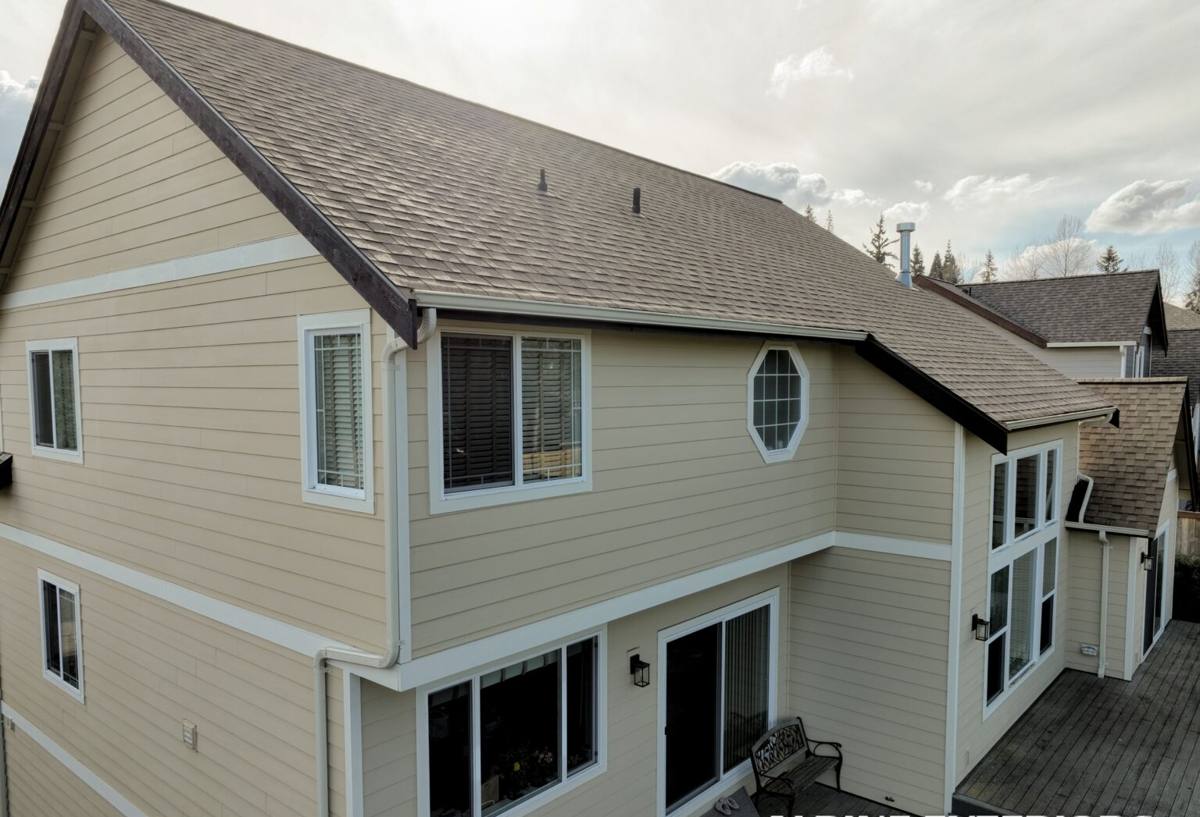
What "Custom" Actually Means on a Barkley Job
"Custom windows" gets used loosely in this trade. For a Barkley home it usually means one or more of the following, and it's worth knowing which applies to your project before you start pricing:
- Custom-sized units — openings that don't match stock dimensions, common in homes with settled framing or non-standard rough openings.
- Custom shape or configuration — arched tops, picture-window combinations, or multi-lite grid patterns matching an existing architectural style.
- Custom performance spec — glass packages, frame materials, and weatherstripping chosen specifically for wind-driven rain exposure rather than a generic builder-grade default.
- Custom finish — exterior color and trim profile matched to the home instead of picking from a limited stock palette.
Most Barkley projects we see combine at least two of these — usually a non-standard opening paired with a performance spec upgrade, because the original builder-grade windows were never rated for the amount of driving rain this area actually gets.
When "Custom" Is the Only Real Option
If your home has settled or the framing has moved even slightly over the decades, a stock-size replacement window will leave gaps that get packed with extra shim and sealant instead of a proper fit. That's a moisture path waiting to happen. Custom sizing costs more up front but removes that risk entirely.
Signs Your Current Windows Are Losing the Battle
Before we talk installation, it helps to know what failure actually looks like in this climate, since it rarely shows up as cracked glass:
- Fogging or a persistent haze between double-pane glass — the seal has failed and the gas fill is gone.
- Soft or discolored wood at the sill or lower corners of the frame, even under paint.
- Green or black growth on the exterior sill or brickmold that returns within weeks of cleaning.
- Drafts you can feel at the frame edge, not just through the glass.
- Difficulty opening or latching — frames can swell and bind after repeated wet cycles.
- Visible daylight or a whistling sound around the frame during a windstorm.
Any one of these on its own might just need a repair. Two or more on the same window, especially combined with soft wood, usually means the window and its flashing need to come out and be replaced correctly rather than patched again.
Frame and Glass Options: What Actually Holds Up Here
There's no single "best" window material — there's a best material for this specific exposure and budget. Here's how the common choices compare for a Barkley-area installation:
| Material | Performance in Salt Air / Driving Rain | Maintenance | Typical Fit |
|---|---|---|---|
| Vinyl | Good — won't corrode, handles moisture well if drainage is designed properly | Low — occasional cleaning, no repainting | Most replacement projects, budget-conscious upgrades |
| Fiberglass | Very good — dimensionally stable, resists warping under repeated wet/dry cycles | Low to moderate | Larger openings, higher-exposure walls facing prevailing weather |
| Wood (clad exterior) | Fair — interior wood look with an exterior shell, but any breach in the cladding invites rot | Higher — cladding seams and interior finish need periodic attention | Homes prioritizing an interior wood aesthetic |
| Aluminum | Weakest here — conducts cold, and uncoated hardware can pit in salt-influenced air over time | Moderate | Rarely our recommendation for this specific exposure |
On the glass side, we default to argon-filled double-pane units with a low-E coating tuned for this region's mix of low winter sun and grey-sky glare rather than the desert-climate coatings some manufacturers push as their standard. For west- and southwest-facing walls that catch the worst of the driving rain, we'll also talk through upgraded weatherstripping and a heavier-duty sill design rather than jumping straight to triple-pane, which adds cost and weight without solving a water-management problem.
How We Actually Install a Window in This Climate
The window unit itself is maybe a third of what determines whether it lasts. The rest is detailing, and it's where most shortcuts happen because it's invisible once the trim goes back on.
Sill Pan and Flashing First
Every opening gets a sloped sill pan before the window ever goes in, so any water that does get past the exterior seal has somewhere to go besides your wall framing. Flashing tape gets integrated with the house wrap in the correct shingle-lap order — top piece over the one below it — so water is always directed outward and down, never trapped behind a seam.
Fastening and Shimming
The unit gets shimmed level and plumb at all four corners plus the midpoints on larger windows, fastened per the manufacturer's schedule rather than "enough screws to hold it." Under-shimming is a common cause of frame racking that shows up as a window that's hard to open a year or two later.
Sealant as a Backup, Not the Primary Barrier
Caulk and sealant are the last line of defense in a correct installation, not the first. If a job relies mainly on a bead of sealant to keep water out, it will eventually fail — sealant degrades faster than the flashing behind it, especially with the UV and moisture cycling this area sees.
Interior Air Sealing
We also seal the interior gap between the frame and rough opening with low-expansion foam or backer rod and sealant, which cuts drafts and keeps humid indoor air from condensing inside the wall cavity — a detail that's easy to skip and hard to diagnose later.
What a Barkley Window Project Typically Costs
Every home is different, but these are the factors that actually move the number, in rough order of impact:
| Factor | Why It Matters |
|---|---|
| Standard vs. custom size | Custom-sized units cost more per window and take longer to manufacture and order |
| Frame material | Vinyl is typically the most budget-friendly; fiberglass and clad-wood cost more upfront |
| Number of openings replaced at once | Doing multiple windows in one visit spreads setup and disposal costs across the job |
| Wall exposure | Walls facing prevailing wind and rain may need upgraded flashing or sill detailing, adding labor |
| Existing damage | Rotted framing or sheathing found once the old window is out adds repair time before the new unit goes in |
| Trim and finish work | Matching existing exterior trim profiles or repainting disturbed siding adds finish labor |
We give a written, itemized estimate before any work starts, and we'll tell you plainly if we find rot or framing issues once a window is removed — that's the one cost factor that can't be fully known until the old unit comes out.
Why It Matters That We Already Work in This Area
A crew that installs windows across Whatcom County but doesn't specifically know the Barkley and Sudden Valley exposure will often default to a generic installation spec — the same flashing detail and sealant schedule they'd use on a drier, more sheltered lot elsewhere in the state. That works fine until the first serious wind-driven rain event, which is exactly the kind of weather this area gets regularly.
Working this area consistently means we know which wall orientations take the worst of it, which existing sill designs tend to fail early, and how long a moss season really runs here versus what a manufacturer's install guide assumes. That local pattern recognition is what keeps a callback from turning into a homeowner's problem two winters later.
Before You Hire: A Practical Checklist
- Ask what sill pan and flashing method the crew uses — a real answer with specifics, not just "we caulk it well."
- Confirm whether the estimate includes disposal of old windows and any rot repair contingency.
- Get the manufacturer's written warranty and ask what voids it — some warranties require a specific installation method.
- Ask how many window jobs the crew has done in your specific area versus drier parts of the county.
- Get the fastening schedule and shimming approach explained, not just assumed.
- Confirm a written, itemized estimate before work begins — verbal quotes lead to disputes later.
Living With New Windows Through Moss Season
Even a correctly installed window benefits from a little seasonal attention here. Keep sills and tracks clear of leaf litter and debris going into fall, since trapped organic matter holds moisture against the frame and gives moss and algae a foothold. A quick rinse and soft-brush cleaning once or twice through the wet months keeps growth from establishing, and it's a good time to visually check that exterior caulk lines are still intact — sealant is the first thing to show wear, well before the window itself has any issue.
If you're weighing a window project for a Barkley-area home, we're happy to take a look and walk you through what your specific openings and exposure actually need — no pressure, no obligation. Reach out for a free estimate using the form below.