 Sudden Valley Siding
 Building Decks for Fairhaven's Marine Climate
Fairhaven sits close enough to Bellingham Bay that salt-laden air is a real factor in how a deck ages, not just a talking point. Add Whatcom County's long wet season and the shade many of these lots get from mature evergreens, and you have a climate that's genuinely harder on outdoor structures than most of the country deals with. A deck built here needs to shed water fast, resist corrosion in its fasteners, and stay clean enough underfoot that moss doesn't turn it into a hazard by February.
Our crew works out of Sudden Valley and takes on decks throughout the Fairhaven area regularly, so this isn't a one-off job for us — it's a pattern we've built a process around. This page walks through what actually matters for a deck built to last in this specific environment, not generic deck-building advice.
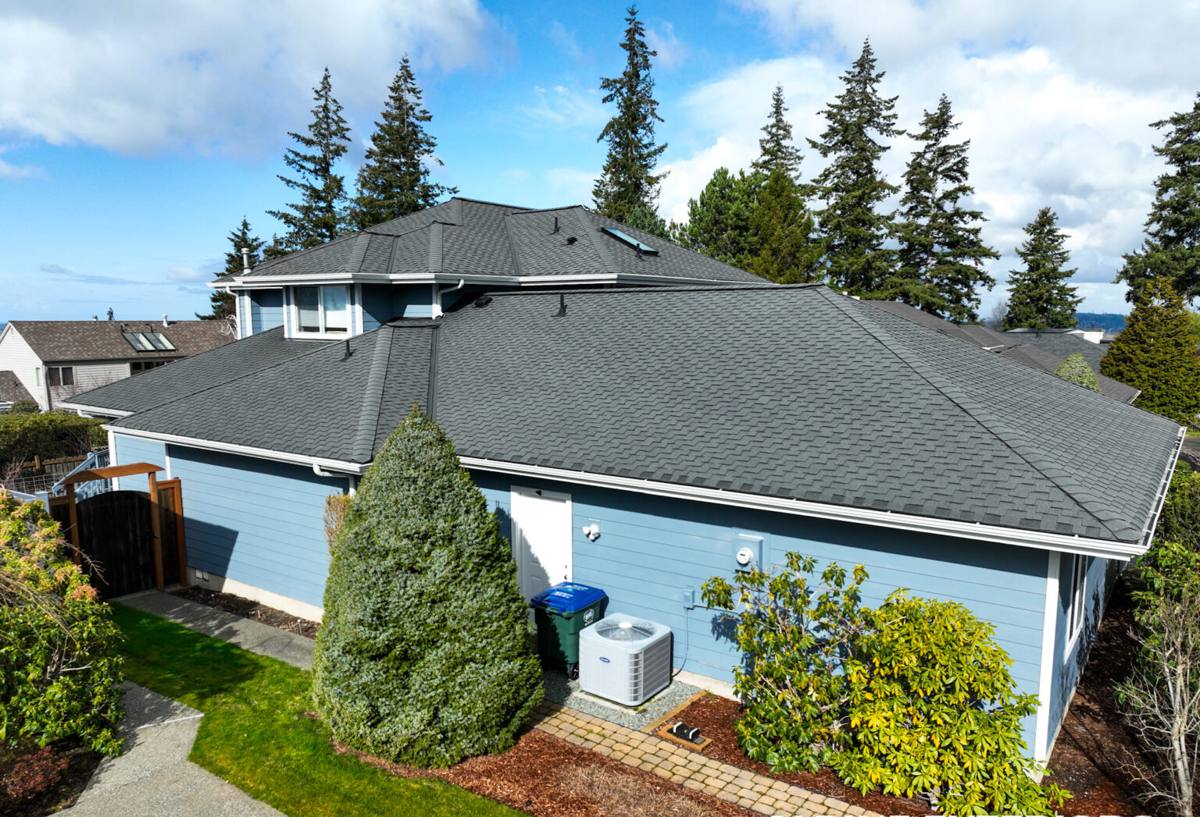
What Salt Air, Rain, and Moss Actually Do to a Deck
Three things wear decks down faster in this part of Whatcom County than they would inland:
- Salt-laden air accelerates corrosion on any exposed metal — fasteners, brackets, hidden fastener clips, railing hardware. Standard zinc-coated screws can start showing rust streaks within a couple of seasons this close to the bay.
- Driving rain, especially wind-driven rain that hits a deck at an angle instead of falling straight down, gets up under rail caps, behind ledger boards, and into end grain that isn't sealed. Water that gets in and can't get back out is what causes rot, not rain itself.
- A long moss and algae season — often stretching from fall through spring — means any deck surface that holds moisture and shade will grow something green on it. On wood decking that's a slip hazard and a maintenance chore. On composite, it's usually cosmetic but still needs attention on the label of whatever product you choose.
None of this means a deck in Fairhaven can't last decades. It means the details that get skipped on a quick, cheap build are exactly the details that matter most here.
Choosing the Right Decking Material for This Environment
There's no universally "best" decking material — there's the right material for your budget, your maintenance appetite, and how close your lot is to salt air and shade. Here's how the common options actually compare for a Fairhaven build:
| Material | How it handles salt air & rain | Moss/algae resistance | Maintenance |
|---|---|---|---|
| Pressure-treated lumber | Good if properly sealed; end cuts need field-treating | Needs regular cleaning and re-sealing to resist growth | Annual cleaning, re-seal every 2-3 years |
| Western red cedar | Naturally rot-resistant; hardware still needs to be corrosion-rated | Better than PT untreated, still needs cleaning | Cleaning and oil/stain every 1-2 years for best appearance |
| Composite decking | Doesn't rot or absorb water the way wood does | Grows algae/moss film in shaded, damp spots like any surface | Occasional wash; no staining or sealing |
| PVC/capped decking | Fully sealed surface, very low water absorption | Same as composite — surface cleaning as needed | Lowest maintenance of the group |
Composite and PVC products cost more up front but remove the sealing/staining cycle entirely, which is worth factoring into the real long-term cost — especially on a deck that's hard to reach or gets a lot of shade. We'll walk you through what fits your lot and budget rather than pushing one product line.
Why We're Careful About Which Composite Lines We Recommend
Not all composite decking handles this climate equally well. Some early-generation composite products absorb more moisture at the core than current capped products do, which matters in a climate where the boards rarely get a long dry stretch to fully release moisture. We steer clients toward fully-capped composite or PVC boards for anything shaded or close to grade, because the trade-off — a somewhat higher material cost — is smaller than the trade-off of dealing with swelling or fading in a product not built for a wet, low-sun environment.
The Structural Work That Determines How Long a Deck Lasts
The decking surface is what you see; the framing underneath is what actually determines whether the deck is standing in twenty years. This is where a rushed build shows up first.
Ledger Attachment and Flashing
Where the deck attaches to the house is the single most common failure point on decks in wet climates. Proper flashing — metal flashing behind the siding, over the ledger board, with a drainage gap — keeps water from tracking behind the house wall. Skipping or shortcutting this detail is invisible on installation day and expensive to fix later.
Fasteners and Hardware
Given the salt air here, we use fasteners and structural hardware rated for corrosion resistance — stainless steel or heavy-duty coated hardware rated for ground contact and coastal exposure — rather than standard-grade screws and brackets. It costs more per piece and is one of the cheapest insurance policies on the whole project.
Joist Protection and Footings
Joist tape over the top of framing lumber keeps water from pooling on cut lumber where deck boards attach. Footings need to go below the local frost depth and bear on solid, undisturbed soil — cutting corners here is exactly the kind of thing that doesn't show until years later when a deck starts to feel spongy or uneven.
Permits, Guardrails, and Code in Whatcom County
Most decks above a certain height off grade require a building permit and inspection, and guardrail and stair requirements (rail height, baluster spacing, stair rise/run) are set by code, not preference. We handle the permit process and build to current code as a matter of course — it's not an upcharge, it's just how the job gets done correctly. If your lot has any proximity to shoreline or critical areas, there can be additional review depending on the specifics of the property; we'll flag that early rather than after materials are ordered.
Living With a Deck in a Wet, Shaded Climate
Even a well-built deck needs some seasonal attention here. A short, honest maintenance checklist for Fairhaven conditions:
- Sweep debris (needles, leaves) off the deck regularly — trapped organic matter under a leaf pile is where moss gets a foothold fastest.
- Rinse or lightly scrub composite and PVC surfaces once or twice a year to prevent algae film from building up, especially in shaded corners.
- Re-seal or re-stain wood decking on the schedule the product calls for — don't wait for it to look obviously dry or gray.
- Check fastener heads and railing hardware periodically for early rust staining, particularly on decks with a bay-facing exposure.
- Keep gutters and downspouts near the deck clear so runoff isn't dumping extra water onto or under the structure.
- Trim back overhanging branches where practical to get a little more sun and airflow onto the deck surface.
Our Process From Design to Final Walkthrough
We keep the process straightforward and don't skip the parts that protect you later:
- On-site consultation to look at your lot's sun/shade pattern, grade, and how close you are to salt air exposure — this shapes our material recommendation.
- A clear written proposal covering materials, framing details, hardware grade, and timeline, so there's no ambiguity about what's included.
- Permit handling and code review before any lumber is ordered.
- Framing built with corrosion-rated hardware, proper ledger flashing, and joist protection as standard practice, not an add-on.
- Decking installation with attention to drainage gaps and fastening method appropriate to the material chosen.
- Final walkthrough where we go over care and maintenance specific to the material you chose.
Why Hiring a Crew That Already Works Fairhaven Matters
A contractor who mostly builds inland, in drier conditions, can do competent framing and still miss the details that matter specifically here — the flashing detail that keeps wind-driven rain out, the hardware grade that resists salt air corrosion, the material choice that won't fight you every spring with moss. Working Fairhaven and the broader Sudden Valley area regularly means we've seen how different decking materials and construction details actually hold up in this climate over time, not just on paper. That's the difference between a deck that needs real attention in year five and one that's still solid in year twenty.
If you're planning a new deck or replacing an aging one in Fairhaven, we're happy to take a look at your property and talk through what makes sense for your budget and your site. There's no pressure and no obligation — just a straight assessment and a free estimate using the form below.