 Sudden Valley Siding
 Why Decks in the Cordata Area Wear Out Faster Than You'd Expect
A deck built anywhere in Whatcom County takes a beating most homeowners underestimate until they're standing on soft boards. In the Cordata area near Sudden Valley, that beating comes from three directions at once: salt-laden marine air moving in off the water, driving rain that hits decks sideways during fall and winter storms, and a moss season that can run eight months or longer in shaded yards. None of these problems is dramatic on its own. Together, over ten or fifteen years, they quietly turn a solid deck into a liability.
Salt Air and Metal Fatigue
Salt air doesn't just affect homes right on the shoreline — it travels inland on prevailing winds and settles on anything metal. Nails, screws, joist hangers, and structural connectors corrode faster here than they would in a dry inland climate, even when the fasteners are rated for exterior use. Corrosion usually starts invisibly, inside the wood where a fastener meets a joist, long before rust stains show up on the surface.
Driving Rain and Wood Movement
Rain that falls straight down is manageable. Rain that's pushed sideways by wind gets forced into every horizontal surface, every board gap, and every spot where flashing wasn't installed correctly the first time. Repeated wetting and drying cycles cause wood to swell, shrink, cup, and eventually split. It's also how water finds its way behind ledger boards and into rim joists, which is where most of the structural damage we find during deck inspections actually starts.
The Long Moss Season
Shaded decks, north-facing decks, and decks under mature trees stay damp for much of the year in this part of Washington. Moss and algae take hold on decking boards, stair treads, and railings, and they hold moisture against the wood surface long after the rain has stopped. Beyond looking bad, moss growth on stairs and walking surfaces becomes a real slip hazard, and it accelerates surface rot faster than plain rainfall would on its own.
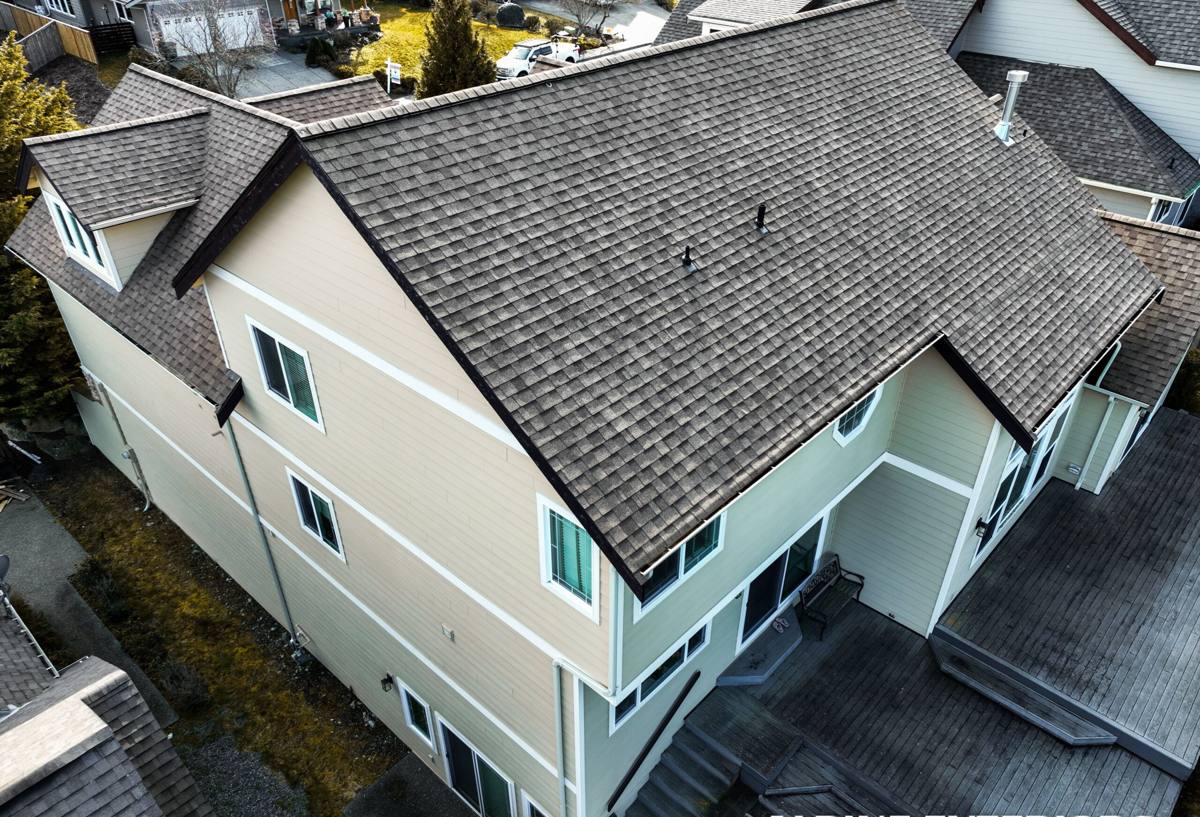
Signs Your Deck Needs Replacement, Not Just Repair
Not every tired-looking deck needs a full tear-off. But there's a point where patching boards is just delaying an expensive problem, and in a climate like this, that point tends to arrive sooner than homeowners expect. Here's what tells us a deck has crossed the line from "repairable" to "replace it":
- A screwdriver sinks into the ledger board, rim joist, or posts with light hand pressure
- Boards feel spongy or bounce noticeably when you walk across them
- Railings wobble or flex when leaned on, even slightly
- Visible gaps have opened up between the ledger board and the house
- Rust streaking is showing up around fastener heads or joist hangers
- Moss or algae keeps returning within weeks of cleaning
- The deck was built without flashing between the ledger and the house wall
- More than a third of the boards have cracked, cupped, or split
If you're only seeing one or two of these, a repair or partial rebuild may still make sense. Once several show up together, it usually means the structure underneath has been absorbing moisture for years, and patching the surface won't fix what's happening below it.
What a Correct Deck Replacement Actually Involves
A deck replacement done right is a structural project, not a cosmetic one. The decking boards are the part everyone sees, but they're the last thing that gets installed, not the first thing that matters.
Framing and Structure
We start below the surface: posts, beams, joists, and footings. In this climate, joist spacing and footing depth matter more than they might in a drier region, because saturated soil and freeze-thaw cycles put extra stress on undersized or poorly-set footings. Any framing member showing rot, insect damage, or excessive moisture staining gets replaced, not just sistered.
Ledger Board and Flashing
The ledger board — where the deck attaches to the house — is the single most common failure point we see on older decks in this area, and it's almost always a flashing problem. Correct flashing directs water away from the house framing instead of trapping it against the ledger. On a proper replacement, this gets torn out, inspected, and re-flashed correctly, even if the rest of the ledger board looks fine.
Fasteners and Hardware
Given the corrosion risk from salt air, we use stainless steel or heavy hot-dip galvanized fasteners and connectors rated for coastal exposure, not standard exterior-grade hardware. It costs more upfront and it's the difference between hardware that lasts the life of the deck and hardware that starts failing quietly within a decade.
Choosing Decking Material for This Climate
Every decking material has trade-offs, and the right answer depends on how much maintenance a homeowner actually wants to do versus how much they want to spend upfront. Here's how the common options compare for a coastal Whatcom County setting:
| Material | Upfront Cost | Maintenance Needs | Moss/Moisture Resistance |
|---|---|---|---|
| Pressure-Treated Wood | Lowest | Annual cleaning and re-staining | Moderate — needs sealing to hold up |
| Cedar | Moderate | Regular sealing to prevent graying and cupping | Naturally rot-resistant, but surface moss still forms without upkeep |
| Composite | Higher | Occasional washing, no staining or sealing | Good — resists rot, but moss/algae can still grow on the surface film |
| PVC / Cellular | Highest | Lowest — simple wash-downs | Best — non-organic surface resists moss growth longest |
We're honest with clients about this: composite and PVC decking cost more per square foot, but they remove the annual staining cycle that pressure-treated wood requires, which matters in a climate where a missed maintenance year lets moss and moisture get a real foothold. Wood remains a legitimate choice for homeowners who want that look and don't mind the upkeep — we just make sure they know what the upkeep actually looks like here before they commit to it.
Our Process, From Estimate to Final Walkthrough
- On-site assessment — we inspect the existing structure, footings, ledger connection, and drainage before quoting anything, since hidden rot changes the scope
- Written estimate — a clear breakdown of framing work, material options, and hardware, so there are no surprise change orders mid-project
- Permit and code check — we confirm what Whatcom County requires for the size and height of the deck before work starts
- Demolition — full removal of old decking, and any framing that doesn't meet current structural standards
- Framing and flashing — new or reinforced posts, joists, and a properly flashed ledger connection
- Decking installation — using the material selected, with attention to board spacing for drainage and airflow underneath
- Final walkthrough — we go over the finished deck with the homeowner, including basic care and what to watch for going forward
Permits and Local Considerations
Deck replacements that involve structural changes, or decks above a certain height, typically require a building permit in Whatcom County, and inspections are usually part of that process. Homeowners are sometimes tempted to skip this step on a like-for-like replacement, but skipping it can create real problems later — at resale, or with insurance, if the work isn't documented. We handle the permit process as part of the job rather than leaving it for the homeowner to sort out separately.
Why Hiring a Crew That Already Works the Cordata Area Matters
A deck built to a generic national spec doesn't necessarily hold up to this region's combination of salt air, sideways rain, and long wet winters. A crew that regularly works decks in and around Sudden Valley and the greater Cordata area already knows which fastener grades corrode too fast here, which flashing details actually keep ledger boards dry through a wet winter, and which decking materials are worth the extra cost given how much moss pressure a shaded lot really sees. That local pattern recognition is the difference between a deck that needs attention again in eight years and one that doesn't.
Keeping a New Deck Ahead of Moisture and Moss
A correctly built deck still needs some basic seasonal care in this climate. Clearing debris out of board gaps before the wet season starts keeps water moving instead of pooling. An annual wash-down — plain water and a stiff brush is often enough — keeps moss from establishing before it takes hold. For wood decks, re-sealing on the schedule the manufacturer recommends is what actually prevents the cupping and splitting we described earlier. None of this is complicated, but skipping it is how a well-built deck ends up looking like a poorly-built one within a few years.
If your deck in the Cordata or Sudden Valley area is showing any of the warning signs above, or you're just ready to plan ahead of the next wet season, we're happy to take a look and give you an honest assessment. Reach out using the form below for a free, no-pressure estimate.