 Sudden Valley Siding
 Cordata Decks Take a Different Kind of Beating
A deck in Cordata doesn't fail the same way a deck fails in a dry climate. Out here, the damage is driven by three things working together: salt-tinged air moving in off the water, driving rain that gets pushed sideways into every joint and seam, and a moss season that can run half the year. None of these alone would do much. Combined, over enough winters, they turn small maintenance issues into structural ones.
Salt air accelerates corrosion on anything metal — nails, screws, joist hangers, bolts. Once a fastener starts rusting, it swells slightly and loosens its grip on the wood around it, which lets moisture in around the shank. Driving rain doesn't just fall on a deck, it gets blown up and under boards, into ledger connections, and behind rim joists where it can sit for days without sun or wind to dry it out. And moss doesn't just look bad — it holds water against wood and framing far longer than bare wood ever would on its own, which is exactly the condition rot needs to take hold.
Whatcom County building stock includes a lot of decks that were solid when built but were never detailed for this specific combination of exposure. That's the gap we spend most of our time closing on repair calls in this area.
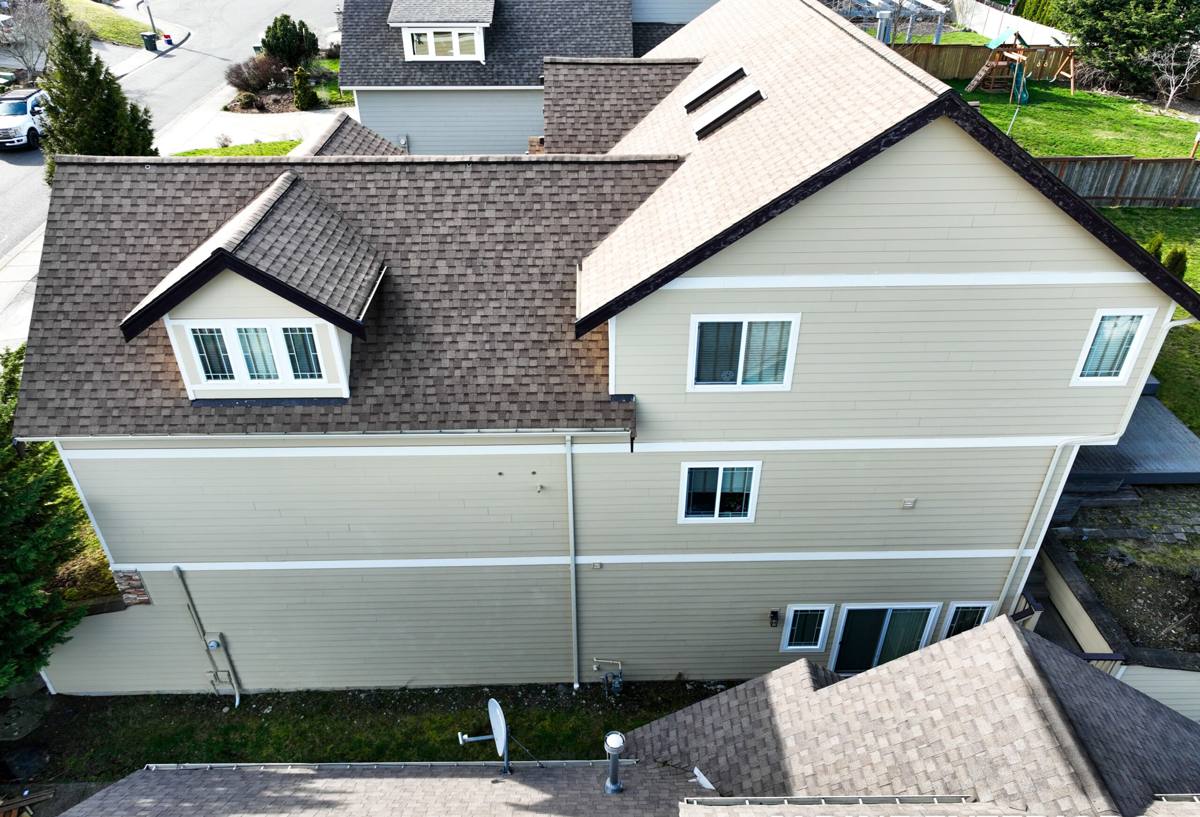
Where the Damage Actually Starts
Homeowners usually notice a deck problem at the surface — a soft board, a wobbly rail, a section that feels spongy underfoot. By the time it's visible, the underlying cause has usually been developing for a while. The most common failure points we find on Cordata-area decks, in roughly the order they tend to show up:
- Rust staining or streaking below fastener heads, especially on horizontal surfaces exposed to wind-driven rain
- A green or black film on decking boards, stairs, or the north/shaded side of the structure — early moss and algae growth
- Soft or spongy decking, usually near board ends or where boards butt against the house
- Gaps, cracking caulk, or daylight visible where the ledger board meets the house band board
- Movement or "give" in railings and posts, which often points to rot at the base connection rather than the rail itself
- Standing water or slow drainage under the deck after rain, which keeps joists and posts wet longer than they should be
Any one of these on its own might be a minor fix. Two or three together usually means moisture has been getting into the structure for more than one season, and the repair needs to go past the surface.
What a Correct Deck Repair Actually Involves
The Ledger Board Connection
The ledger board — where the deck attaches to the house — is the single most important structural connection on most decks, and it's also the point most exposed to the wind-driven rain common here. A correct repair checks for proper flashing between the ledger and the house siding or sheathing, confirms the fasteners are rated for the load and resistant to corrosion, and looks for rot in the band board behind the ledger, not just the ledger itself. Patching a ledger without checking what's behind it is one of the more common shortcuts we see on decks that come to us for a second repair.
Framing, Posts, and Footings
Joists, beams, and posts that have been sitting in damp shade for years often look fine from below until you probe them. We check for soft spots with a moisture meter and an awl rather than relying on a visual look alone, since surface wood can appear sound while the core has already started to break down. Posts at ground contact and footing connections get particular attention, since that's where water collects and drains the slowest.
Decking and Railings
Individual board replacement only makes sense if the framing underneath is sound — otherwise you're fastening new material to a structure that's still failing. Railings get checked for the same rot patterns at their base connections, plus a check that baluster spacing and rail height still meet current code, since older decks were sometimes built to different standards than what applies today.
Hardware and Fasteners
Given the salt air in this area, we don't use standard zinc-coated fasteners or hangers on exterior connections. Stainless steel or high-grade hot-dip galvanized hardware costs more up front but doesn't set up the same corrosion cycle that loosens joints and stains wood over time. This is one of the clearest examples of a repair that's cheaper today and more expensive over the life of the deck if the wrong hardware goes in.
Repair or Replace: How We Help You Decide
Not every deck problem needs a full rebuild, and not every deck is worth patching. The honest answer depends on where the damage is and how far it's spread. Here's the general framework we use:
| Factor | Repair Usually Makes Sense | Replacement Usually Makes Sense |
|---|---|---|
| Location of rot | Isolated to a few boards or one section | Found at the ledger, multiple joists, or several posts |
| Age of structure | Framing is under 15-20 years old and sound | Framing is original to an older home and untested |
| Fastener condition | Hardware is intact, just cosmetic rust | Hangers and bolts are visibly corroded or loose |
| Code compliance | Rail height and spacing already meet current code | Older railing doesn't meet current safety code |
| Budget goal | Extend usable life a few more seasons | Want a long-term, low-maintenance solution |
Cost naturally follows the same logic. Isolated board or railing repairs tend to run a few hundred dollars. Structural work involving the ledger, multiple joists, or footings climbs into the low thousands. A full deck replacement is its own project with its own cost range, and we'll always tell you plainly if that's the more honest recommendation rather than layering repairs onto a structure that's past the point of being worth it.
Our Repair Process
- Inspection. We walk the full deck, check the ledger connection, probe framing and posts for soft spots, and look underneath at drainage and ventilation — not just the parts you can see standing on top.
- Written assessment. You get a clear explanation of what's failing, why, and what it will take to fix it correctly, including whether repair or replacement is the more honest path.
- Structural repair first. Any rot in the ledger, framing, or posts gets addressed before anything cosmetic happens. There's no point installing new boards over compromised framing.
- Correct hardware. All replaced connections use corrosion-resistant fasteners and hangers suited to this climate, not whatever matches the original build.
- Decking and rail work. Boards, balusters, and rail components get replaced or resurfaced as needed, matched to the existing deck where possible.
- Moisture management. Where drainage under the deck is part of the problem, we address grading or flashing details so the repair doesn't just fail again the same way.
Decking Materials: What Holds Up Here
Material choice matters more in a climate like this than in most. Each option handles moss, moisture, and salt air differently, and each comes with its own maintenance commitment.
| Material | Moss & Moisture Behavior | Maintenance Needed |
|---|---|---|
| Pressure-treated lumber | Resists rot well but surface stays porous, so moss and algae can take hold without regular cleaning | Annual cleaning and periodic sealing or staining |
| Cedar | Naturally rot-resistant with attractive weathering, but softer and more prone to surface wear in constant damp | Cleaning plus sealing every couple of years to hold color and resist moisture uptake |
| Composite decking | Doesn't absorb moisture into the board itself, and modern capped composites resist moss better than early generations did | Occasional washing; no staining or sealing required |
We don't push one material as universally "best." Composite carries a higher material cost but the lowest ongoing maintenance burden, which matters if you don't want to be out there scrubbing moss every spring. Wood costs less up front and can look great, but only if the maintenance schedule actually happens. We'll walk through the honest trade-offs for your specific deck rather than defaulting to whatever's easiest to install.
Maintenance That Actually Extends the Life of a Repair
A repair is only as good as what happens to the deck afterward. In a climate with this much rain and moss pressure, a little seasonal attention goes a long way toward not needing another repair call in a few years.
- Sweep debris and standing leaves off the deck surface regularly, especially in fall and through moss season
- Clean moss and algae off boards and stairs at least once a year, before it has a chance to establish and hold moisture
- Check the ledger board area for gaps, cracked caulk, or staining after major storms
- Keep gutters and downspouts near the deck clear so runoff isn't draining directly onto or under it
- Re-seal or re-stain wood decking on the schedule the product calls for, not just when it starts looking gray
- Look under the deck once a year for standing water, soft framing, or new rust streaking on hardware
Why a Crew That Already Works in Cordata Matters
Deck repair done right in this part of Whatcom County isn't a generic checklist — it's a response to a specific combination of salt exposure, driving rain, and a long moss season that plays out differently than it would inland or in a drier climate. A crew that works this area regularly already knows which connections tend to fail first, which hardware actually holds up, and how aggressive the moss season here really gets on a shaded deck. That's the difference between a repair that lasts and one that's back on the schedule in two years.
It also matters for response time. Storm damage or a sudden soft spot doesn't wait for a convenient week, and a contractor already working in and around Cordata can typically get eyes on a problem faster than one coming from farther out.
If you've got a deck showing any of these warning signs, we're happy to take a look and give you a straight answer — repair or replace, and why — with no pressure either way. Use the form below to request a free estimate.