 Sudden Valley Siding
 Building a Deck That Actually Holds Up in Columbia
A deck in Columbia has a harder job than a deck almost anywhere inland. Between the driving rain that comes off the water, a moss season that can stretch for months, and salt-laden air working on every metal fastener and connector, an ordinary deck built to a generic spec starts showing problems within a few seasons — soft boards, rusted hardware, slick surfaces, and rot hiding where you can't see it. We build decks for this specific stretch of Whatcom County, which means every decision, from footing depth to fastener grade, gets made with local conditions in mind rather than a one-size-fits-all approach.
This page covers what a properly built custom deck looks like for a Columbia property: the structural details that matter here, the material choices that actually make sense for this climate, and what our process looks like from first call to final walkthrough.
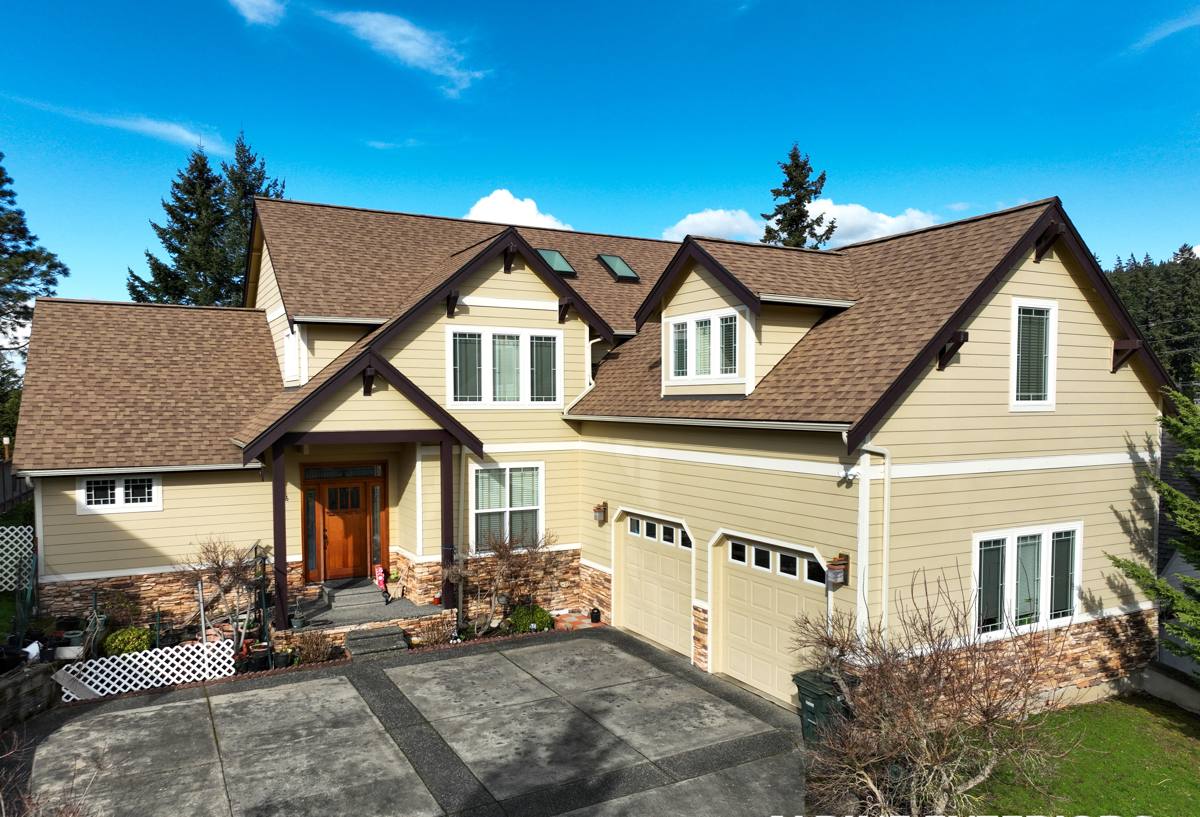
What Whatcom County Weather Does to a Deck Over Time
Most deck failures aren't dramatic — they're slow. Understanding how our climate attacks a deck is the first step to building one that doesn't need to be rebuilt in ten years.
Driving Rain and Standing Moisture
Rain here doesn't fall straight down. Wind-driven rain gets pushed sideways into ledger connections, under railing posts, and into any gap where flashing wasn't done right. If water can get behind a ledger board or pool on a horizontal surface without a way to drain, rot starts in the framing long before it's visible on the surface.
The Long Moss Season
Shaded decking, especially anything under tree cover or on the north side of a house, stays damp for extended stretches through fall, winter, and spring. Moss and algae take hold on any surface that doesn't shed water and dry out between rains, and once established they hold moisture against the decking material, accelerating whatever decay process is already underway.
Salt Air and Metal Corrosion
Salt air doesn't just affect waterfront homes directly on the shoreline — it travels, and over years it works on unprotected steel fasteners, joist hangers, and structural screws. Once corrosion starts on a fastener buried inside the framing, it's invisible until the connection actually fails.
The Structural Anatomy of a Deck Built for This Climate
The parts of a deck nobody sees are the parts that determine whether it lasts fifteen years or thirty-five. This is where we don't cut corners, regardless of what decking material ends up on top.
Framing and Footings
Footings get sized and set below frost depth and bear on undisturbed soil, not fill. On sloped or uneven Columbia lots, that sometimes means deeper or more numerous footings than a flat-lot deck would need — we size this to the actual site, not a minimum spec. Framing lumber is pressure-treated and rated for ground contact where it's within splash range of soil or standing water.
Ledger Flashing and Waterproofing
The ledger board — where the deck attaches to the house — is the single most common point of hidden rot on decks in wet climates. We flash it properly with a water-resistant barrier and metal or high-quality flashing tape that sheds water away from the house rather than trapping it against the rim joist. This detail alone is the difference between a ledger connection that's still solid in twenty years and one that's silently rotting behind the siding.
Fasteners and Hardware
Structural connectors, joist hangers, and fasteners are stainless steel or heavy hot-dip galvanized, rated for coastal and treated-lumber exposure. Standard zinc-coated hardware corrodes faster in salt air and in contact with the chemicals in modern pressure-treated lumber — we don't use it on structural connections here, as a matter of our own standard, not because every product on a shelf is unusable.
Choosing a Decking Material for Columbia Conditions
The decking surface itself gets the most attention from homeowners, and rightly so — it's what you see and stand on. But the right choice depends on how much shade, moisture, and moss exposure the specific spot on your property actually gets.
| Material | How It Handles Moisture & Moss | Maintenance | Typical Lifespan |
|---|---|---|---|
| Pressure-treated wood | Resists rot when properly treated and sealed; still absorbs moisture and can support moss growth if not maintained | Annual cleaning and re-sealing recommended | 15–20 years with upkeep |
| Cedar | Naturally rot- and insect-resistant, but softer surface can hold moisture in shaded areas | Periodic cleaning, staining or sealing every few years | 15–25 years with upkeep |
| Composite decking | Doesn't absorb water into the board itself; textured surfaces still need cleaning to prevent surface algae/moss | Occasional washing, no sealing or staining | 25–30+ years |
| PVC/capped composite | Fully moisture-resistant shell; best resistance to surface staining and moss in heavy-shade areas | Low — occasional washing | 25–30+ years |
There isn't one universally "right" answer — a sunny, open deck can perform fine in cedar or treated wood with routine care, while a heavily shaded deck tucked under trees is where composite or capped PVC earns its higher upfront cost by resisting the moss and moisture problems that shade creates.
Board Spacing and Surface Drainage
Regardless of material, board spacing and gap width matter more here than in drier climates. Gaps that are too tight trap debris and moisture; gaps that are too wide catch heels and let more organic material collect underneath, feeding the same moss and rot issues over time. We set spacing based on the specific board material's expansion behavior in our wet-dry cycles.
Design Considerations for Columbia Properties
Columbia lots in the Sudden Valley area often deal with slope, established tree cover, and varying sun exposure across a single yard — all of which affect how a deck should be laid out, not just how it's built.
- Where the deck sits relative to tree canopy, since heavier shade means more moss pressure and slower drying after rain
- Grading and drainage beneath and around the deck so water has somewhere to go instead of pooling under the structure
- Railing and post placement on sloped sections, which can require taller posts and different bracing than a flat-lot deck
- Orientation toward views versus prevailing wind and rain direction, since a deck facing the weather takes more of a beating than one that's partially sheltered
- Stair and landing placement on uneven terrain, planned for safe footing when surfaces are wet or mossy
Our Process, Start to Finish
Every custom deck we build in Columbia follows the same basic sequence, adjusted for the specifics of your lot and how you plan to use the space.
- On-site assessment — we walk the property, check grade, drainage, sun/shade exposure, and how the deck will tie into the existing structure.
- Design and material selection — we go over layout options and decking materials with honest trade-offs for your specific spot, not a generic upsell.
- Written estimate — a clear scope of work and price before anything is scheduled.
- Permitting — we handle the permit process where required so the work is inspected and legal from day one.
- Framing and structural work — footings, framing, ledger flashing, and hardware installed to the standards above.
- Decking, railing, and finish work — surface material, railings, stairs, and any built-in features installed and detailed.
- Final walkthrough — we go over the finished deck with you, including basic maintenance guidance specific to the material you chose.
Keeping a New Deck Ahead of Moss and Moisture
No deck material is entirely maintenance-free in this climate — some just need far less than others. A short list of habits keeps whatever we build looking and performing the way it should for years:
- Sweep leaves and debris off the deck surface regularly, especially in fall, so moisture and organic matter don't sit against the boards
- Wash the deck surface at least once a year with a deck-safe cleaner to remove early moss and algae growth before it establishes
- Keep gutters and downspouts near the deck clear so runoff isn't dumping extra water onto or under the structure
- Check and clear the gap between boards periodically, since trapped debris holds moisture against the material
- Inspect railing posts and stair connections annually for movement, which can signal a footing or fastener issue starting below
- Re-seal wood decking on the schedule appropriate to that material — don't wait until it's visibly graying or cupping
Permits and Local Requirements
Most custom decks above a certain height or attached to the house require a building permit in Whatcom County, and inspections typically cover footing depth, ledger attachment, and railing height and spacing for safety. We handle this as part of the project rather than leaving it to the homeowner, and we build to code minimums as a floor, not a ceiling — our framing and flashing details generally exceed what's required for inspection sign-off because we're building for how the deck holds up over decades, not just for passing inspection once.
Why Local Experience in Columbia Matters
A deck built to a generic national spec can pass inspection and still fail early here, because that spec wasn't written with Whatcom County's driving rain, salt air, and moss season in mind. A crew that already works in and around Sudden Valley and Columbia knows which details get skipped on decks that fail early in this climate — under-flashed ledgers, standard hardware in a corrosive environment, decking materials chosen without accounting for shade and moisture — and builds around those failure points from the start rather than learning them on your project.
If you're planning a custom deck in Columbia, we're glad to walk your property, talk through material options honestly, and put together a clear, no-pressure estimate using the form below.