 Sudden Valley Siding
 Why Roofs Age Differently in Bellingham and Sudden Valley
A roof in Whatcom County doesn't fail the way a roof does in a dry climate. Out here, the damage is slow and cumulative: salt-laden air moving in off Bellingham Bay and the Sound corrodes exposed metal faster than manufacturers' spec sheets assume, driving rain off the water finds every weak seam and undersized flashing detail, and the tree cover common to Sudden Valley's wooded lots keeps roofs shaded and damp long after a storm has passed. That shade is exactly what moss needs to take hold, and once moss gets a foothold under shingle tabs it lifts them, holds water against the deck, and shortens the life of a roof that might otherwise have had another decade left in it.
None of this means roofs here fail faster across the board — it means they fail in specific, predictable ways if they weren't built for this climate in the first place. A roof replacement done right in this area accounts for moss, moisture, and salt exposure from the first layer down, not as an afterthought.
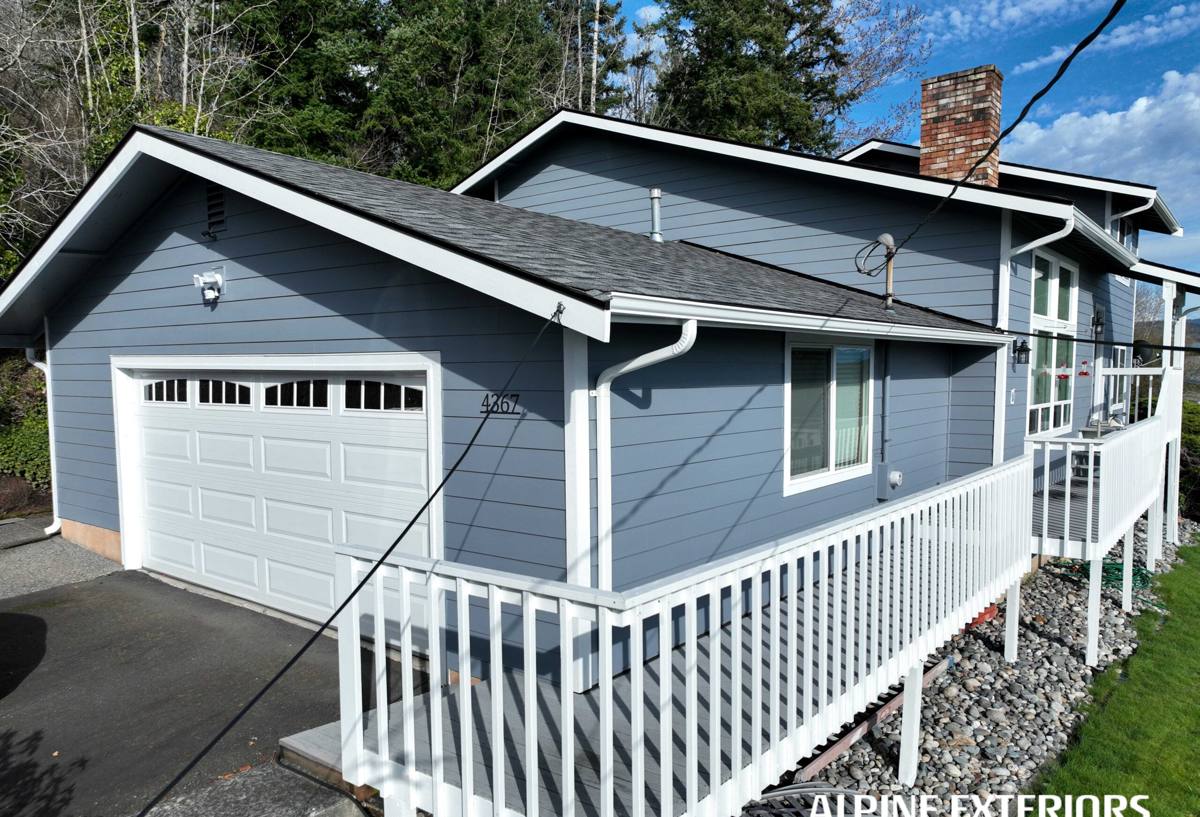
Signs It's Time for a Replacement, Not Another Repair
Repairs make sense when the damage is isolated — a single cracked pipe boot, a handful of wind-lifted tabs, a flashing detail that was never sealed correctly. Replacement makes sense once the roofing system itself, not just a piece of it, is failing. In this climate, that line gets crossed sooner than homeowners expect, mostly because moss and trapped moisture do their damage under the surface, out of sight.
- Granule loss heavy enough that you can see bare, shiny patches on multiple shingles, not just one or two
- Moss or algae established across large sections of the roof, especially on north-facing or shaded slopes
- Soft or spongy spots underfoot on the deck, or sagging visible from the ground
- Daylight visible through the roof deck from inside the attic
- Shingles curling, cupping, or cracking in more than a few isolated spots
- Repeated leaks in different locations after past repairs
- The roof is at or past the manufacturer's rated lifespan for its material and exposure
- Rusting, pitted, or failing metal flashing, valleys, or fasteners
Any one of these on its own might still be a repair. Two or three together, especially on a roof that's already had patch work done, usually means the underlying system has reached the point where another repair is a short-term fix on a long-term problem.
What a Correct Roof Replacement Includes
A roof replacement is more than swapping old shingles for new ones. In a climate that sees this much rain and this much moss pressure, the layers underneath the shingles matter as much as the shingles themselves.
Tear-Off and Deck Inspection
A full tear-off down to the deck is the only way to know what's actually underneath — old layers, hidden rot, or deck damage from a leak that was never fully diagnosed. Any soft, delaminated, or water-damaged decking gets replaced before anything new goes down. Roofing over a compromised deck just hides the problem for another few years.
Underlayment and Moisture Protection
Given how much of the year this region spends wet, the underlayment layer is where a lot of long-term performance is won or lost. Synthetic underlayment holds up to moisture exposure and foot traffic during install better than older felt products, and self-adhering ice-and-water membrane belongs at eaves, valleys, and around every penetration — the spots where wind-driven rain is most likely to work its way backward under the shingles.
Ventilation
A roof that can't breathe traps moisture in the attic, which shortens the deck's life and feeds the exact conditions moss and mold need. Balanced intake at the eaves and exhaust at the ridge should move air continuously through the attic space — this is one of the most commonly skipped details on lower-cost roof jobs, and one of the most consequential over time.
Flashing and Penetrations
Chimneys, skylights, vent pipes, and wall-to-roof transitions are where the majority of roof leaks actually originate — not in the open field of shingles. Correct flashing, properly lapped and sealed rather than just caulked over, is what keeps driving rain from working its way in at these details over the years.
Choosing the Right Roofing Material for This Climate
There's no single correct material for every home, but some options handle this area's combination of rain, shade, and moss pressure better than others. The right choice depends on the home's roof pitch, tree cover, and how much long-term maintenance the owner wants to take on.
| Material | Typical Lifespan | Moss/Moisture Resistance | Maintenance |
|---|---|---|---|
| Architectural asphalt shingle | 25–30 years | Good with proper underlayment and ventilation; still needs periodic moss treatment on shaded slopes | Low to moderate |
| Metal (standing seam or panel) | 40–50+ years | Very good; sheds water and discourages moss growth on most slopes | Low, but coastal salt exposure calls for corrosion-resistant coatings and fasteners |
| Cedar shake/shingle | 20–30 years with upkeep | Requires active maintenance in wet, shaded conditions; more vulnerable to moss and rot without it | High |
| Synthetic composite | 30–50 years | Good; resists moisture absorption better than wood | Low to moderate |
On heavily shaded lots — which describes a lot of Sudden Valley's tree-lined properties — we lean toward materials and details that resist moss rather than just tolerate it, because the shade isn't going away. On more exposed, wind- and rain-driven slopes closer to the water, flashing quality and fastener corrosion resistance matter as much as the shingle itself. We'll walk your specific roof and tell you honestly which option fits it, rather than defaulting to whatever's easiest to install.
Cost Factors to Expect
Every roof replacement quote should reflect the specifics of your roof, not a flat per-square rate pulled from a generic estimate. The factors below move the price the most.
| Factor | Why It Matters |
|---|---|
| Roof size and pitch | Steeper roofs take longer to work safely and use more material per square |
| Number of layers to remove | Tear-off of multiple old layers adds labor and disposal cost |
| Deck condition | Rotted or soft decking sections need to be replaced before new roofing goes down |
| Material choice | Asphalt, metal, cedar, and composite carry different material and labor costs |
| Access and tree cover | Wooded lots with limited equipment access can add setup and cleanup time |
| Ventilation upgrades | Adding proper intake/exhaust venting where none existed is worth the added cost |
| Permit and inspection | Local permit fees and required inspections are part of an honest quote, not a hidden add-on |
Be cautious of any quote that doesn't account for deck condition until after the tear-off has already started — that's usually where "surprise" costs come from. A thorough inspection before the quote is written is what keeps the final invoice matching the estimate.
Our Process, Start to Finish
- On-site inspection. We walk the roof, check the attic for ventilation and moisture signs, and look at flashing, valleys, and deck condition before quoting anything.
- Written estimate. A clear breakdown of material, labor, tear-off, and any deck repair we expect to need, with the assumptions spelled out.
- Scheduling around the weather. We plan the tear-off and install to minimize the roof's exposure to open sky, especially given how quickly weather can turn here.
- Tear-off and deck repair. Old roofing comes off down to the deck, damaged sections are replaced, and the deck is inspected before anything new is installed.
- Underlayment, flashing, and ventilation installed. The layers most homeowners never see are where we spend the most attention, because they determine how the roof performs in years five through twenty-five.
- Final roofing material installed to manufacturer specification, including proper nailing patterns and exposure for wind and rain resistance.
- Cleanup and magnetic sweep of the property for debris and stray fasteners.
- Final walkthrough so you can see the finished work and ask questions before we consider the job done.
Moss and Algae: The Long Game
A correctly installed roof resists moss better, but it doesn't make a home immune to it — not in a climate with this much shade and rain. Zinc or copper strips installed near the ridge can help suppress regrowth over time as rain washes trace metal down the slope. Keeping gutters and valleys clear of needles and debris matters just as much, since trapped organic matter is what gives moss somewhere to start. For homes with heavy tree cover, an occasional soft wash or moss treatment — done correctly, without pressure-washing that strips granules — extends the life of even a well-built roof.
We'll tell you honestly what your specific lot and tree cover are likely to mean for long-term moss pressure, rather than promising a maintenance-free roof that doesn't really exist in this environment.
Why Local Experience on This Job Matters
A roofing crew that mainly works drier inland climates tends to under-detail ventilation and underlayment, because it hasn't had to deal with the consequences of skipping them. Working Bellingham and Sudden Valley regularly means knowing which slopes on a given lot hold moss longest, which details fail first under driving rain, and how to schedule a tear-off around a weather window instead of hoping the forecast holds. It also means understanding that homes in planned communities like Sudden Valley may fall under community association guidelines for roofing materials, colors, or contractor requirements — worth confirming before you finalize a material choice, and something we can help you check.
Whatcom County's inspection and permitting process is also something a crew that works here regularly navigates as routine, not as a surprise that delays your project.
Warranty and Aftercare
A roof replacement should come with two layers of protection: the manufacturer's material warranty, and a workmanship warranty from the crew that installed it. Ask any contractor to spell out both in writing, including what voids each one — some manufacturer warranties are contingent on proper ventilation or installer certification, which is one more reason the details underneath the shingles matter as much as the shingles themselves. After install, keep an eye on gutters, valleys, and shaded slopes each fall, and have any new leak or granule loss looked at promptly rather than waiting for it to spread.
If you're weighing a repair against a full replacement, or just want an honest read on where your roof actually stands, we're happy to take a look. Fill out the form below for a free, no-pressure estimate.