 Sudden Valley Siding
 Why Barkley Homes Take a Different Kind of Beating
Homes in and around Barkley sit in one of the tougher climates in Whatcom County for exterior siding. The combination is specific: moisture-laden marine air moving in off the water, driving rain that hits walls sideways during fall and winter storms, and long stretches of gray, damp weather that give moss and algae months at a time to get established on north-facing walls, under eaves, and anywhere sunlight doesn't reach. None of these factors alone is unusual for the Pacific Northwest. Together, over years, they're exactly the conditions that expose weak siding systems — and reward well-installed ones.
Salt-tinged air accelerates corrosion on fasteners and metal trim that aren't rated for it. Driving rain finds any gap in flashing or caulking and pushes water sideways into wall assemblies that were only ever designed to shed water falling straight down. And moss doesn't just look bad — it holds moisture against the siding surface long after a storm has passed, which is exactly the kind of prolonged dampness that rots wood-based products and stains lesser paint finishes. A siding system that isn't built and installed for this specific combination will show it within a few winters, not a few decades.
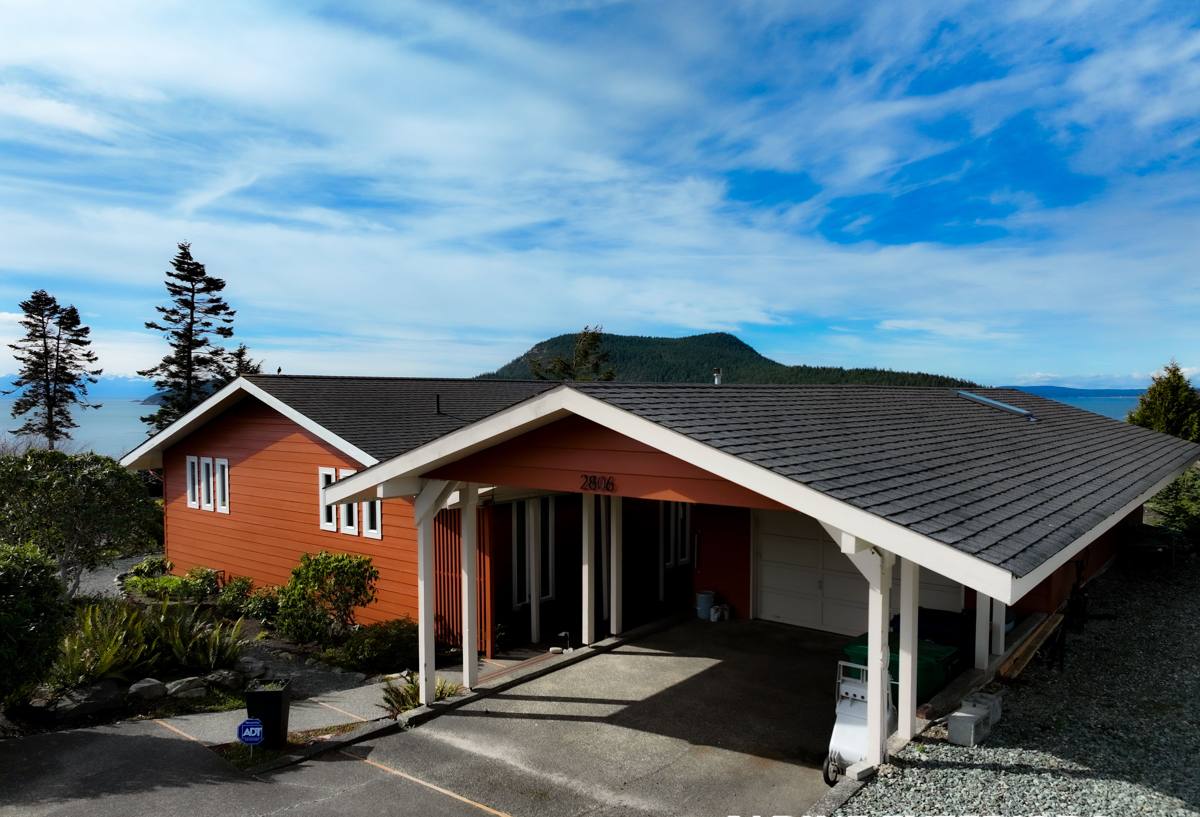
Why We Install Only James Hardie Fiber Cement
We standardized on James Hardie siding for every home we work on, including in Barkley, because it's engineered around the failure points we actually see in this climate. It's non-combustible fiber cement, not a wood product, so it doesn't absorb water the way wood, primed spruce, or wood-composite sidings do. James Hardie also makes a climate-specific HZ5 product line built for regions with exactly this weather pattern — cold, wet winters and sustained damp seasons — rather than a one-size-fits-all national product.
The factory-applied ColorPlus finish matters here too. It's baked on and warrantied against fading and cracking in a controlled environment, which holds up better under repeated wet-dry cycling than field-applied paint on other siding types. We're not installing James Hardie because it's trendy — we settled on it after weighing the maintenance burden, moisture behavior, and warranty structure of the alternatives and concluding it was the product we could stand behind on every job.
What This Means in Practice for a Barkley Home
- Siding that resists moisture absorption at the board level, not just at the paint surface
- A factory finish that doesn't rely on the installer's field paint job for long-term color and moisture protection
- A product engineered for freeze-thaw and prolonged damp exposure, not just general-purpose weather resistance
- A manufacturer warranty structure that's transferable if the home sells, which matters in a market where buyers ask about siding age and condition
What a Correct Installation Actually Involves
James Hardie siding performs the way it's rated to perform only when it's installed to spec. A huge share of the siding problems we see on older homes — including some with fiber cement already on them — trace back to installation shortcuts, not the product itself. In a climate that drives water sideways as often as it does here, these details aren't optional extras. They're the difference between siding that lasts and siding that fails early.
| Installation Detail | Why It Matters in This Climate |
|---|---|
| Weather-resistant barrier and proper overlap | Backstops the siding against wind-driven rain that gets past the outer surface |
| Flashing at windows, doors, and penetrations | Directs water that reaches these points back out instead of into the wall cavity |
| Correct fastener type and placement | Prevents corrosion-driven staining and loose boards in salt-influenced air |
| Proper gap and clearance at grade and roof lines | Keeps splash-back moisture and prolonged dampness away from board edges |
| Factory-cut, factory-primed edges kept intact | Protects the one part of the board most vulnerable to moisture wicking |
| Caulking only where James Hardie specifies it | Over-caulking traps moisture; under-caulking lets it in — both cause early failure |
Every one of these is inspectable after the fact by someone who knows what to look for, which is part of why we walk clients through the details rather than treating installation as a black box.
Signs Your Current Siding Is Already Losing the Fight
Before a full siding replacement makes sense, it helps to know what failure actually looks like on a home in this area. Some of it is cosmetic. Some of it signals water is already getting past the surface.
- Persistent moss or dark streaking on north- and shade-facing walls that comes back within a season of cleaning
- Soft spots, bubbling, or visible swelling, especially near the bottom courses or around windows
- Paint that's peeling or alligatoring rather than just fading evenly
- Nail pops, warped boards, or visible gaps opening up at seams
- A musty smell or soft drywall on interior walls that back up to exterior siding
- Rust streaks running down from fasteners or trim
One or two of these can sometimes be a localized repair. Several at once, especially combined with a home's age, usually means the siding system as a whole is past the point where patching makes financial sense.
How We Approach a Barkley Project
The process is the same discipline on every home, but a local job benefits from crews who already understand how this specific pocket of Whatcom County behaves through a wet season.
- On-site assessment. We look at existing siding condition, moisture history, roof lines, and how the home is oriented to prevailing wind and rain.
- Written scope and product selection. We spec the correct James Hardie panel or lap profile and HZ product line for the home's exposure, and put it in writing before any work starts.
- Tear-off and substrate check. Old siding comes off and we check sheathing underneath for rot or damage before anything new goes up — this is where hidden moisture problems usually surface.
- Weather barrier and flashing first. The water-management layer goes in correctly before a single piece of siding is hung.
- Installation to manufacturer spec. Fastening, gapping, and caulking follow James Hardie's published installation guidelines, not shortcuts.
- Final walkthrough. We go over the finished job with the homeowner and explain what was done and why, so there's no mystery about what's behind the new siding.
How James Hardie Compares to Other Options Homeowners Ask About
We get asked regularly why we don't offer vinyl, LP SmartSide, or cedar. Here's the honest comparison, focused on how each behaves in a climate like this one.
| Siding Type | Moisture Behavior Here | Ongoing Maintenance |
|---|---|---|
| James Hardie fiber cement | Resists moisture absorption; factory finish holds up under repeated wet-dry cycling | Occasional wash; repaint interval is long, factory-finish dependent |
| Vinyl siding | Doesn't absorb water itself, but seams and panels can allow water behind the surface, and it's more prone to cracking in cold snaps | Low, but replacement rather than repair when damaged |
| LP SmartSide (engineered wood) | Wood-based core is more sensitive to sustained damp exposure and edge moisture intrusion than fiber cement | Field-applied or shorter-cycle finish maintenance |
| Cedar / primed spruce | Natural wood movement and moisture absorption; performs best with disciplined, frequent maintenance | Highest — regular refinishing and moisture monitoring needed |
Each of these products has legitimate uses and each has homeowners who are happy with it elsewhere. Our decision to install only James Hardie isn't a claim that the others are unusable — it's that after weighing moisture behavior, installation sensitivity, and long-term maintenance for this specific climate, Hardie is the one product we're willing to put our name behind on every job.
Why Hiring a Crew That Already Works This Area Matters
A siding crew that's worked Whatcom County homes through several wet seasons has seen firsthand where water actually gets in on this type of exposure — not in a training manual, but on real roof lines, real window returns, and real grade transitions typical of homes in and around Sudden Valley and Barkley. That experience shows up in small decisions during installation: where to add an extra flashing detail, how to sequence work around an incoming storm, which wall orientations need extra attention to moss and algae resistance. It's the difference between a crew executing a generic spec sheet and a crew that's adapted that spec sheet to what this specific climate actually throws at a house.
What to Expect After Installation
Correctly installed James Hardie siding is low-maintenance, not zero-maintenance. A periodic gentle wash keeps moss and algae from getting a foothold, especially on shaded or north-facing walls. Caulking and any trim paint (where field-painted) should be checked periodically, since those are the areas most exposed to UV and moisture cycling. Beyond that, the factory ColorPlus finish and the fiber cement substrate are doing most of the long-term work, which is a meaningfully lighter maintenance load than wood-based sidings carry in this climate.
If your Barkley home's siding is showing moss that won't quit, soft spots, or paint that's failing faster than it should, we're glad to take a look and give you a straightforward, no-pressure assessment of what's actually going on and what it would take to fix it right. Use the form below to request a free estimate.