 Sudden Valley Siding
 Building Decks That Actually Hold Up in Barkley
A deck in Barkley has a harder job than it looks like it does. It's not just a place to put a grill and a couple of chairs — it's a structure that sits outside, uncovered, through everything Whatcom County's weather can throw at it for months on end. We've built and repaired decks throughout Sudden Valley and the surrounding Barkley area long enough to know that the decks that fail early almost always fail for the same reasons: wrong fasteners, no flashing, poor drainage, or a decking material that was never suited to this climate in the first place. This page is about doing those things right the first time, specifically for homes in this area.
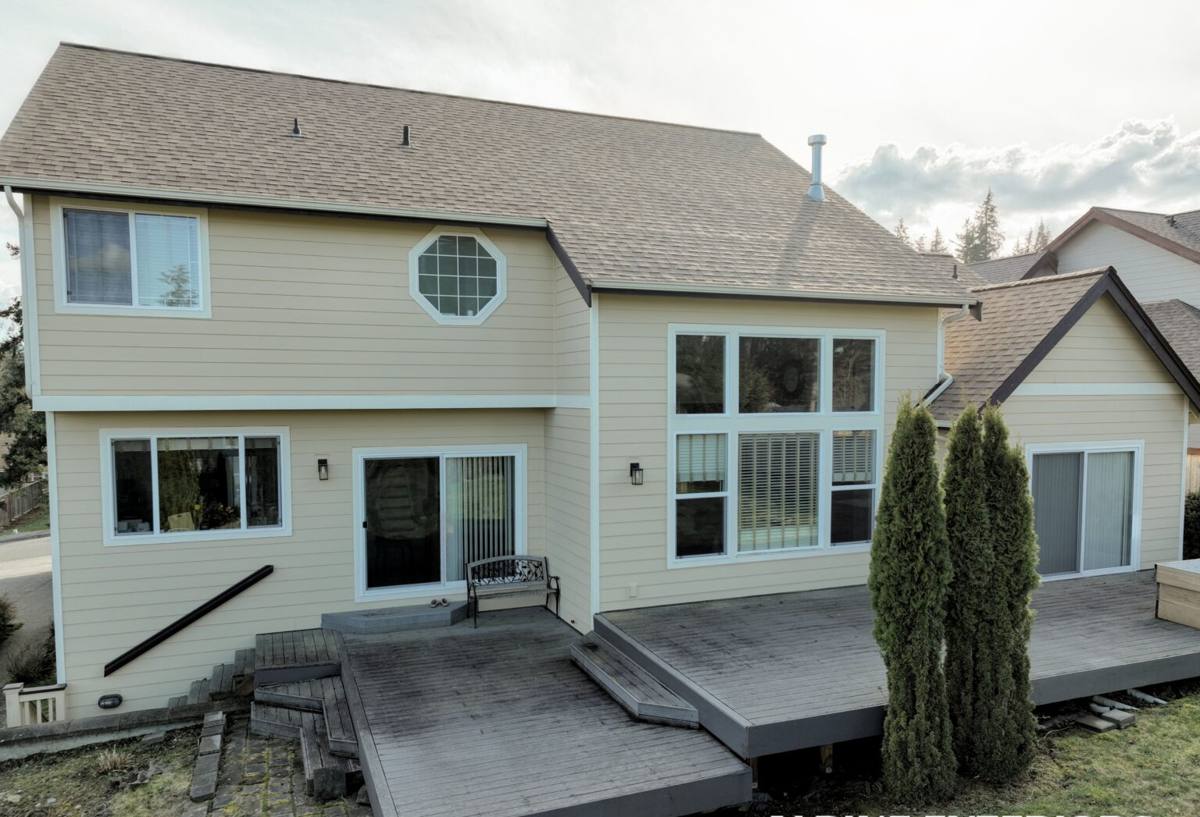
What Local Conditions Do to an Outdoor Deck
Every region has its own version of "normal wear," and in Barkley that wear comes from a specific combination of factors: salt-tinged, moisture-heavy air moving through the county, long stretches of driving rain, and a moss season that can stretch for most of the year in shaded, tree-covered yards. None of these are dramatic on their own. Together, over several winters, they're what separates a deck that's still tight and solid at year fifteen from one that's soft, stained, and unsafe by year eight.
Driving Rain and Standing Water
Wind-driven rain doesn't just fall on a deck — it gets pushed sideways into ledger connections, under railing posts, and into any gap where end grain is exposed. If a board doesn't get a chance to dry out between storms, that moisture works its way into fastener holes and joints and starts the slow process of rot from the inside, long before it's visible on the surface.
Salt Air and Metal Fasteners
Whatcom County's marine climate carries salt and moisture further inland than people expect, and it's hard on anything metal. Fasteners, brackets, and hardware that aren't rated for coastal exposure can corrode years ahead of schedule, and a corroding fastener doesn't just look bad — it loses holding strength exactly where a deck structurally depends on it most.
The Long Moss Season
Shaded lots, tree cover, and consistent moisture add up to a moss and algae season that can run nearly year-round on north-facing or heavily treed decks. Beyond looking bad, moss holds water against the decking surface and makes boards slick and dangerous underfoot — a real safety issue on stairs and landings, not just a cosmetic one.
Choosing Decking Material for a Barkley Property
There's no single "best" decking material — there's the material that makes sense for a given yard's sun exposure, budget, and how much upkeep the homeowner actually wants to do. Here's how the common options compare under Sudden Valley conditions specifically.
| Material | Moisture Resistance | Moss / Algae Behavior | Maintenance |
|---|---|---|---|
| Pressure-treated wood | Good if sealed regularly | Prone to moss in shade unless treated and cleaned | Annual cleaning and re-sealing |
| Cedar | Naturally moisture-resistant, but surface still needs care | Can develop moss/mildew if not maintained | Periodic cleaning and finish renewal |
| Composite decking | Very good — won't rot or absorb water like wood | Can still grow surface algae in constant shade; cleans off more easily than wood | Occasional washing, no sealing needed |
| PVC / capped polymer | Excellent — fully sealed surface | Least prone to moss staining into the material itself | Lowest ongoing maintenance |
We'll walk through these trade-offs honestly during your estimate. A composite or capped polymer product costs more up front but makes sense for a shaded, moisture-prone lot where a homeowner doesn't want to be out there scrubbing and re-sealing every year. A well-detailed cedar or treated-wood deck can perform just as well structurally — it just asks more of the owner in upkeep.
What a Correctly Built Deck Actually Involves
The decking boards are the part everyone sees, but they're the least likely part of the deck to cause a real problem. The failures we get called out to repair are almost always in the structure underneath.
Ledger Board and Flashing
Where a deck attaches to the house is the single most common point of water intrusion and structural failure we see in this region. Proper flashing — installed so water sheds away from the house rather than behind the ledger board — is non-negotiable, especially given how much driving rain this area gets.
Footings and Framing
Footings need to go below the frost line and bear on solid, undisturbed soil, which matters on the sloped and sometimes uneven lots common around Sudden Valley. Joists and beams should be sized to the actual span and load, not just "what's always been done," and any cut ends need to be sealed, not left as raw exposed wood.
Fasteners and Hardware
Given the salt content in the local air, we use fasteners and structural hardware rated for coastal or corrosive exposure — not standard interior-grade hardware that looks fine on day one but starts rusting within a few seasons.
Drainage and Slope
Decking should be installed with a slight pitch away from the house and enough gap between boards for water to actually drain rather than pool. On lower decks close to grade, we also look at what's happening underneath — standing water under a deck is a long-term moisture and pest problem waiting to happen.
Our Process for a Barkley Deck Project
- On-site assessment — we look at sun exposure, drainage, existing structure (for rebuilds), and how the deck will actually be used before recommending anything.
- Design and material selection — sizing, layout, railing style, and decking material chosen for your yard's specific conditions and your maintenance preferences.
- Permitting — most deck projects in Whatcom County require a permit; we handle that process rather than leaving it on the homeowner.
- Build — footings, framing, flashing, and decking installed in that order, with inspections at the structural stages where required.
- Final walkthrough — we go over the finished deck with you, including what maintenance it will need and when.
Cost Factors to Expect
We don't quote a price without seeing the site, but here are the main factors that move a deck project up or down in cost, so you can think through your own priorities before we talk.
| Factor | Effect on Cost |
|---|---|
| Decking material (treated wood vs. composite vs. PVC) | Largest single line item; composite/PVC costs more upfront, less over time |
| Height and grade change | Taller decks need more substructure, footings, and often stairs and railing |
| Site access and slope | Sloped or hard-to-access lots (common around the lake) add labor time |
| Railing style and hardware | Cable, glass, or custom railing costs more than standard wood or metal baluster railing |
| Rebuild vs. new build | Removing and disposing of an old structure adds cost before construction starts |
Keeping a Deck Healthy Through Whatcom County Winters
Whatever material you choose, a little seasonal attention goes a long way in this climate. Homeowners in Barkley and Sudden Valley should be doing roughly this each year:
- Clear leaves and debris from between boards before fall rains set in — trapped debris holds moisture against the deck surface.
- Check and treat for moss on shaded areas and stairs at least once a year; don't let it build up on walking surfaces.
- Inspect the ledger board flashing and any visible fasteners for rust or gaps once a year.
- Reseal wood decking on the manufacturer's recommended schedule — don't wait until it's visibly gray and dry.
- Look underneath the deck periodically for standing water, soft framing, or pest activity.
- Keep gutters and downspouts near the deck clear so roof runoff isn't dumping extra water onto or near the structure.
Why a Crew That Already Works in Barkley Matters
Deck-building code and best practice don't change from neighborhood to neighborhood, but the practical details do. Knowing which lots around Sudden Valley tend to have drainage issues, how HOA or association guidelines in the area typically handle exterior structure approvals, and what Whatcom County's permitting office expects on submittals all save time and prevent the kind of mid-project surprises that drive costs up. A crew that's already worked in Barkley isn't guessing at any of that — we've seen how the local soil, slope, and tree cover behave on real projects nearby, not just in general.
If you're planning a new deck or need an honest look at one that's showing its age, we'd be glad to come out and take a look. There's no pressure and no cost to get our take — just fill out the form below to request a free estimate.