 Sudden Valley Siding
 Why Ferndale Roofs Wear Differently Than Roofs Twenty Miles Inland
Ferndale sits close enough to the water that salt-laden air is a real factor in how a roof ages, not just a talking point. Combine that with Whatcom County's long wet season and the moss growth that comes with it, and you get a set of conditions that are genuinely harder on asphalt shingles than what you'd see in a drier, inland climate. None of this means asphalt shingle roofing is a bad fit for Ferndale — it's still one of the most practical, cost-effective roofing systems available here. It just means the installation and the material choices have to account for what the roof will actually face over the next 20-30 years, not just what looks good on install day.
We work on homes throughout Ferndale and the surrounding Whatcom County area regularly enough to see the pattern: roofs that were installed without attention to local conditions tend to show granule loss, moss colonization, and flashing failures years before they should. Roofs installed with those conditions in mind hold up noticeably longer.
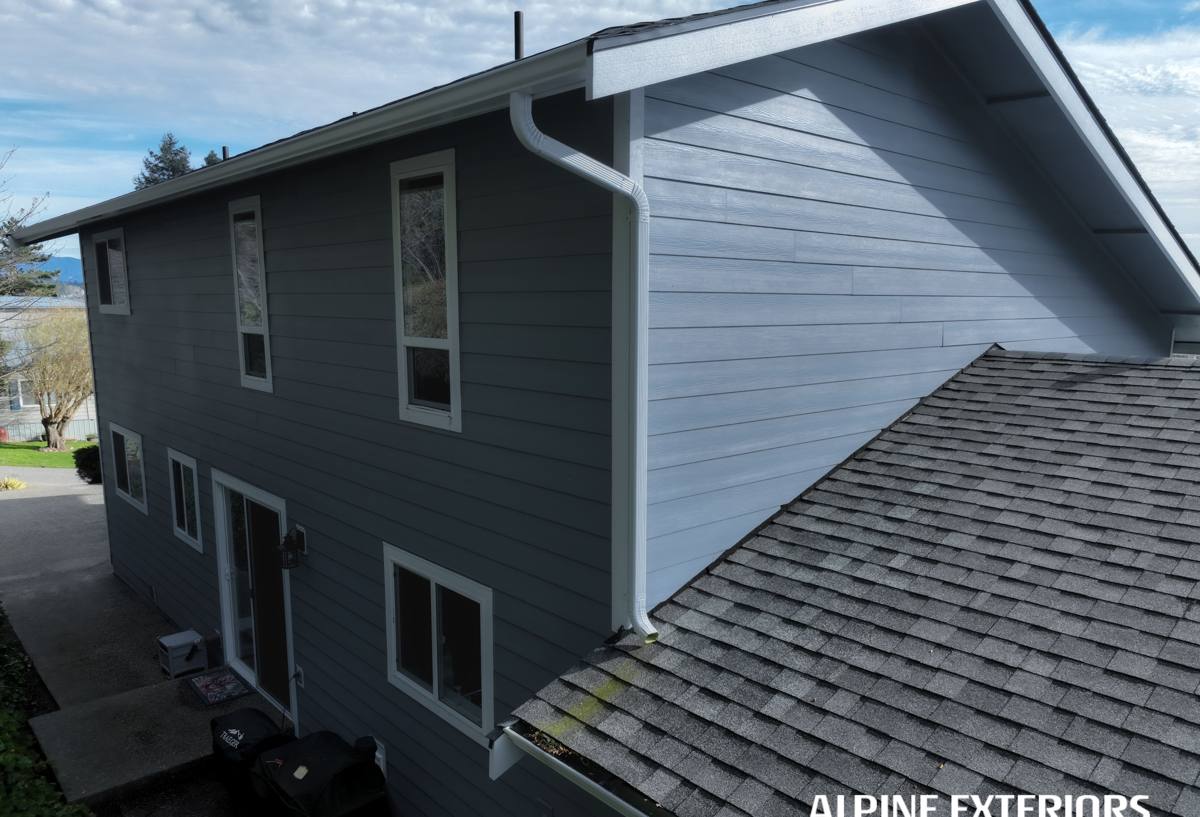
What Salt Air, Driving Rain, and Moss Actually Do to a Shingle Roof
Salt Air
Airborne salt doesn't rot asphalt shingles the way it corrodes bare metal, but it does accelerate wear on exposed metal components — flashing, drip edge, nail heads, and vent housings. Once those small metal parts start to corrode, water finds its way underneath the shingle field even though the shingles themselves look fine from the ground.
Driving Rain
Rain that comes in at an angle, which is common with the wind patterns off the water near Ferndale, pushes water sideways under shingle edges and around penetrations far more aggressively than a straight-down rain would. This is why flashing detail and underlayment coverage matter more here than in a calmer, drier region — a roof that would be fine with minimal flashing in Eastern Washington can leak in Whatcom County if it's cut the same way.
Moss Season
Whatcom County's moss season runs long — realistically much of the fall through spring. Moss holds moisture against the shingle surface, lifts shingle edges as it grows, and works its way into the granule layer. Left unaddressed, it shortens the usable life of a shingle roof by years.
What a Correct Asphalt Shingle Installation Involves
Starting With the Deck
Every proper installation starts with an honest look at the roof deck. Soft spots, delaminated sheathing, or trapped moisture under the old roofing need to be dealt with before a single shingle goes down — covering up a bad deck with new shingles just hides the problem for a while.
Underlayment and Ice/Water Barrier
Given how much wind-driven rain Ferndale sees, we don't treat underlayment as an afterthought. Self-adhering ice-and-water barrier belongs at eaves, valleys, and around all penetrations — the places water is most likely to be pushed by wind rather than just falling straight down. Synthetic underlayment across the rest of the field gives a second layer of protection if any water does get past the shingles.
Flashing Details That Actually Matter
Step flashing at walls, proper valley metal, and correctly lapped flashing at chimneys and skylights are where most leaks in this climate actually originate — not in the open field of shingles. Flashing has to be integrated with the underlayment in the right order (shingled, not caulked over) so water is always directed out and down, never trapped.
Ventilation and Moisture Control
A shingle roof that can't breathe traps moisture in the attic, which shows up as premature shingle failure from the underside and can encourage the same kind of moss and algae growth on the surface. Balanced intake and exhaust ventilation isn't optional in a climate this wet — it's part of making the roof last as long as the material is rated for.
Choosing a Shingle for Ferndale's Conditions
Not every asphalt shingle product handles salt air and constant moisture the same way. The biggest practical differences for a Ferndale home come down to algae resistance, wind rating, and how the shingle is built.
| Shingle Type | Typical Wind Rating | Algae/Moss Resistance | Best Fit For |
|---|---|---|---|
| Standard 3-tab | Lower | Standard granules only | Budget projects, secondary structures |
| Architectural (laminated) | Higher | Often available with algae-resistant granules | Most Ferndale homes exposed to weather off the water |
| Impact-resistant architectural | Higher | Algae-resistant options available | Homes wanting extra durability and longer warranty terms |
For most homes in this area, we lean toward architectural shingles with algae-resistant (copper- or zinc-infused) granules. They cost more up front than 3-tab shingles, but the combination of better wind performance and slower moss/algae colonization makes a real difference in a climate where the roof is wet more months than not.
Moss and Algae: What Ongoing Maintenance Actually Looks Like
Even a well-installed, algae-resistant shingle roof benefits from periodic attention in this climate. That doesn't mean pressure washing — pressure washers strip granules and shorten shingle life, which we don't recommend and won't do. What actually helps:
- Keeping overhanging branches trimmed back so roof surfaces get more sun and dry out between rains
- Clearing debris from valleys and gutters before it holds moisture against the shingles
- Gentle, low-pressure moss removal rather than scraping or power washing
- Zinc or copper strips at the ridge on roofs that are prone to moss recurrence, which release trace metals that inhibit regrowth as rain washes over them
- A yearly visual check of flashing points, especially after the first hard windstorm of the season
Repair vs. Replacement: How We Actually Evaluate a Ferndale Roof
We don't default to recommending a full replacement just because a roof is showing its age. The honest evaluation comes down to a few questions: Is the deck sound underneath? Is the damage isolated to flashing and penetrations, or spread across the shingle field? How many years of expected life are left on the shingles themselves, and does a repair make financial sense against that remaining life? A roof with good bones and an isolated flashing leak usually just needs a targeted repair. A roof with widespread granule loss, multiple past patch jobs, and moss damage working into the deck is usually past the point where repair is the better value.
Our Process From Estimate to Cleanup
- On-site inspection of the roof, attic ventilation, and any visible problem areas, with straightforward findings — no pressure to replace something that can be repaired
- A written estimate outlining scope, materials, and what's driving the recommendation
- Scheduling that accounts for Whatcom County's weather windows, since shingle installation needs dry conditions to go in correctly
- Tear-off and deck inspection, with any deck repairs communicated before covering them up
- Installation of underlayment, flashing, and shingles to the standard the site actually requires — not the minimum code allows
- Full site cleanup, including magnetic sweep for nails and debris removal
- A final walkthrough so you know exactly what was done and what to expect going forward
Why It Matters to Hire a Crew That Already Works This Area
A roofing crew that regularly works in Ferndale and elsewhere in Whatcom County already knows which flashing details tend to fail here, how far moss and algae resistance actually matters versus marketing language, and how local wind-driven rain behaves differently than it would twenty miles inland. That familiarity shows up in the small decisions — where extra ice-and-water barrier gets used, how valleys are detailed, which ventilation setup fits a given attic — that separate a roof that lasts from one that needs attention again in a few years. It also means we're not learning the area's conditions on your project.
What Affects the Cost of a Ferndale Asphalt Shingle Roof
| Factor | Why It Matters |
|---|---|
| Roof size and complexity | More valleys, penetrations, and roof planes mean more flashing work and labor time |
| Deck condition | Rot or delamination found at tear-off adds repair costs before new roofing goes on |
| Shingle class chosen | Architectural and impact-resistant shingles cost more than 3-tab but hold up better to local conditions |
| Ventilation upgrades | Adding or correcting intake/exhaust ventilation is often worthwhile but adds to scope |
| Access and pitch | Steeper roofs or difficult access affect labor and safety equipment needs |
We don't quote a project without seeing the roof — anyone who gives a firm number over the phone for a shingle roof they haven't inspected is guessing. What we can say honestly is that the factors above are what actually move the number, far more than which day of the week you call.
Signs a Ferndale Roof Needs a Closer Look
- Granules collecting in gutters or at downspout outlets
- Moss visible on the roof surface, especially on north-facing slopes
- Curling, cupping, or cracked shingles
- Daylight visible through the attic roof deck
- Water stains on interior ceilings, especially near chimneys, skylights, or wall intersections
- Shingles that are 20+ years old, regardless of visible condition
If you're seeing any of the above, or it's just been a while since anyone looked at the roof from up close, we're happy to come take a look. The estimate is free, there's no pressure attached to it, and you'll get a straight answer about whether you need a repair, a replacement, or nothing at all right now — just fill out the form below.