 Sudden Valley Siding
 Why Composite Decking Makes Sense for Alger Homes
Alger sits in that stretch of Whatcom and northern Skagit County where the weather off the water and the tree cover work against outdoor wood almost year-round. Sudden Valley Siding Contractor already works throughout Whatcom County, and Alger is one of the outlying communities where we get called out regularly for decks that were built with the wrong materials for this climate, or built correctly but never maintained for it. Composite decking isn't the right answer for every homeowner or every budget, but for a lot of Alger properties it solves problems that wood decking simply can't.
The short version: composite boards don't have wood grain for moisture to soak into, they don't feed mold and moss the way real lumber does, and they don't need refinishing every couple of years. That matters more here than it does in a drier climate, because the combination of salt-tinged air, driving rain, and long stretches of shade puts real stress on any exterior surface, decks included.
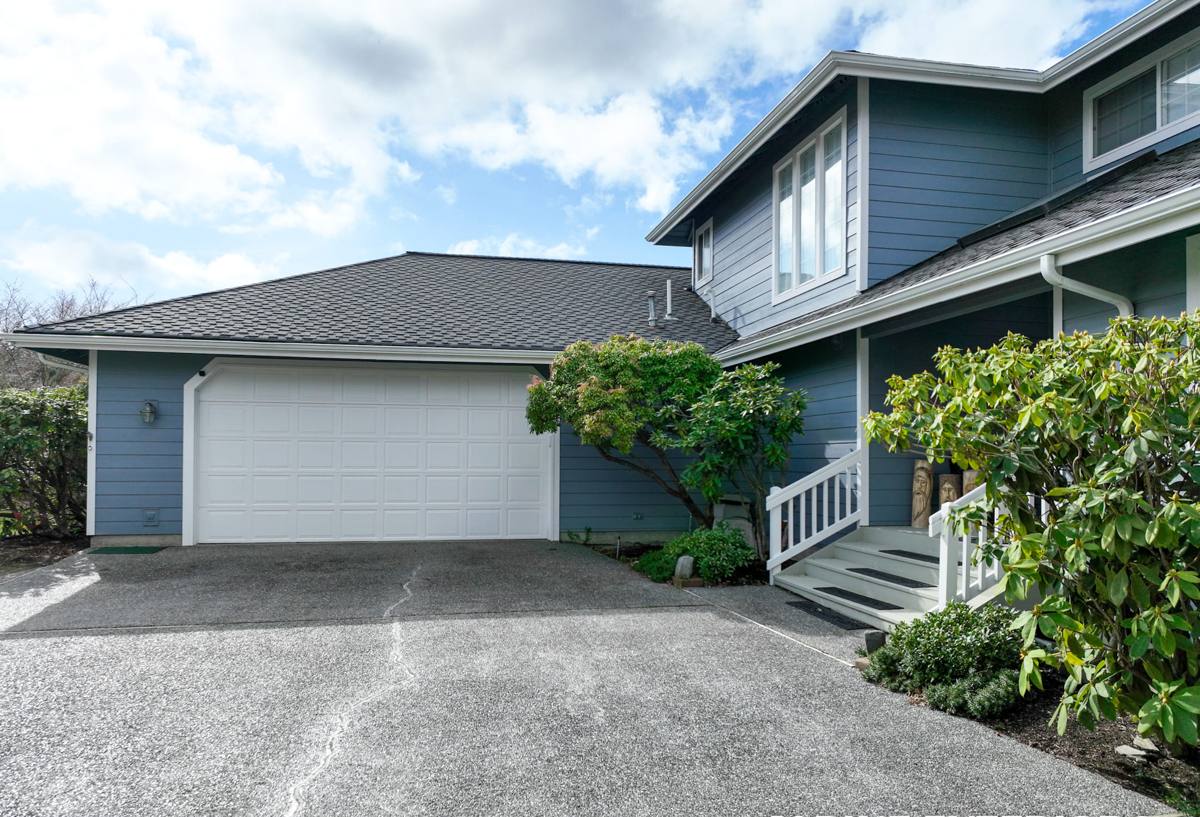
What Driving Rain, Salt Air, and a Long Moss Season Do to a Deck
Rain and Standing Moisture
Western Washington doesn't get hard freezes as often as inland climates, but it makes up for that with sheer volume and duration of rain. Wood decking absorbs water through end grain and fastener holes, swells, and eventually cups, splits, or rots from the inside out — often starting underneath, where nobody looks until a board fails. Composite boards absorb far less moisture, so the freeze-thaw cycling and slow saturation that ruin wood decking over a decade or two aren't the same threat.
Salt Air and Fasteners
Proximity to Samish Bay and the greater Salish Sea means the air here carries more salt than it does further inland. Salt-laden air accelerates corrosion on any exposed metal — deck screws, joist hangers, railing brackets. A correct composite deck installation accounts for this with corrosion-resistant fasteners and hardware rated for coastal exposure, not just whatever hardware is cheapest at the yard.
Shade, Moss, and Organic Growth
A lot of Alger properties sit under mature trees, which is great for privacy and terrible for a deck surface. Shade keeps wood damp longer after every rain, and that dampness is exactly what moss, algae, and mildew need to take hold. Once moss gets established on wood decking, it holds moisture against the board constantly, which speeds up rot underneath the growth. Composite surfaces still need occasional cleaning, but they don't provide the same organic material for moss to root into.
Composite vs. Wood vs. Other Decking Options
Every decking material is a set of trade-offs. Here's how the main options actually compare for a climate like this one, based on what we see in the field rather than marketing claims.
| Material | Moisture/Moss Resistance | Maintenance | Typical Lifespan | Upfront Cost |
|---|---|---|---|---|
| Cedar or pressure-treated wood | Absorbs moisture; needs sealing to resist moss and rot | Annual cleaning, periodic staining or sealing | 10-15 years before major repairs | Lowest |
| Capped composite | Resists moisture absorption; moss can grow on the surface but not into the board | Periodic washing; no staining or sealing | 25-30+ years, manufacturer-dependent | Mid to upper |
| Uncapped composite (older generation) | Some moisture absorption at cut edges; more prone to surface mold | More frequent cleaning than capped boards | 15-20 years | Mid |
| PVC/polymer decking | Essentially non-absorbent | Lowest of all options | 25-30+ years | Highest |
We don't install uncapped composite anymore as a standard recommendation for this area — it was a real improvement over wood when it came out, but capped composite and PVC products have since closed the price gap enough that the extra moisture resistance is usually worth it here.
What a Correct Composite Deck Installation Involves
Substructure First
The decking boards get the attention, but the framing underneath is what determines whether the deck lasts. Composite boards are heavier than wood and can be less forgiving of joist spacing that's too wide, so we build or verify the substructure to the board manufacturer's spacing requirements rather than reusing old wood-spec framing by default. Ledger board attachment and flashing at the house get checked or redone — a poorly flashed ledger is one of the most common sources of hidden water damage on any deck, composite or wood.
Fasteners, Flashing, and Airflow
Given the salt exposure in this area, we use fasteners and hardware rated for coastal or marine-grade corrosion resistance, not standard interior-grade hardware. Hidden fastener systems with grooved-edge boards give a cleaner look and eliminate the exposed screw heads that are usually the first thing to show rust streaks. We also make sure there's enough airflow underneath the deck — composite doesn't rot, but trapped moisture under a low deck can still cause problems for the framing, fasteners, and anything stored underneath.
Our Process for Alger Composite Decking Projects
- Site visit and honest assessment — we look at the existing structure (if there is one), sun and shade exposure, drainage, and how the deck will actually be used before recommending anything.
- Design and material selection — board tier, color, railing type, and layout, with real trade-offs explained rather than upsold.
- Written estimate — a clear scope and price before any work starts, no surprise change orders for things we should have caught up front.
- Permitting — decks of a certain size or height typically require a permit; we handle that process rather than leaving it to the homeowner to figure out.
- Tear-out and substructure work — removing failing wood decking (if applicable) and building or reinforcing the frame to spec.
- Installation — decking, fascia, railings, and stairs installed to manufacturer specification, not just "close enough."
- Final walkthrough — checking the finished deck with the homeowner and covering basic care before we leave.
Board Choices We Recommend, and Why
For most Alger homes, we point people toward capped composite decking as the default recommendation. The cap layer is what actually resists moisture, staining, and surface mold — it's the difference-maker versus older uncapped composite. Within capped composite, there's a range of tiers: mid-range boards with a simpler wood-grain texture and pattern, and premium boards with deeper embossing, wider color selection, and sometimes better fade resistance.
Darker board colors look good but run hotter in direct sun and can show pollen, dust, and mineral residue from rain more visibly than mid-tone colors — worth thinking about if the deck gets full afternoon sun. For heavily shaded, moss-prone areas, a color and texture that hides surface debris between cleanings is often the more practical choice than the color that looked best in a showroom sample.
A Realistic Maintenance Checklist for This Climate
Composite decking is lower-maintenance than wood, not maintenance-free. In a climate with this much rain and shade, a little regular upkeep goes a long way:
- Sweep off leaves, needles, and debris regularly — trapped organic matter holds moisture against the board surface and is the main food source for surface mold and algae.
- Wash the deck surface a couple of times a year with a soft-bristle brush and a mild soap-and-water or composite-safe cleaner — avoid high-pressure washing, which can damage the cap layer on some boards.
- Check that gaps between boards stay clear so water can drain through rather than pooling.
- Inspect railing posts, stair stringers, and any exposed metal hardware once a year for early signs of corrosion, especially on decks closer to open air with more direct wind exposure.
- Confirm gutters and downspouts near the deck are directing water away rather than dumping it onto or under the deck surface.
- Trim back overhanging branches where practical to reduce shade and debris buildup on chronically damp sections.
Cost Factors to Expect
We don't quote firm numbers without seeing the site, but these are the main variables that move the price on a composite deck project in this area:
| Factor | Why It Matters | Typical Impact |
|---|---|---|
| Deck size and shape | More square footage and complex angles mean more material and labor | Largest single cost driver |
| Substructure condition | A failing wood frame needs to be rebuilt, not just re-decked | Can add significantly if hidden rot is found |
| Board tier | Mid-range vs. premium capped composite pricing per square foot | Moderate impact |
| Railing type | Composite, metal cable, and glass railing systems price very differently | Moderate to significant |
| Height and stairs | Elevated decks need more structural work and code-required railings/stairs | Moderate impact |
| Permitting requirements | Larger or higher decks generally require permits and inspections | Adds time and a modest fee, not usually a major cost |
Why a Crew That Already Works in Alger Matters
A deck built to a generic spec sheet doesn't always hold up the same way in every climate. A crew that already works this part of Whatcom and Skagit County knows to spec corrosion-resistant hardware without being asked, knows which board colors and textures actually hold up under heavy shade and rain, and knows the local permitting process instead of learning it on your project. That local familiarity shows up in small decisions throughout a build — flashing details, fastener choice, drainage — that don't get noticed until they either hold up for decades or fail in five years.
It also matters for response time. If something needs a follow-up visit — a railing adjustment, a question about cleaning, a warranty issue with the board manufacturer — a contractor who's already local and already knows your project gets it handled faster than one who has to schedule a special trip out to Alger.
If you're weighing composite decking for a home in Alger, we're glad to come take a look, walk the site with you, and give you a straight answer on what it would take — no pressure, no hard sell. Use the form below to request a free estimate.