 Sudden Valley Siding
 Roofing Built for Yew Street, Not Just Any Roof
Yew Street sits inside a stretch of Whatcom County where the weather doesn't let a roof coast. Homes here deal with driving rain off Lake Whatcom, salt-laden air moving up from the Sound on stormy days, and shade from mature conifers that keeps roof surfaces damp long after the rain stops. That combination is exactly what wears out a shingle roof faster than the manufacturer's warranty assumes. A roofing job done right for this street isn't the same job you'd spec for a dry, sun-exposed lot on the other side of the county line, and treating it like a generic install is how homeowners end up with premature leaks and moss damage inside ten years instead of twenty-five.
This page is about one thing: asphalt shingle roofing done correctly for Yew Street homes, from the deck up. Not a general roofing overview — the specifics that matter for this exact climate and this exact neighborhood.
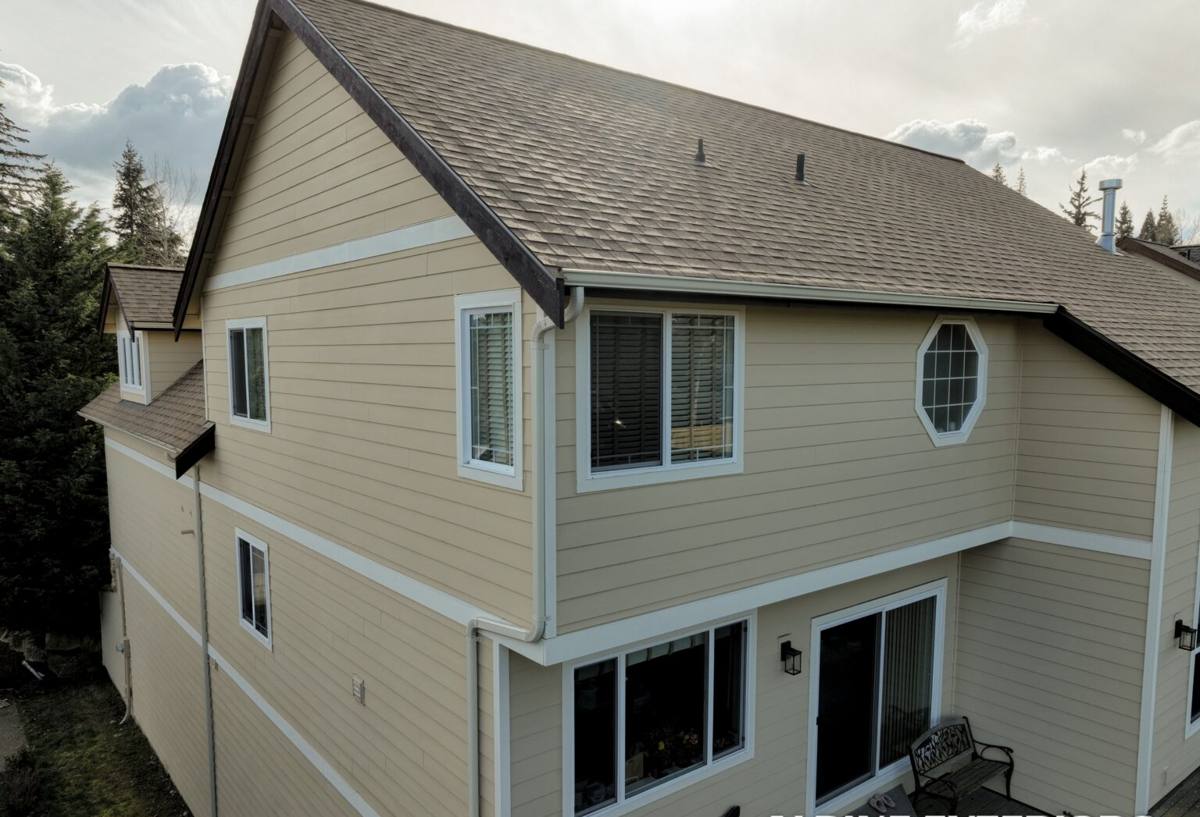
What This Climate Actually Does to a Roof
Three forces do most of the damage on roofs in and around Sudden Valley, and each one calls for a different response in how the roof is built.
Moss and Shade
Tree cover keeps north-facing and shaded slopes wet for days after a storm passes. Moss doesn't just sit on top of shingles — its root structure works into the granule layer and lifts shingle edges, which is where water finds its way underneath. A roof with poor ventilation or tight shingle spacing in shaded areas will grow moss faster than one built with airflow and drainage in mind from the start.
Driving Rain
Wind-driven rain doesn't fall straight down — it gets pushed sideways under shingle tabs, into valleys, and around flashing that isn't sealed properly. A roof that would hold up fine in a calm, dry climate can leak here simply because the underlayment and flashing details weren't built for horizontal water.
Salt Air and Metal Corrosion
Salt in the air accelerates corrosion on exposed metal — flashing, fasteners, and vent stacks age faster than they would inland. Standard galvanized fasteners and cheap flashing show rust and failure well ahead of schedule in this environment, which is why the grade of metal used matters as much as the shingle brand.
What a Correct Asphalt Shingle Job Involves
Asphalt shingle roofing looks simple from the ground, but most leaks trace back to shortcuts in the layers you never see. A correct job on a Yew Street home includes:
- Full tear-off to bare decking — never a layover on an existing roof, which traps moisture and hides rot
- Decking inspection and repair of any soft, delaminated, or water-damaged sheathing before anything new goes down
- A synthetic or high-quality felt underlayment across the full roof, not just spot coverage
- Ice-and-water shield membrane at eaves, valleys, and roof penetrations — the spots where wind-driven rain gets in first
- Proper starter strip and shingle nailing pattern matched to the manufacturer's high-wind spec
- Corrosion-resistant flashing at every chimney, wall intersection, skylight, and vent
- Balanced intake and exhaust ventilation so the attic can actually dry out between storms
Skip any one of these and the roof may look fine for a year or two while the real problem builds underneath. This is where most of the "why does my new roof already leak" calls come from — not from bad shingles, but from a rushed install underneath them.
Choosing the Right Shingle for This Street
Not every asphalt shingle is built the same, and the differences matter more in a wet, shaded climate than they do somewhere dry. Here's how the common options compare for a home like the ones on Yew Street:
| Shingle Type | Typical Lifespan Here | Moisture & Moss Resistance | Best Fit |
|---|---|---|---|
| 3-Tab Asphalt | 15-20 years | Lower — flatter profile holds moisture longer | Budget-driven projects, less shaded roofs |
| Architectural (Dimensional) Asphalt | 25-30 years | Better drainage from the layered profile | Most Yew Street homes, especially shaded lots |
| Algae-Resistant Asphalt | 25-30 years | Copper- or zinc-infused granules resist streaking and moss growth | Heavily shaded roofs and north slopes near the tree line |
For most homes on this street, an architectural shingle with algae-resistant granules is the honest recommendation — the upfront cost difference over standard 3-tab is modest compared to the years of service life and the reduced moss maintenance you get back.
Our Process for Yew Street Roofing Projects
- On-site inspection. We walk the roof and attic, check the decking, existing ventilation, and flashing condition before quoting anything.
- Honest estimate. You get a written scope covering tear-off, decking repair allowance, underlayment, shingle class, and flashing — no vague line items.
- Material selection. We walk through shingle options with the moss and moisture exposure of your specific lot in mind, not a one-size answer.
- Scheduling around weather. Roofing in this region means working around rain windows — we plan install days to keep decking protected and dry.
- Tear-off and deck check. Old roofing comes off, decking gets inspected board by board, and any soft spots are repaired before underlayment goes down.
- Underlayment and flashing. Ice-and-water membrane at vulnerable points, full underlayment coverage, and corrosion-resistant flashing throughout.
- Shingle installation. Installed to manufacturer spec for wind exposure, with attention to valleys, ridges, and penetrations.
- Ventilation check. We confirm intake and exhaust airflow is balanced so the attic can dry properly between storms.
- Cleanup and walkthrough. Magnetic sweep for stray nails, full debris haul-away, and a walkthrough so you know exactly what was done.
Moss and Long-Term Roof Care
A well-built roof still needs some maintenance in a climate with a long moss season. The goal isn't a moss-free roof forever — it's catching growth before it lifts shingles or clogs drainage. A few habits go a long way:
- Keep gutters and valleys clear of needles and debris, especially heading into fall
- Have moss physically removed (not just chemically treated) from shaded slopes every year or two
- Trim back overhanging branches where practical to reduce shade and debris buildup
- Watch for granule buildup in gutters — that's shingle wear, and heavier buildup means the roof is aging faster than expected
- Schedule a roof check after any major windstorm, not just when a leak shows up inside
Signs a Roof Needs Attention
- Moss visibly lifting shingle edges rather than sitting flat on the surface
- Curling, cupping, or cracked shingles, especially on south- or west-facing slopes
- Rust streaking or gaps at flashing around chimneys and vents
- Daylight or damp insulation visible in the attic
- Missing or lifted shingles after a windstorm
Cost Factors on a Real Yew Street Roof
Every roof is priced from its own specifics, but the factors that move the number the most on homes in this area are consistent:
| Factor | Why It Matters |
|---|---|
| Roof pitch and access | Steeper roofs and limited access (trees, tight driveways) add labor and safety measures |
| Number of existing layers | Tear-off of multiple old layers takes more time and disposal cost than a single-layer roof |
| Decking condition | Rotted or delaminated sheathing found during tear-off adds material and labor to replace |
| Shingle class chosen | Architectural and algae-resistant shingles cost more upfront than 3-tab but last longer |
| Flashing and valley complexity | Roofs with multiple valleys, skylights, or chimneys need more detail work and metal |
| Ventilation upgrades | Adding proper intake/exhaust venting where none exists is an added but worthwhile cost |
We break these out in every estimate so you can see exactly what's driving the price, rather than one lump number.
Why a Crew That Already Works This Area Matters
Roofing crews unfamiliar with this part of Whatcom County tend to underbuild for the moisture and moss exposure, because they're used to specs that work fine in drier climates. A crew that already works Sudden Valley and the surrounding streets knows which slopes hold moss longest, which flashing details actually need upgrading versus matching to code minimum, and how to schedule around this region's rain patterns instead of losing days to it. Many homes in this community are also part of an HOA or architectural review process for exterior changes — a local crew is used to that step and can help you plan around it rather than being surprised by it partway through a project.
That local familiarity shows up in fewer callbacks, not in a sales pitch. It's the difference between a roof that's technically installed to code and one that's actually built for what this street sees every winter.
Get a Straight Answer on Your Roof
If you're not sure whether your roof needs a full replacement, a repair, or just a maintenance visit, the easiest way to find out is to have it looked at. We offer free, no-pressure estimates for Yew Street homeowners — walk the roof with us, get an honest read on its condition, and get a written quote broken down by what's actually driving the cost. Use the form below to get started.