 Sudden Valley Siding
 Why South Hill Windows Need to Be Chosen Differently
South Hill sits inside a stretch of Whatcom County that takes a real beating from the weather nine months out of the year. Homes here deal with salt-laden air drifting in off the water, driving rain that hits siding and window frames sideways instead of straight down, and a moss season that seems to stretch a little longer every year. None of that is dramatic on its own, but stacked together over a decade or two, it's exactly the combination that finds the weak point in a window — the seal that was never quite right, the flashing that was skipped to save time, the frame material that looks fine in the showroom but can't handle constant damp.
A window that would be perfectly adequate in a dry inland climate can underperform here within a few years. That's not a knock on the product; it's a mismatch between the product and the environment it's asked to survive in. When we talk to South Hill homeowners about window replacement, the conversation almost always starts with energy performance, but it ends up being just as much about moisture management, because in this part of Sudden Valley the two problems are connected. A window that leaks air usually isn't far from a window that will eventually leak water too.
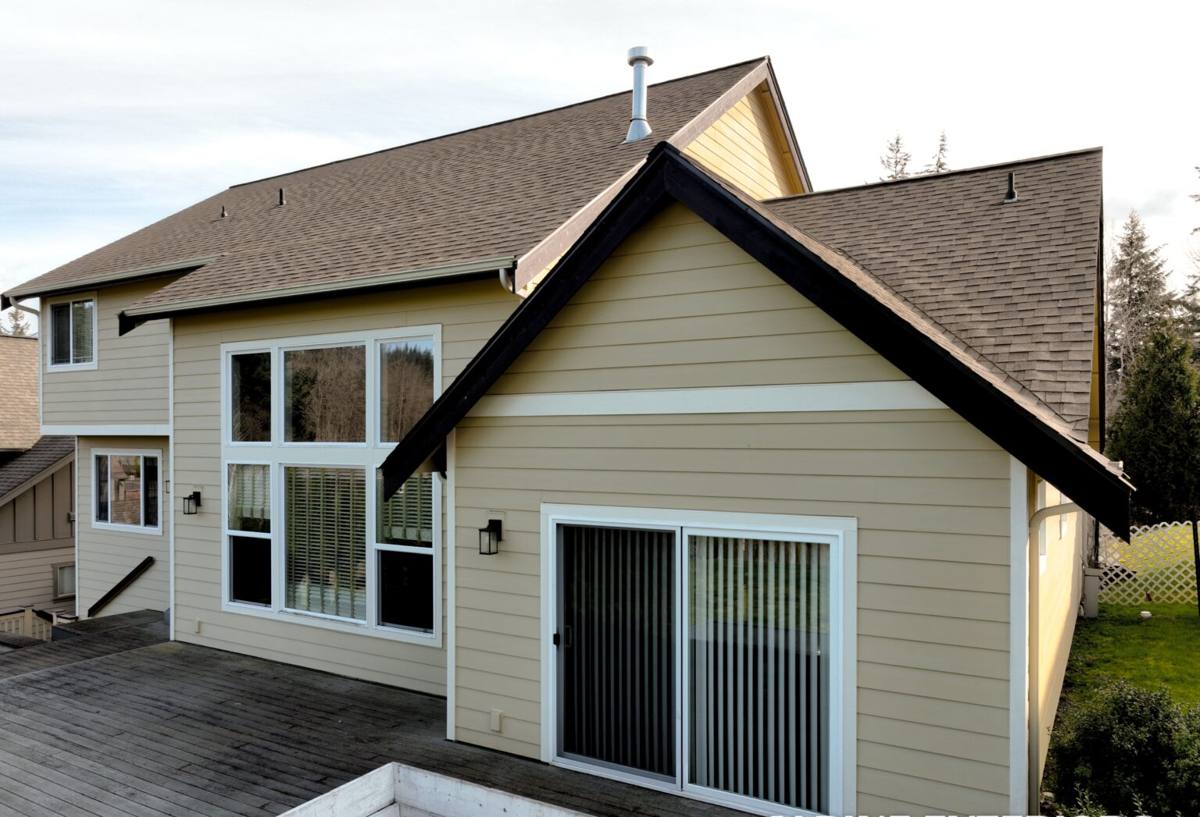
What "Energy-Efficient" Actually Means Here
"Energy-efficient" gets used loosely in this industry, so it's worth being specific about what actually matters for a home in this climate.
U-Factor: How Well the Window Holds Heat
U-factor measures how much heat passes through the window assembly — frame, glass, and spacer all together. Lower is better. In a climate with as many gray, damp, chilly months as this one, U-factor is usually the single most important number on the label, because the bigger cost driver for most South Hill homes is heat loss, not solar overheating.
Solar Heat Gain Coefficient (SHGC)
SHGC measures how much solar heat comes through the glass. It matters most on south- and west-facing walls that catch direct sun. In the Pacific Northwest we generally want to keep some solar gain rather than block it entirely — free heat on a clear winter day is worth having — so this number needs to be balanced against U-factor rather than minimized on its own.
Air Infiltration
This is the number that gets overlooked most often, and it's the one most directly tied to driving rain. A window with poor air infiltration ratings isn't just drafty — it's also more likely to let wind-driven moisture work its way in around the sash. In a spot that gets sideways rain as often as this stretch of Whatcom County does, air infiltration performance deserves as much attention as the insulating glass package.
Frame Material: The Decision That Matters Most Long-Term
The glass package gets most of the marketing attention, but frame material is usually what determines how a window performs ten and twenty years out. Here's how the common options stack up for a damp, salt-exposed, moss-prone climate like this one.
| Frame Material | Moisture Behavior | Maintenance | Typical Lifespan |
|---|---|---|---|
| Vinyl | Won't rot; can warp slightly with big temperature swings | Low — occasional cleaning | 20–30 years |
| Fiberglass | Excellent — dimensionally stable, doesn't absorb moisture | Low | 30–40+ years |
| Wood (unclad) | Poor without diligent upkeep — the highest risk in this climate | High — regular repainting/sealing | Varies widely with maintenance |
| Wood-clad (aluminum or vinyl exterior) | Good on the exterior face; interior wood still needs monitoring at joints | Moderate | 25–35 years |
We don't rule out wood-clad or even unclad wood for homeowners who want that look and understand the upkeep involved — that's a legitimate choice for the right owner. But as a professional standard, we steer most South Hill replacement projects toward vinyl or fiberglass because they remove moisture absorption from the list of things that can go wrong. That's fewer callbacks, fewer surprises, and a frame that doesn't care whether the rain came in straight or sideways.
What a Correct Installation Actually Involves
The window unit itself is maybe half the job. The other half — the part that determines whether the window still performs well in fifteen years — is how it's integrated into the wall.
Sill Pan and Drainage
Every replacement opening should get a sloped sill pan that directs any water that does get past the exterior seal back outside, rather than letting it pool against the sill and work its way into the framing. This is a step that's easy to skip on a fast retrofit and impossible to check once trim is back on, which is exactly why it matters who's doing the work.
Flashing That Actually Overlaps Correctly
Flashing tape and building paper need to be layered so that water is always shingled downward and outward — never trapped behind a layer that dead-ends against the frame. On a home exposed to regular driving rain, a flashing detail that's "close enough" eventually shows up as a stain on the interior sill or soft trim a few years down the road.
Sealing and Insulation Around the Frame
The gap between the rough opening and the new window frame needs to be filled with a material that stays flexible and doesn't compress or gap over time — not just caulked shut on the visible exterior seam. A frame that's air-sealed but not properly insulated around its perimeter will still show a cold ring around the window on a thermal scan, even with a great U-factor glass package.
What Salt Air and Moss Season Actually Do to Windows
Two climate factors show up repeatedly on older South Hill homes we look at.
Salt air is corrosive to unprotected metal hardware — hinges, locks, and older aluminum frames in particular. It doesn't happen overnight, but over enough years it pits finishes and stiffens moving parts, which is one more reason hardware quality and finish matter as much as the glass spec.
Moss and organic growth thrive in the shaded, damp conditions common through the fall, winter, and much of spring here. On windows, that usually shows up as green buildup in exterior tracks and sills that holds moisture against the frame far longer than it would otherwise sit there. Left alone for years, that constant damp exposure is what eventually breaks down seals and finishes that would have lasted much longer in a drier spot.
Our Process, Start to Finish
- On-site assessment. We look at existing window condition, framing, and any signs of past moisture intrusion before recommending anything.
- Product and performance discussion. We walk through frame material, glass package, and U-factor/SHGC tradeoffs based on which walls of the home actually need what.
- Written estimate. Clear scope, clear pricing, no pressure to decide on the spot.
- Removal and opening prep. Old units come out carefully; the opening is inspected for hidden rot or damage before anything new goes in.
- Sill pan, flashing, and install. The window goes in plumb, level, and square, with drainage and flashing details done correctly — not just caulked and trimmed.
- Interior and exterior finish work. Trim, sealing, and cleanup so the job looks finished, not just functional.
- Final walkthrough. We check operation, sealing, and answer any questions before we call it done.
Repair, Replace, or Wait? A Practical Checklist
Not every older window needs to be replaced immediately. These are the signs that tip the decision toward replacement rather than repair:
- Visible fog or moisture trapped between panes — the seal has failed and can't be repaired
- Soft or discolored wood at the sill, especially on walls that take direct rain
- Windows that are noticeably drafty even when fully latched
- Frames that no longer open, close, or lock smoothly
- Persistent condensation on the interior glass during cold months
- Visible daylight or gaps around the frame when viewed from outside
- Moss or green buildup that keeps returning in the tracks no matter how often it's cleaned
If you're only seeing one or two of these on an otherwise sound window, a repair or resealing may be the more sensible near-term move. When several show up together, or on multiple windows on the same exposure, replacement is usually the better long-term value.
Cost Factors for a South Hill Window Project
Every home is different, so we don't publish flat per-window pricing — opening size, frame material, glass package, and how much of the existing framing needs repair all move the number. Broadly, these are the factors that matter most:
| Factor | Effect on Cost |
|---|---|
| Frame material (vinyl vs. fiberglass vs. wood-clad) | Moderate to significant — fiberglass and wood-clad run higher than vinyl |
| Glass package (double-pane vs. triple-pane, Low-E coatings) | Moderate — better performance costs more upfront, less over time in energy use |
| Number and size of openings | Direct, straightforward scaling |
| Hidden framing repair once old units are removed | Variable — can't be fully priced until the opening is open |
| Full-frame replacement vs. insert (retrofit into existing frame) | Full-frame costs more but resets flashing and sill details completely |
That last line matters more than it looks. An insert replacement can be the right call on a frame that's still sound, but it reuses the existing sill and flashing — so it's only a good option if that framing has held up well. On a wall that's taken years of direct, driving rain, we'll often recommend a full-frame replacement instead, even though it costs more, because it's the only way to actually correct the drainage details rather than build a new window on top of an old problem.
Why a Crew That Already Works in South Hill Makes a Difference
Window performance in this climate isn't just about the product — it's about installation habits built around what actually happens here. A crew that works across dry, low-wind regions may install a window correctly by a generic standard and still miss the sill pan detail or flashing overlap that specifically matters on a home taking wind-driven rain off the lake basin. Familiarity with how South Hill and the broader Sudden Valley area sit relative to prevailing weather — which walls take the worst of it, where moss builds up fastest, where salt air does the most damage to hardware — comes from doing this work here repeatedly, not from a manufacturer's install manual alone.
There's also the practical side: a local crew is easier to reach if a question comes up after the job, easier to have back out for a warranty check, and has a reputation in the neighborhood worth protecting. That accountability shows up in the quality of the work before a problem ever happens, not just in how it gets handled afterward.
If you're weighing whether it's time to replace windows on a South Hill home, we're happy to take a look and give you a straightforward, no-pressure estimate — just fill out the form below.