 Sudden Valley Siding
 What Barkley's Climate Actually Does to Siding
Barkley sits in the stretch of Whatcom County that takes weather from two directions at once: wet, wind-driven storms rolling off the water, and long stretches of overcast, shaded days that never quite dry a wall out. Add the salt air that reaches inland through the county and the moss and algae that thrive under the fir and cedar canopy common around Sudden Valley, and you get a set of conditions that's genuinely harder on siding than most of the country deals with. This isn't a page about siding in general — it's about what siding replacement needs to accomplish specifically for a house sitting in this pocket of the county.
Homes here rarely fail from one dramatic event. They fail slowly, from moisture that gets behind the cladding and never fully leaves, from fasteners that corrode a little every year, and from a north or west wall that stays damp long after the rest of the house has dried. A replacement done right accounts for all three. A replacement done to save money on materials usually doesn't, and the homeowner finds out a few winters later.
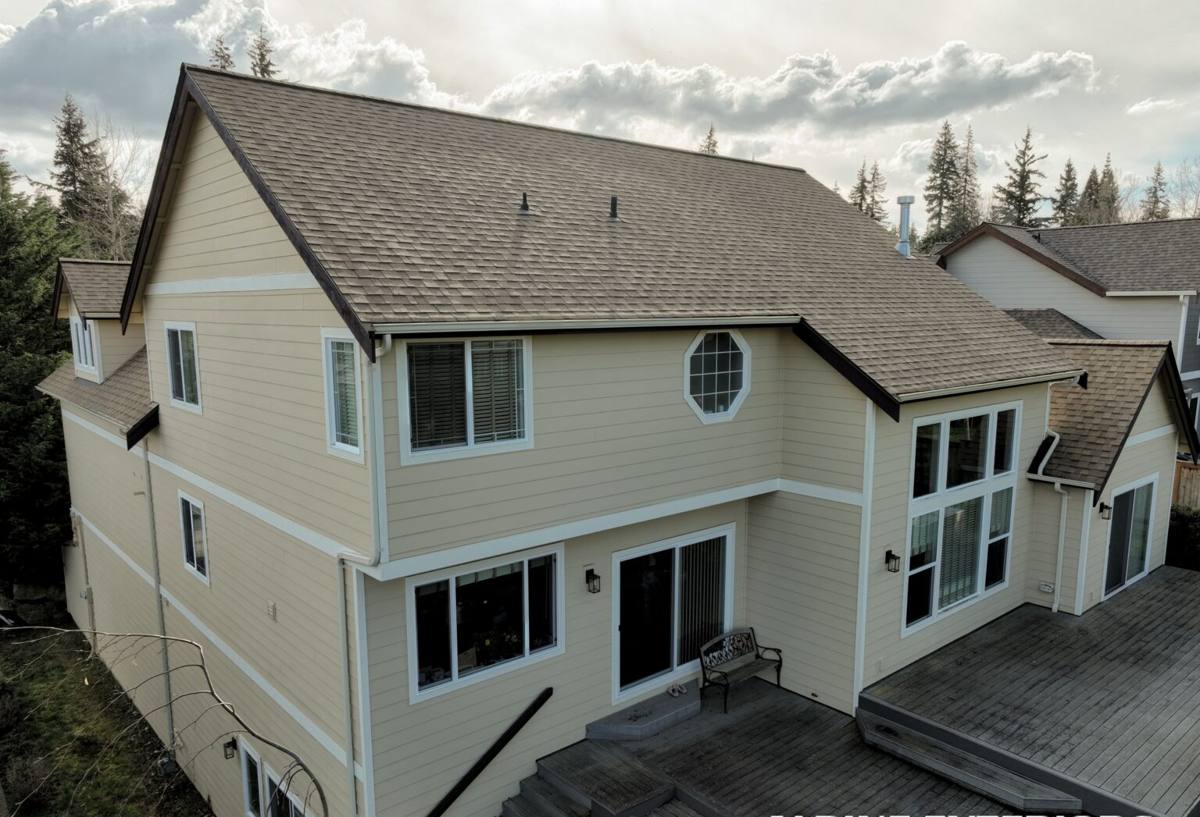
The Three Things Working Against Your Siding Here
Salt Air and Slow Corrosion
Whatcom County's proximity to the water means airborne salt is a real factor, even a few miles inland. Salt accelerates corrosion in fasteners, flashing, and any hardware that isn't rated for it, and it breaks down cheaper paint finishes faster than manufacturers' glossy brochures suggest. Over a decade or two, that shows up as rust streaking through paint, fastener heads popping, and trim that looks tired years before it should.
Driving Rain and Wind-Driven Moisture
Rain that falls straight down is easy on a wall. Rain that comes in sideways during a windstorm is not — it gets pushed up under laps, around poorly flashed windows, and into any gap a lazier installation left behind. Whatcom County gets its share of both, and Barkley's exposure to weather moving in off the water means driving rain isn't an occasional event, it's a seasonal pattern the siding has to be built to shed.
The Long Moss Season
Shaded, tree-covered lots are part of what makes this area attractive, and they're also what keeps north- and west-facing walls damp for months at a time. Moss and algae need exactly that: shade, moisture, and time. Once they take hold on a wall, they hold water against the surface long after the sun would otherwise have dried it, which is how a moss problem quietly becomes a rot problem underneath.
Signs a Barkley Home Needs Replacement, Not Another Repair
Repair makes sense when the damage is isolated and the material underneath is sound. Replacement is the honest answer once the siding itself — or what's happening behind it — has become the problem. Look for:
- Soft or spongy spots when you press on the siding, especially near the bottom courses or under windows
- Paint that's failing evenly across whole walls rather than in one patch
- Persistent moss or algae growth that comes back within a season of cleaning
- Visible warping, cupping, or separation at the lap joints
- A musty smell or discoloration on interior walls that back up to exterior siding
- Fastener heads that are rusting, backing out, or leaving streaks down the face of the siding
- Siding that's original to a home built more than 20–25 years ago, particularly if it's untreated wood, older hardboard, or a low-grade composite
Any one of these on its own might be a repair. Several at once, especially on the walls that face prevailing weather, usually means the whole assembly is due.
What a Correct Siding Replacement Involves
Tear-Off and What's Underneath
Replacement starts with full removal of the old siding, not installation over it. That's the only way to actually see the sheathing, framing, and water-resistive barrier underneath, which matters enormously on a house that's spent years absorbing driving rain. Soft or rotted sheathing gets replaced before anything new goes up — covering it over just hides the problem for the next owner to find.
Water-Resistive Barrier and Flashing
This layer, not the siding face itself, is what actually keeps a wall dry. Correct installation means a continuous, properly lapped weather-resistive barrier, flashing integrated at every window, door, and horizontal trim break, and careful attention to the transitions where most leaks actually start. Given how much wind-driven rain this area sees, skipping or rushing this step is where a lot of premature failures trace back to.
Fastening and Installation to Spec
Fiber cement siding has a manufacturer-specified fastening pattern, clearance requirements, and gapping tolerance for a reason — get those wrong and you lose the moisture and expansion performance the product was engineered to deliver. That includes maintaining proper clearance from grade, decks, and roof lines, all of which matter more in a climate that stays damp for months than they would somewhere drier.
Trim, Caulking, and Finish Details
The small details — how trim is sealed, which caulk is used where, how corners are finished — are what separate a job that looks good for one summer from one that holds up through a decade of Whatcom County winters. This is also where corrosion-resistant fasteners and hardware earn their keep given the salt air moving through the area.
Why We Install Only James Hardie Fiber Cement
We get asked why we don't offer vinyl, LP SmartSide, cedar, or other fiber cement brands. The honest answer is that after years of replacing siding in this exact climate, we standardized on one product because it's the one that consistently holds up to what Barkley and the rest of Sudden Valley throw at it.
| Material | How it handles this climate | Where it falls short |
|---|---|---|
| Vinyl siding | Won't rot, low upfront cost | Warps and fades in temperature swings, seams open under wind, not fire-rated, looks visibly like vinyl |
| Cedar | Natural look many homeowners want | Needs ongoing staining/sealing to survive moss season, absorbs moisture, high long-term maintenance cost |
| LP SmartSide (engineered wood) | Cheaper than fiber cement, easy to install | Wood-based core is vulnerable if moisture gets past the finish; edge sealing is critical and easy to miss |
| Other fiber cement brands (Cemplank, Allura) | Similar base material to Hardie, non-combustible | Less regionally engineered finish system and a thinner track record in wet marine climates |
| James Hardie fiber cement | Engineered moisture resistance, factory-baked finish, non-combustible, proven in wet coastal climates | Higher material cost, heavier, requires correct fastening and installation to perform as designed |
None of the alternatives are junk — vinyl is genuinely inexpensive, cedar genuinely looks good, engineered wood genuinely installs fast. But every one of them asks the homeowner to accept a trade-off that shows up specifically in a climate like this one: more maintenance, more moisture risk, or a shorter realistic lifespan before it needs attention again. Fiber cement removes most of that trade-off, and Hardie is the version of it we trust enough to put our name behind.
What the Hardie System Gets Right for This Area
James Hardie engineers its plank and panel products for specific regional conditions rather than shipping one formulation nationwide, which matters in a climate defined by sustained moisture rather than heat or dryness. Its ColorPlus finish is baked on at the factory under conditions a job-site paint job can't replicate, which is a real advantage against the fading and chalking that salt air and UV cause over time. It's also non-combustible, which is worth something even on the wetter side of the state as wildfire smoke and ember exposure become a bigger part of the conversation statewide. And it carries a strong, transferable warranty — useful if you ever sell the home, since a documented warranty on the siding is something buyers and their inspectors notice.
Our Siding Replacement Process
1. On-Site Assessment
We walk the whole exterior, not just the wall you called about. That includes checking for soft sheathing, moisture trapped behind existing siding, and any walls where moss or algae point to a bigger drainage or shading issue than the surface suggests.
2. Tear-Off and Prep
Old siding comes off, sheathing gets inspected and repaired where needed, and the water-resistive barrier and flashing go in correctly before a single piece of new siding is installed. This is the step that's easiest to shortcut and the one that determines how the wall performs in ten years, not ten months.
3. Installation to Manufacturer Spec
Hardie siding goes up following the fastening schedule, clearances, and joint treatment the manufacturer specifies for our region — not a generalized approach that happens to work in a drier climate.
4. Final Walk-Through
We go over the finished work with you, cover care and cleaning (especially for keeping moss from re-establishing on shaded walls), and make sure warranty registration is handled.
What Siding Replacement Costs in Barkley
Every home is different, but the factors that move the price are consistent. We'll always give you an exact number after seeing the house, but this is what drives that number up or down:
| Factor | Why it matters |
|---|---|
| Total square footage of wall area | The most direct driver of material and labor cost |
| Condition of the sheathing underneath | Rot or water damage found during tear-off adds repair scope |
| Number of stories and access | Steep lots and multi-story walls, common around Sudden Valley, add scaffolding and labor time |
| Trim complexity and window/door count | More transitions mean more flashing and finish work |
| Siding profile chosen | Lap width, shingle-style panels, and board-and-batten each price differently |
| Existing siding removal | Some materials (like old cedar or hardboard) are more labor-intensive to strip than others |
Be cautious of a bid that's dramatically lower than the others for the same square footage — it usually means something is being skipped, most often the flashing and sheathing repair that don't show up until years later.
Why It Matters That We Already Work Barkley and Sudden Valley
A lot of siding contractors will drive anywhere for a job. Fewer have actually worked enough homes in this specific pocket of Whatcom County to know which walls typically show moss first, which lots hold moisture longest, and how local weather patterns actually behave against a house rather than in the abstract. Many properties in and around Sudden Valley also fall under HOA or architectural review guidelines, and knowing that process ahead of time — rather than discovering it mid-project — keeps a replacement on schedule instead of stalled waiting on approvals nobody planned for.
There's also a simple accountability argument: a crew that's still working this neighborhood next year, and the year after, has every reason to install your siding correctly the first time. We're not passing through.
If your Barkley home is due for new siding, we're happy to take a look and give you a straight, no-pressure estimate — what we'd recommend, what it would cost, and why. Use the form below to get started.