 Sudden Valley Siding
 Why Fairhaven Roofs Wear Out Faster Than the National Average
Fairhaven sits close enough to the water that salt-laden air is part of daily life, and that changes how a roof ages. Add Whatcom County's long wet season and the shade from mature evergreens that many Fairhaven properties sit under, and you have three separate forces working against a roof at the same time: corrosion, saturation, and organic growth. A roof system built for a dry inland climate simply doesn't hold up the same way here, and a lot of the "why is my roof failing early" calls we get trace back to a roof that was installed correctly for a different climate.
Salt Air and Metal Components
Salt air accelerates corrosion on anything metal — flashing, fasteners, vent caps, gutter hardware. Standard galvanized fasteners and untreated flashing can start showing rust streaks and pitting years before they would inland. This matters most at the details: a roof is only as good as its flashing, and flashing failure is one of the top causes of hidden leaks.
Driving Rain and Wind-Driven Moisture
Whatcom County storms don't always come straight down. Wind-driven rain gets pushed sideways and upward under shingle tabs, around chimney flashing, and into any gap in the underlayment. A roof that would perform fine in calm rain can leak in a sideways storm if the underlayment and flashing details weren't built with that in mind.
Moss, Shade, and a Long Wet Season
Northwest Washington's moss season runs long — often eight months or more of the conditions moss needs: shade, moisture, and mild temperatures. Moss holds water against the roof surface, works its way under shingle edges, and lifts granules and shingle tabs as it grows. Left unaddressed for a few seasons, moss growth alone can shorten a roof's usable life by years.
Signs a Fairhaven Roof Needs Replacement, Not Another Repair
Repairs make sense for isolated damage. Replacement makes sense once the roof's overall condition — not just one spot — is compromised. Here's how we tell the difference during an inspection:
- Granules collecting in gutters or at downspout discharge points, indicating the shingles are wearing down to the mat
- Moss or algae covering large areas rather than isolated patches, especially on north-facing or shaded slopes
- Shingles that are cupping, curling, or cracking across multiple sections of the roof, not just one
- Soft spots or sagging when walked, which points to deck damage underneath
- Daylight visible through the roof deck from the attic, or water stains on multiple rafters
- Repeated leaks in different locations after prior patch repairs
- A roof at or past 20–25 years old (asphalt) even if it looks okay from the ground
What a Correct Roof Replacement Actually Involves
"Replace the roof" covers a lot of different work quality, and in a coastal, high-moisture climate the details matter more than the shingle brand on the wrapper. A correct job includes several steps that are easy to skip and hard to see once the roof is finished.
Full Tear-Off and Deck Inspection
We remove the old roofing down to the deck rather than layering over it. This lets us actually see the plywood or plank sheathing underneath, which is the only way to catch rot, delamination, or soft spots caused by long-term moisture intrusion — problems that are common on older Whatcom County homes and completely invisible from a re-layer.
Underlayment Built for This Climate
Given how much wind-driven rain and standing moisture this area sees, we treat underlayment as a real moisture barrier, not a formality. That means ice-and-water shield or a comparable self-adhered membrane at eaves, valleys, and any low-slope transitions where water lingers longest, with synthetic underlayment across the rest of the field.
Flashing, Vents, and Fasteners That Handle Salt Air
New flashing at every chimney, skylight, wall intersection, and roof-to-roof transition — never reused. We use fasteners and metal components rated for coastal exposure rather than the cheapest galvanized option, because that's where early corrosion shows up first.
Ventilation That Actually Balances
Proper intake and exhaust ventilation keeps the attic dry and temperature-stable, which slows moss regrowth on the roof surface and prevents condensation from forming on the underside of the deck. A lot of older Fairhaven-area homes have exhaust vents but little to no intake, which undercuts the whole system.
Choosing a Roofing Material for a Coastal, Moss-Prone Climate
There's no single "best" roofing material for every home — it depends on budget, roof pitch, and how much long-term maintenance you want to take on. Here's how the common options actually perform under Fairhaven's conditions:
| Material | Salt Air / Moisture Behavior | Moss Resistance | Typical Lifespan | Ongoing Maintenance |
|---|---|---|---|---|
| Architectural asphalt shingle | Good with quality flashing and fasteners; the industry standard for this region | Moderate — benefits from copper/zinc strips or periodic treatment | 25–30 years | Low to moderate |
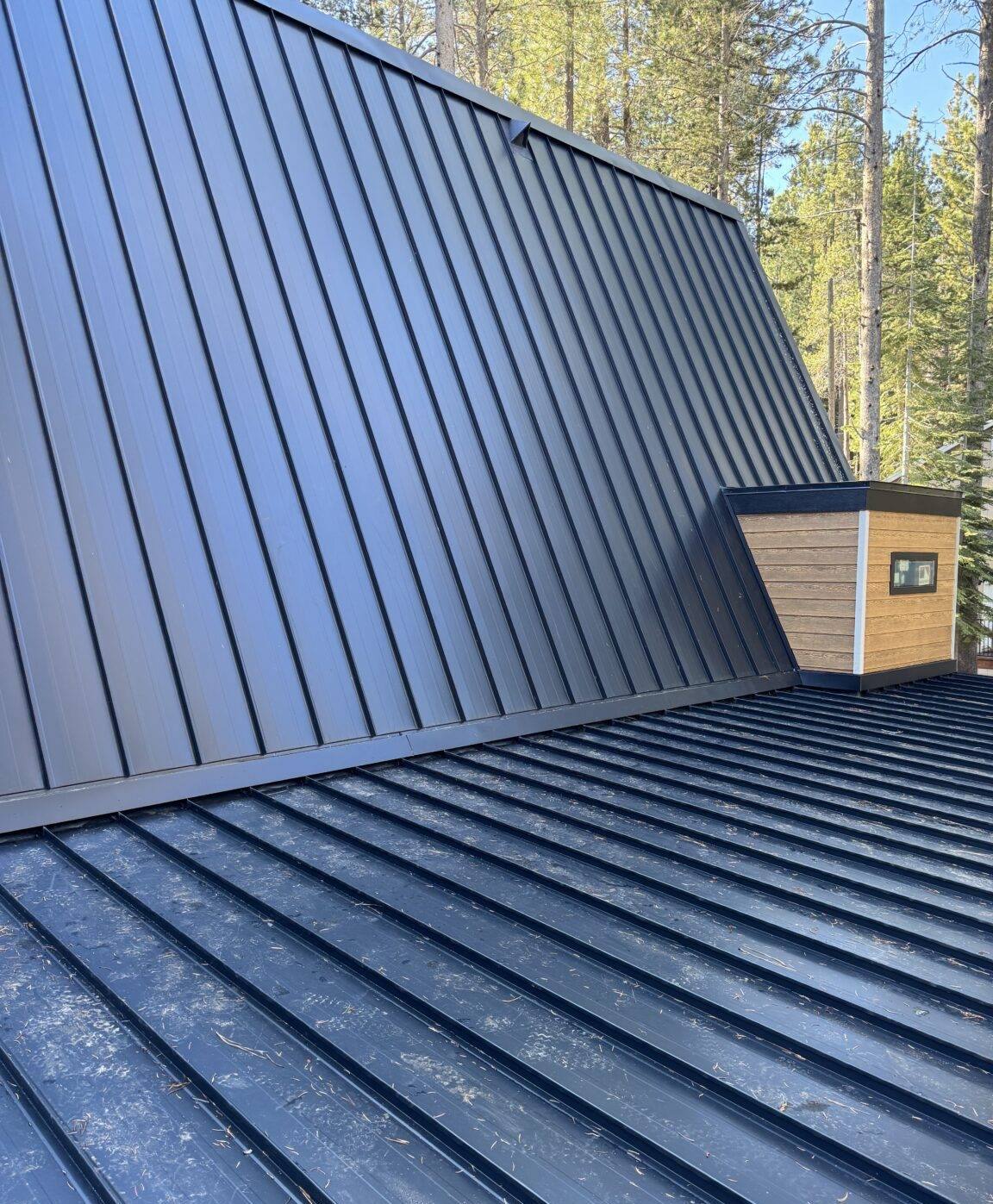
| Standing seam metal | Very good when finished/fastener system is coastal-rated | High — sheds moisture, little surface for moss to grip | 40–50+ years | Low |
| Cedar shake | Requires diligent maintenance in wet, shaded conditions | Low without regular cleaning and treatment | 20–30 years with upkeep | High |
| Synthetic/composite shake | Good — doesn't absorb moisture like natural wood | Moderate to high | 30–50 years | Low |
We install cedar shake when a homeowner wants that look and understands the maintenance commitment, but as a professional standard we're upfront that natural wood shake in a shaded, high-moisture setting needs real upkeep — cleaning, treatment, and prompt repair — or moss and moisture will shorten its life well below its potential. That's a maintenance-and-moisture trade-off, not a knock on the material itself.
Our Roof Replacement Process
- Inspection and estimate: We walk the roof, check the attic from inside when accessible, and document deck condition, flashing points, and ventilation before quoting anything.
- Material selection: We go over options and trade-offs in plain terms — cost, lifespan, and what upkeep each choice actually requires in this climate.
- Scheduling around weather: Roofing in the Pacific Northwest means watching the forecast closely; we schedule tear-off in windows that keep your home protected and avoid leaving a deck exposed overnight.
- Tear-off and deck repair: Old roofing comes off, damaged sheathing gets replaced, and we don't cover up problems we find.
- Underlayment, flashing, and ventilation installation: The parts that determine how the roof performs in a storm, not just how it looks.
- Final roofing material installation: Installed to manufacturer specification so warranty coverage stays intact.
- Cleanup and walkthrough: Job site cleared, including a magnetic sweep for stray fasteners, and we walk the finished roof with you.
What Affects Roof Replacement Cost
Every roof is different, so exact pricing depends on a site visit, but the main cost drivers are consistent from job to job:
- Roof size and number of squares (100 sq. ft. units) being replaced
- Roof pitch and accessibility — steep or high roofs take longer and require more safety setup
- Amount of deck repair needed once old roofing is removed
- Material choice, from standard asphalt shingle up through metal or cedar
- Number of penetrations — chimneys, skylights, vents — each needing new flashing
- Layers of existing roofing to remove and dispose of
Because of these variables, honest roofers give a range up front and firm numbers after seeing the roof in person — be cautious of a full quote given before anyone has looked at your deck condition.
Life After Replacement: Keeping Moss and Moisture From Coming Back
A new roof still lives in the same climate that wore out the old one. A few habits extend the life of the investment significantly: keep gutters clear so water isn't backing up under the eaves, trim back overhanging branches that keep sections of the roof shaded and damp, and have the roof looked at every couple of years rather than waiting for a visible leak. Zinc or copper strips near the ridge can help slow moss regrowth over time by releasing trace metals with rainfall runoff.
Why Hiring a Crew That Already Works in Fairhaven Matters
Roofing crews that mostly work drier inland areas sometimes underbuild for coastal exposure — lighter underlayment, standard fasteners, minimal ventilation upgrades — because that's what works where they usually build. A crew that regularly works Fairhaven and the surrounding Whatcom County coastline already knows which details can't be shortcut: the flashing upgrades salt air demands, the underlayment coverage wind-driven rain requires, and where moss tends to establish first on a given roof orientation. That local pattern recognition is part of what you're paying for, not just the labor.
If your roof is showing wear, or you just want an honest read on how much life it has left, we're glad to take a look. Reach out for a free, no-pressure estimate using the form below.