 Sudden Valley Siding
 Why Roofs Around Lake Whatcom Wear Differently
A roof over Sudden Valley sits under a different set of pressures than a roof twenty minutes away in downtown Bellingham, and both are different from a roof out on the flats east of the county. Lake Whatcom sits in a bowl of second-growth fir and cedar, and that tree cover does two things at once: it shades roof slopes for most of the day, and it drops needles, cones, and fine debris into every valley and gutter line. Add in moisture-laden marine air that pushes inland off Bellingham Bay through much of the fall, winter, and spring, and you get roofs that stay damp far longer after a storm than they would in a drier, more open part of Whatcom County.
None of that means a roof here is doomed — it means the maintenance and repair schedule has to account for shade, standing moisture, and a moss season that can run eight months or more in a wet year. A repair that ignores those conditions tends to fail again within a couple of seasons. A repair that accounts for them holds.
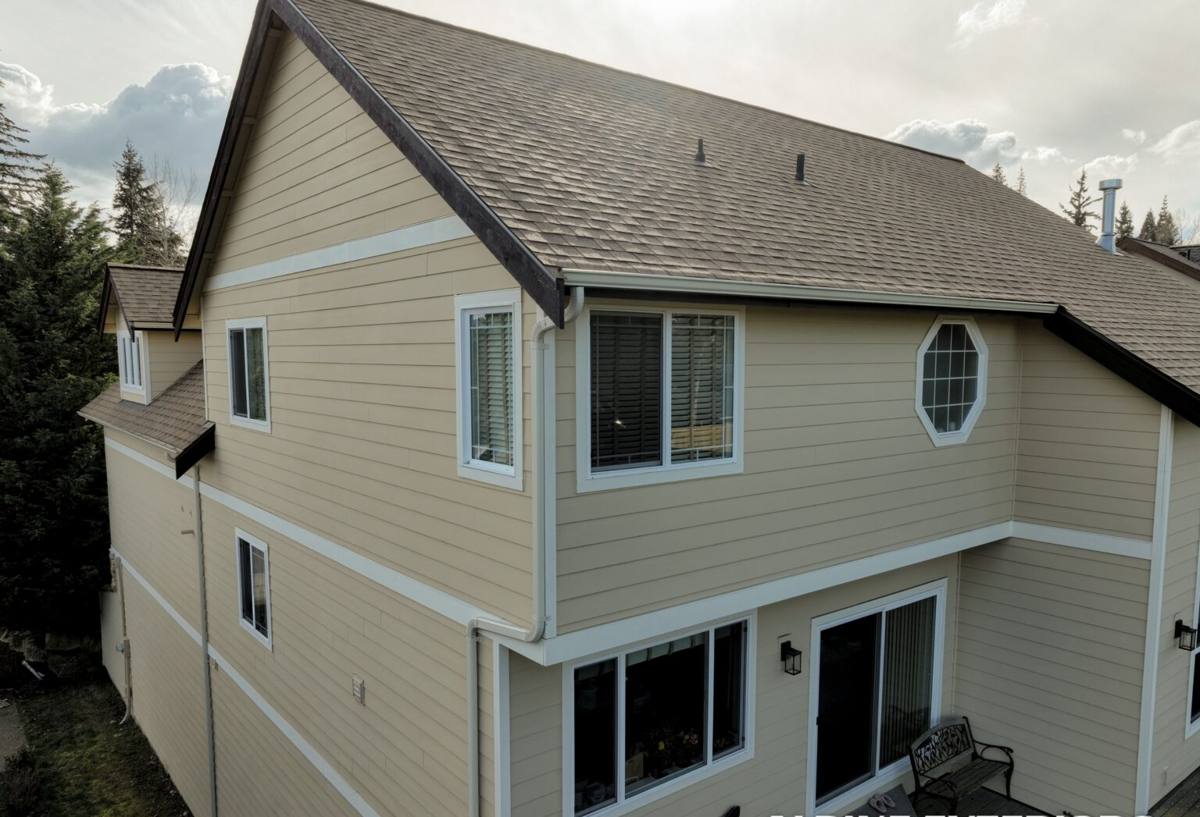
Signs a Roof Needs Repair, Not Replacement
Most roofs don't fail all at once. They fail in one spot first — a flashing seam, a section of moss-choked shingles, a valley that's been holding water — and if that spot gets fixed early, the rest of the roof can go on doing its job for years. The trick is catching the early signs before they turn into a ceiling stain or a soaked section of decking.
- Granules collecting in gutters or at the base of downspouts, especially after a hard rain
- Dark streaking or thick moss mats on north-facing or shaded slopes
- Curling, cupping, or cracked shingles concentrated in one section rather than spread evenly
- Soft spots underfoot near valleys, chimneys, or plumbing vents
- Daylight visible around flashing when viewed from the attic
- Water stains on interior ceilings that track back to a specific roof plane
- Rust streaks or lifted metal at chimney or skylight flashing
Any one of these on its own is usually a repair, not a replacement. It's when several show up together across multiple slopes, or when the decking underneath has gone soft, that replacement starts to make more financial sense than another round of patching.
What an Honest Roof Repair Actually Involves
Diagnosis before demolition
A repair worth paying for starts with figuring out why the roof failed in that spot, not just covering it up. A leak at a valley might be a shingle problem, or it might be a flashing problem, or it might be moss holding water against the surface long enough to work its way under the shingle edge. Those three causes get three different fixes, and treating the wrong one means the leak comes back.
Matching materials, not just covering the gap
Shingles fade and weather over time, so a patch using brand-new material next to a ten-year-old roof plane is never going to be invisible — but it should be close, and it should be functionally identical: same shingle class, same nailing pattern, same underlayment where the old layer is disturbed. We'd rather tell a homeowner honestly that a patch will show a little than oversell a seamless match that doesn't exist.
Flashing and decking, not just shingles
A lot of "roof leaks" are actually flashing failures — around chimneys, skylights, dormers, and where a roof plane meets a sidewall. Replacing shingles without addressing failed flashing underneath is a common shortcut that buys a homeowner a year or two before the same leak reappears. Any competent repair checks the decking underneath a compromised area too; soft or delaminated plywood needs to be cut out and replaced before new roofing goes back down, not just covered over.
Moss, Debris, and the Lake Whatcom Factor
The tree canopy that makes Sudden Valley a pleasant place to live is also the single biggest driver of roof repair calls in the neighborhood. Moss doesn't just sit on top of shingles looking unattractive — its root structure lifts shingle edges as it grows, and the mat it forms holds water against the roofing surface long after the rest of the neighborhood has dried out. Over a few seasons that constant dampness accelerates granule loss and shortens the usable life of the roofing significantly.
Debris compounds the problem. Needles and small branches collect in valleys and behind chimneys, block the flow of water toward the gutters, and create small dams that force water sideways under shingles instead of down and off the roof. A roof that's clean and de-mossed sheds water the way it was designed to; one that's carrying a season of buildup is fighting an uphill battle even in a light rain.
What actually helps
- Physical moss removal (not just a chemical kill-and-leave treatment) followed by a rinse, done gently enough not to strip granules
- Zinc or copper strips near the ridge on shade-prone slopes, which discourage regrowth as rain washes trace metal down the roof
- Clearing valleys and gutter lines of needle buildup at least once, ideally twice, a year given the tree cover around the lake
- Trimming back branches that overhang the roofline where practical, to cut down on both shade and debris
Repair vs. Replacement: How to Weigh It
| Factor | Leans Toward Repair | Leans Toward Replacement |
|---|---|---|
| Age of roof | Under 15 years, or a shingle line rated for 30+ years | Past 20-25 years or nearing the end of its rated life |
| Extent of damage | Isolated to one slope, valley, or penetration | Spread across multiple slopes or widespread granule loss |
| Decking condition | Solid, dry plywood or planking underneath | Soft, delaminated, or water-damaged decking in several spots |
| Moss/algae history | First occurrence, addressed early | Chronic, recurring despite repeated cleaning |
| Rough cost range | Small hundreds to a few thousand dollars, depending on scope | A full re-roof runs well into five figures on most homes |
These are general guidelines, not a formula — a fifteen-year-old roof with failing decking in one spot can still make sense to repair, while a five-year-old roof with a manufacturing or installation defect might need a broader fix. That's why the diagnosis step matters more than any rule of thumb.
Our Repair Process
- On-roof inspection. We walk the roof rather than eyeball it from the ground, checking every slope, valley, and penetration, not just the spot where the leak showed up inside.
- Straight explanation and estimate. We tell you what we found, what caused it, and what it will take to fix it correctly — including if the honest answer is that a repair won't hold and replacement is the better use of your money.
- The repair itself. Matching materials where we can, correcting flashing and decking issues where we find them, not just papering over shingles.
- Cleanup and debris clearing. Gutters and valleys cleared as part of the job, since a fresh repair sitting under a clogged gutter doesn't stay fixed for long.
- Follow-up. We stand behind the work and want to hear from you if anything about the repair doesn't perform the way it should.
Why It Matters That We Already Work in Sudden Valley
Roofing crews that mostly work drier, more open parts of the county sometimes underestimate how aggressively moss and shade take hold around a lake ringed by conifers. A crew that's already up on roofs in this neighborhood knows which slopes stay wet longest, which tree lines create chronic moss problems, and what a repair actually needs to survive a Whatcom County winter here rather than a textbook one. That local pattern recognition shows up in fewer callbacks and repairs that are sized correctly the first time — not oversold, not undersold.
It also matters for access and timing. Storm season brings a rush of calls across the whole county, and a crew that already knows the roads and layout around the lake can get to an active leak faster than one working from across town for the first time.
Homeowner Checklist: Is It Time to Call?
- Moss covering more than roughly a third of any single slope
- Granules visibly collecting in gutters after normal rain, not just during a storm
- Any ceiling stain, however small, especially after a heavy rain event
- Shingles that look curled, cracked, or lifted when viewed from the ground with binoculars
- Gutters or valleys that stay full of needles and debris between cleanings
- Visible daylight or staining around chimney, skylight, or vent flashing from inside the attic
- It's been more than a year since the roof was inspected or cleaned
If two or more of these sound familiar, it's worth having someone look before the next big rain rather than after it.
If you're dealing with a leak, moss buildup, or just want an honest read on where your roof stands, we're happy to come out, walk the roof, and give you a straightforward, no-pressure estimate. There's a form below to get that scheduled.