 Sudden Valley Siding
 Decking in Edgemoor Faces a Specific Set of Problems
Edgemoor sits close enough to the water that salt air is part of daily life on an exposed deck, and Whatcom County's wet season means long stretches where a deck surface barely gets a chance to dry out between rains. Add in the shade from mature trees that a lot of Edgemoor lots have, and you've got a near-perfect setup for moss, algae film, and slow rot in anything that isn't built and finished to handle it. A deck that would be low-maintenance in a drier inland climate can turn into a yearly chore here if the wrong material or a shortcut installation gets used.
This page is specifically about composite decking for Edgemoor properties — what the material needs to do to hold up here, what a correct installation actually looks like, and how we approach the job when we're called out to this part of Whatcom County.
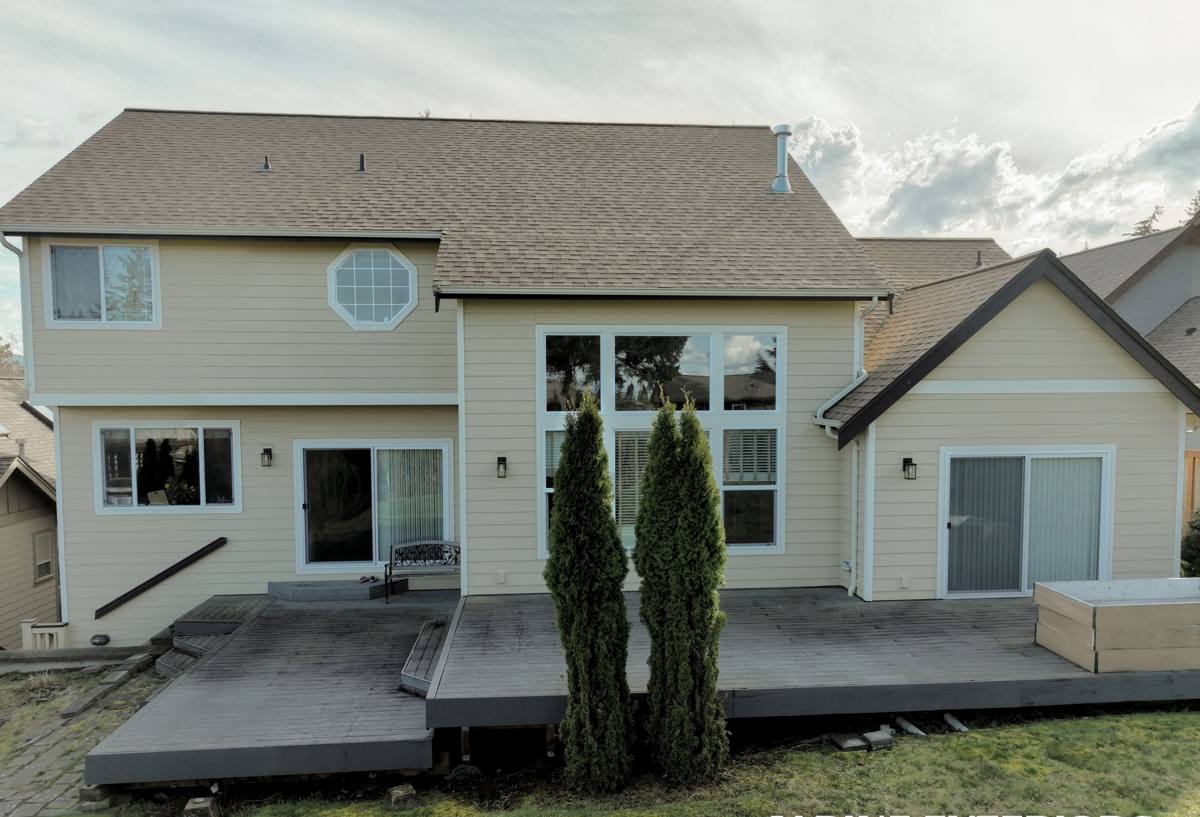
What Salt Air, Rain, and Moss Actually Do to a Deck
Each of these stresses works on a deck in a different way, and understanding them is why the details of an installation matter as much as the decking product itself.
Salt Air
Airborne salt accelerates corrosion on any exposed metal fastener, bracket, or railing hardware. It doesn't rot composite boards, but it will eat through the wrong grade of screws, joist hangers, or post hardware over a few seasons if the fastener spec is wrong.
Driving Rain
Rain that comes in sideways off the water pushes moisture into places a calmer climate wouldn't — under rail bases, into end-grain cuts on framing lumber, behind fascia boards. Standing water and trapped moisture are what cause problems, not rain itself, which is why drainage and airflow underneath the deck matter so much.
Moss and Algae
Shade, moisture, and mild temperatures are exactly what moss wants. On a deck surface, moss and algae film aren't just cosmetic — they hold moisture against the boards and make the surface slick and genuinely dangerous underfoot, especially on stairs.
Why Composite Decking Fits Edgemoor's Conditions
Composite decking is a wood-fiber-and-plastic blend (with today's better products capping the board in a protective polymer shell). It's not immune to moss or algae growth — nothing that sits outside in wet shade is — but it doesn't absorb water the way solid wood does, so it doesn't swell, cup, splinter, or rot the way an untreated or poorly maintained wood deck will after a few Whatcom County winters.
The practical upside for a homeowner: no annual sanding, staining, or sealing schedule. The trade-off is a higher upfront material cost than wood, and composite still needs to be kept clean of moss and debris — it just doesn't punish you structurally for a season or two of neglect the way wood can.
Composite vs. Wood vs. PVC — How They Actually Compare Here
| Material | Moisture/Moss Resistance | Maintenance | Typical Lifespan Locally | Upfront Cost |
|---|---|---|---|---|
| Pressure-treated wood | Absorbs moisture; needs sealing to resist moss and rot | Annual cleaning, periodic staining/sealing | 10-15 years with upkeep | Lowest |
| Cedar | Naturally rot-resistant but still absorbs moisture; grays and can moss over without sealing | Regular sealing to hold color and resist moisture | 15-20 years with upkeep | Moderate |
| Composite | Doesn't absorb water like wood; capped boards resist staining well | Periodic washing to keep moss/algae off; no sealing or staining | 25-30+ years (manufacturer-warrantied) | Higher |
| PVC | Fully synthetic, no wood fiber to hold moisture | Lowest; occasional washing | Comparable to or longer than composite | Highest |
We install composite for most Edgemoor decking projects because it hits the sweet spot for this climate — real moisture resistance and a long warranty, without the premium cost jump to full PVC. Where a homeowner has specific reasons to want PVC or a different framing approach, we'll talk through it honestly rather than push a single product line.
What a Correct Composite Deck Installation Involves
Composite boards are only as good as what's underneath them. Most of the composite deck failures we get called to inspect trace back to substructure or fastening mistakes, not the decking material itself.
Substructure and Framing
Joists and framing still need to be sized correctly for the span and load, and we treat framing lumber or use naturally durable material so the structure underneath isn't the weak link. Composite decking doesn't rot, but the wood frame holding it up can if it's not detailed for drainage.
Drainage and Airflow
Low decks or decks close to grade need enough clearance and ventilation underneath to let moisture escape instead of pooling. In a climate with as much sustained rain as Whatcom County gets, we pay close attention to slope, gapping, and any spots where water could get trapped against framing or the house's ledger board connection.
Fastening and Hardware
Given the salt air near the water, fastener and hardware grade isn't optional — we use corrosion-resistant fasteners and hardware rated for coastal exposure, not standard-grade screws that'll start rusting and staining the deck within a couple of seasons.
Board Spacing and Edge Details
Composite boards expand and contract with temperature more than people expect, so gapping between boards has to be set correctly at install. Rail posts, stair stringers, and picture-frame edge boards all need to be detailed so water sheds off the deck instead of collecting at trim lines — a common spot for moss to establish first.
Our Process, From Estimate to Finished Deck
1. On-Site Assessment
We look at existing structure (if there's a deck to replace or tie into), sun/shade exposure, drainage at grade, and how exposed the site is to weather off the water. This tells us what framing, fastener grade, and drainage detailing the job actually needs.
2. Straightforward Proposal
You get a written scope and price — what's being replaced or built, what composite product and color options fit, and what hardware and framing spec we're using. No pressure to upgrade to the most expensive board line if a mid-tier product is the right call for the project.
3. Installation
Framing and any structural repairs first, then composite decking installed to the manufacturer's fastening and gapping specs, with attention to the drainage and hardware details above.
4. Walkthrough
We walk the finished deck with you, cover basic care, and answer questions about the manufacturer's warranty coverage before we consider the job done.
What Composite Actually Needs for Upkeep in This Climate
Composite is genuinely low-maintenance, but "low" isn't "zero," especially with moss pressure in shaded Edgemoor yards.
- Sweep or blow off leaves and debris regularly, especially in fall — trapped organic material is what feeds moss growth
- Wash the deck surface once or twice a year with a mild soap-and-water solution and a soft-bristle brush
- Avoid pressure washing at high PSI directly on composite surfaces — it can damage the cap layer on some products
- Check stair treads and shaded areas more often; these hold moisture longest and moss shows up there first
- Inspect railing posts and fastener points once a year for any signs of movement or corrosion staining
- Keep planters and rugs off the deck surface for extended periods where they trap moisture underneath
Cost Factors Worth Knowing Upfront
Composite decking projects vary a lot in price depending on a handful of factors, and we'd rather explain them than throw out a number that doesn't mean anything until we've seen the site.
- Deck size and shape — square footage plus complexity of angles, stairs, and framing
- Height off grade and whether structural support (posts, footings) needs to be added or replaced
- Composite product tier — entry-level capped composite vs. premium multi-layer boards
- Railing style — composite or metal rail systems cost more than basic wood or cable rail
- Site access — how easily materials and equipment can reach the build area
- Removal and disposal of an existing deck, if one is being replaced
Why Hire a Crew That Already Works Edgemoor
A lot of decking problems we get called to fix aren't the composite board's fault — they're framing, fastener, or drainage mistakes made by a crew that didn't account for how wet and salt-exposed this stretch of Whatcom County actually gets. Working in and around Sudden Valley and Edgemoor regularly means we're not guessing at what the local conditions demand; we're building to what we've already seen hold up and what we've seen fail. That's worth more than a lower bid from a crew that treats every deck the same regardless of where it sits.
If you're considering a new composite deck or replacing an aging one in Edgemoor, we're glad to come take a look and give you a straight, no-pressure estimate — fill out the form below and we'll set up a time.