 Sudden Valley Siding
 Roofing Built for Deming's Corner of Whatcom County
Deming sits where the valley starts climbing toward Mount Baker, and that location gives it its own weather personality within Whatcom County. Homes here take a steady beating from driving rain off the Nooksack valley, damp air that never fully dries out between storms, and long stretches of shade under conifers that keep roof surfaces wet far longer than homes in open country. Add in the salt-tinged air that reaches inland on strong westerly weather systems, and you get a climate that is genuinely hard on asphalt shingles if the roof underneath them wasn't built correctly in the first place.
We install and repair asphalt shingle roofs for homeowners in Deming and the surrounding Sudden Valley area, and this page is about that one job done right for this one kind of weather — not a generic roofing pitch.
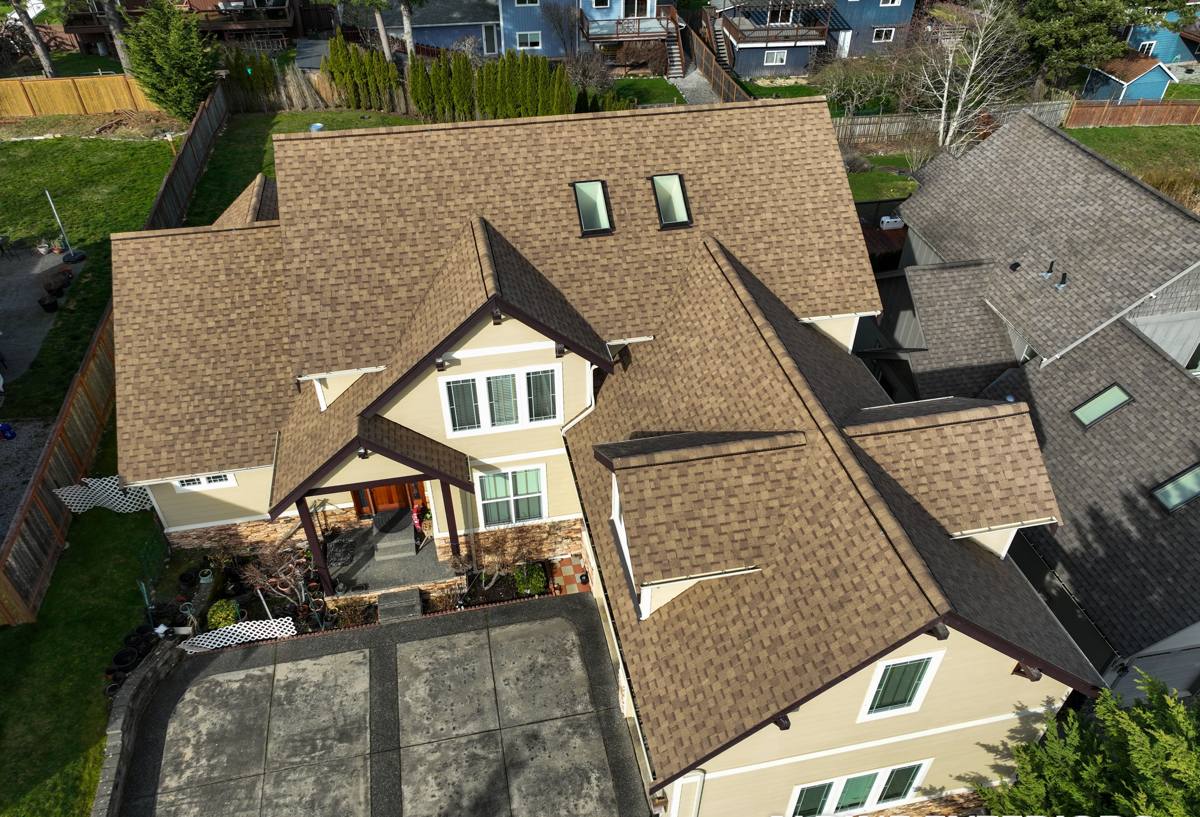
What Local Weather Actually Does to a Shingle Roof
Asphalt shingles are a proven, durable product almost everywhere in the country. In Whatcom County, though, they fail early for a small, predictable set of reasons, and almost all of them trace back to moisture that had nowhere to go.
Moss and Organic Growth
Shaded, north-facing slopes and roofs under tree cover stay damp for days after a storm passes. That moisture feeds moss and algae, which root into the shingle surface, lift tabs at the edges, and hold water against the mat underneath. Once moss gets a foothold, it accelerates every other problem on the roof.
Driving Rain and Wind-Driven Water
Storms coming up the valley don't just fall straight down — wind pushes rain sideways and up under shingle edges, especially at low-slope sections, valleys, and anywhere flashing is marginal. A roof that would be fine in a calmer climate can leak here if the underlayment and flashing details weren't built for wind-driven water specifically.
Salt-Influenced Air
Homes closer to open weather exposure deal with airborne salt that accelerates corrosion on exposed metal — nails, flashing, vents, and fasteners. Left unaddressed, corroded metal components fail years before the shingles around them would have.
Constant Freeze-Thaw and Wet-Dry Cycling
Whatcom County doesn't get brutal winters, but it does get repeated cycles of saturation, cold snaps, and drying out. That cycling is what actually breaks down granule adhesion and seals over time, more than any single storm event.
Choosing the Right Shingle for a Deming Roof
Not every asphalt shingle product handles this climate the same way. We steer homeowners toward products with the algae resistance and wind ratings this area actually needs, rather than the cheapest option on the shelf.
| Shingle Type | Typical Lifespan | Moss/Algae Resistance | Best Fit For |
|---|---|---|---|
| 3-Tab (economy) | 15–20 years | Low unless treated | Budget projects, low-exposure roofs |
| Architectural / Dimensional | 25–30 years | Good with algae-resistant granules | Most Deming homes, standard slopes |
| Premium Algae-Resistant | 30+ years | Best available in asphalt | Shaded lots, north-facing roofs, tree cover |
| Impact-Rated / High-Wind | 25–30 years | Good | Open, exposed sites with wind concerns |
For most Deming properties — especially anything under tree cover, which describes a lot of homes in this part of the county — we recommend an architectural shingle with algae-resistant, copper-infused granules. It costs somewhat more up front but consistently outlasts standard shingles in shaded, damp conditions and delays the moss problem by years instead of months.
What a Correctly Installed Asphalt Shingle Roof Involves
A shingle roof is only as good as the layers homeowners never see. Rushing or skipping any of these steps is exactly how roofs that "look fine" end up leaking within a few years in this climate.
Tear-Off and Deck Inspection
We remove the old roofing down to the deck rather than layering over it. That lets us actually see the plywood or OSB underneath, check for soft spots or rot from prior leaks, and replace any damaged sheathing before it's sealed under new material. Covering over a compromised deck just hides a problem that gets worse.
Ice-and-Water Shield and Underlayment
Given how much wind-driven rain this area sees, we pay particular attention to underlayment at eaves, valleys, and any roof-to-wall transition — the spots most likely to take on water sideways or by backup. A synthetic underlayment with self-adhered membrane at the vulnerable areas gives the roof a real second line of defense, not just a formality.
Ventilation
Proper intake and exhaust ventilation keeps the underside of the deck dry and regulates attic temperature, which matters for both moisture control and shingle lifespan. A roof that traps humid air underneath will show premature wear from below, even if the top side looks fine.
Flashing and Metal Details
Chimneys, skylights, vent pipes, and valleys are where roofs actually fail — rarely in the open field of shingles. We install new flashing rather than reusing old, corroded pieces, and we pay attention to metal quality given the corrosion pressure from salt-influenced air in this area.
Shingle Installation and Fastening
Correct nail placement, count, and pattern matter more in a windy valley location than they would somewhere calmer. Under-driven, over-driven, or misplaced nails are a common cause of blow-offs and leaks that show up a season or two after installation.
Our Process, Start to Finish
- Free on-site inspection. We walk the roof (or inspect from the deck level with photos, if pitch or safety requires it), check attic ventilation and any interior signs of moisture, and give you an honest read on repair versus replacement.
- Written estimate. A clear scope of work and price — materials, tear-off, disposal, and labor — with no vague allowances that turn into surprise add-ons later.
- Scheduling around weather. Roofing is weather-dependent work here more than most places. We plan installs around forecasted dry windows and won't start a tear-off we can't close up the same day if rain is likely.
- Tear-off, deck repair, and installation. Done in the sequence described above, with the deck inspected and any rot addressed before anything new goes down.
- Site cleanup and magnetic nail sweep. Full cleanup of old material and debris, with a magnetic sweep of the yard and driveway for stray nails.
- Final walkthrough. We review the finished roof with you before calling the job done.
Maintenance That Actually Extends a Shingle Roof's Life Here
Most premature roof failures we see in this climate aren't installation failures — they're maintenance gaps. A few habits go a long way:
- Have gutters cleared at least twice a year, more often if you're under conifers, so water doesn't back up under the eave line
- Watch for moss starting at shaded valleys or north slopes and treat it early, before it lifts shingle tabs
- Trim back branches that keep a section of roof shaded and damp longer than the rest
- After any significant windstorm, do a visual check for lifted or missing shingles rather than waiting for a leak to show up inside
- Check attic ventilation isn't blocked by insulation, especially after any attic work
- Get a professional inspection every few years even if nothing looks obviously wrong — flashing and fastener issues are hard to spot from the ground
Cost Factors Homeowners Should Understand
Every roof is different, but the price of an asphalt shingle roof in this area is driven by a consistent set of factors. We'll walk through all of these specifically for your home during the estimate, but broadly:
| Factor | Why It Matters |
|---|---|
| Roof size and number of layers to remove | Tear-off labor and disposal cost scale with square footage and existing layers |
| Roof complexity (valleys, dormers, pitch) | More cuts, flashing, and steep-slope labor increase both material and time |
| Deck condition | Rotted sheathing found during tear-off adds repair cost not visible in advance |
| Shingle grade selected | Standard versus algae-resistant/premium products carry a real material cost difference |
| Ventilation upgrades needed | Adding or correcting intake/exhaust vents adds labor but protects the investment |
| Access and site conditions | Tree cover, driveway access, and staging space affect labor time |
We'd rather give you a realistic number up front than a low one that grows once the tear-off starts. That's part of why we inspect the deck as a condition, not an assumption, before finalizing scope.
Why a Crew That Already Works This Area Matters
Roofing crews that mostly work drier, more open parts of the state don't always build in the wind-driven-rain and moss-season details this valley actually needs. A crew already familiar with Deming and the wider Sudden Valley area knows which slopes and orientations tend to hold moisture, which flashing details matter most given local wind patterns, and how to schedule around this area's rain windows instead of guessing. That local pattern recognition is the difference between a roof that just meets code and one that's actually built for what it's going to face every winter here.
Signs Your Deming Roof Needs Attention Soon
A few warning signs are worth acting on before they turn into interior damage:
- Visible moss or dark streaking, especially on shaded or north-facing slopes
- Granules collecting in gutters or at downspout outlets
- Curling, cupping, or cracked shingles
- Soft spots underfoot or visible sagging along the roofline
- Daylight visible through the attic deck, or damp insulation
- Water stains on interior ceilings, particularly after a windy storm
Any one of these is worth a look before the next storm cycle rather than after.
If you're seeing any of these signs, or it's simply been a while since your roof was inspected, we're happy to take a look and give you a straight answer — repair, maintenance, or replacement, whichever actually fits your roof. Use the form below to request a free, no-pressure estimate.