 Sudden Valley Siding
 Deck Repair Built for Columbia's Wet, Salt-Laden Climate
Homes in the Columbia neighborhood near Sudden Valley sit in one of the harder spots in Whatcom County for an outdoor deck to survive. The combination of driving rain off the water, salt-laden marine air, and a moss season that can run from October through May puts constant moisture pressure on wood and hardware that a deck in a drier inland climate never has to deal with. A deck that would need attention every ten years elsewhere often needs it every five or six here, and the parts that fail first are almost always the same: the ledger board where the deck meets the house, the fasteners holding everything together, and any horizontal surface where moss and standing water can sit undisturbed for months at a time.
We repair decks in this area regularly enough to know which failures are cosmetic and which ones are structural before we ever pull a board. That distinction matters, because the fix, and the cost, for a deck with a mossy, slick surface is completely different from the fix for a deck with a rotted ledger board or failing posts.
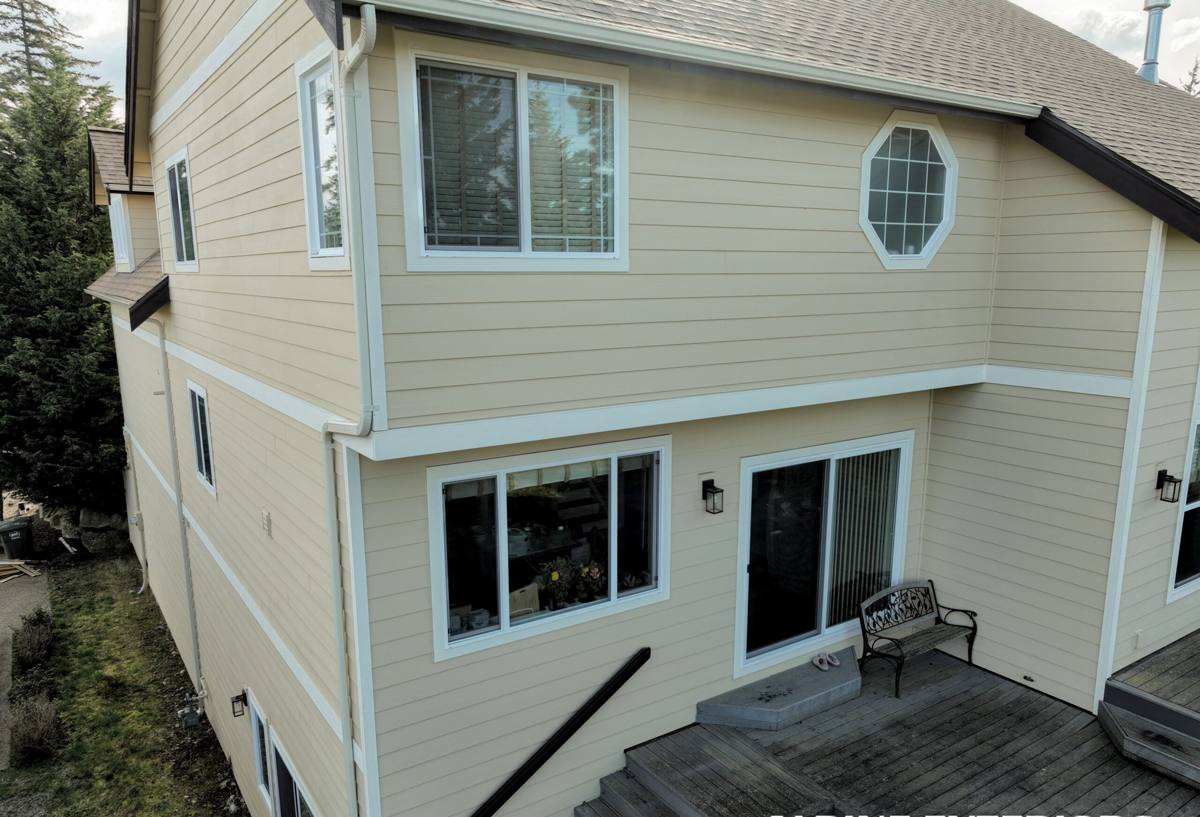
The Warning Signs Worth Taking Seriously
Most deck problems in this climate start small and stay hidden under moss, algae film, or a coat of old stain. By the time a board feels soft underfoot, the damage below the surface is usually further along than it looks. Walk your deck with these signs in mind before the wet season sets in again:
- Boards that feel spongy, springy, or noticeably softer than the boards around them
- Green or black moss and algae film that stays damp for days after rain stops
- Gaps opening up between the ledger board and the house, or staining on the siding above it
- Railings or posts that wiggle more than they used to when you lean on them
- Rust streaks bleeding out from screws, nails, or joist hangers
- Standing water that does not drain within a few hours of rain ending
- Stair stringers or landing posts with visible checking, cupping, or soft spots
Any one of these on its own might just mean routine maintenance. Two or three together, especially near the ledger or a support post, usually means it is time for a real inspection rather than a pressure wash and a new coat of sealant.
What a Correct Deck Repair Actually Involves
The Ledger Board Connection
This is the single most important connection on the entire deck, and it is the one most often patched over instead of properly repaired. The ledger bolts the deck framing to the house, and in a climate with this much driving rain, the flashing behind and above it has to actually shed water away from the house, not just cover the gap. A correct repair means pulling back enough siding to inspect the rim joist and sheathing behind it, replacing any flashing that has failed, and confirming the connection is still solid before anything else gets touched.
Framing, Posts, and Footings
Joists, beams, and posts that sit low to wet ground or under dense shade hold moisture longest and rot from the inside out, often while the outer wood still looks fine. We check post bases for rot at the soil line, confirm footings have not shifted or settled, and look at joist hangers for rust and loosened fasteners. A hanger that has rusted through does its job right up until the moment it does not.
The Decking Surface
Surface boards take the brunt of moss growth and standing water, but they are also the easiest part to get wrong with a quick fix. Replacing a rotted board without addressing why water was sitting there, whether from poor spacing, missing drainage, or the wrong fastener choice, just buys a few more years before the same board fails again.
Guardrails and Stair Compliance
Any repair that touches railings or stairs is a chance to bring them up to current safety standards, not just patch what is there. Loose balusters, railing heights that have drifted over the years, and stair stringers with hairline splits are easy to overlook but matter for both safety and resale, and we flag them as part of any repair scope rather than leaving them for another visit.
Matching the Repair to the Damage
Not every deck problem calls for the same scope of work, and an honest assessment should tell you which category you are in before any price gets discussed.
| Repair Level | Typical Signs | What is Involved |
|---|---|---|
| Spot Repair | A few soft or split boards, surface moss, loose railing balusters | Board replacement, hardware upgrade, cleaning and resealing |
| Structural Repair | Ledger separation, rusted hangers, a soft or leaning post | Partial deconstruction, flashing and framing repair, code-compliant reconnection |
| Full Rebuild | Widespread rot in framing, failing footings, deck no longer feels solid | Removal to the ledger, new substructure, new decking and railings |
Cost climbs with each level, but so does the risk of skipping ahead. Patching decking over a compromised ledger or post just delays a bigger repair and hides the problem for the next inspection.
Fasteners and Hardware: The Detail Most Repairs Get Wrong
Marine air moving through this part of Whatcom County accelerates corrosion on standard hardware faster than most homeowners expect. A deck repaired with the wrong fasteners can look solid for a year or two while rust quietly works through the connection points that hold it together.
| Fastener Type | Corrosion Resistance | Where It Falls Short Here |
|---|---|---|
| Standard galvanized | Low to moderate | Coating wears through within a few years in salt-laden, wet air |
| Hot-dip galvanized | Moderate to good | Better, but still vulnerable at cut edges and drilled holes |
| Stainless steel | High | Higher upfront cost, but holds up for the life of the deck |
We default to stainless or coated fasteners rated for ground contact and coastal exposure on structural connections, even when it costs more than what came out of the deck originally. Replacing a board every few years because the fasteners failed first costs more over time than doing it right once.
Material Choices That Actually Hold Up in Columbia
Both wood and composite decking can perform well here, but each comes with trade-offs worth understanding rather than a blanket recommendation.
Pressure-treated lumber is affordable and easy to repair in sections, but it needs regular sealing and cleaning to keep moss and rot at bay in this climate. Skip a year or two of maintenance and it shows. Cedar resists rot naturally and looks better longer, but it is softer and more prone to surface checking under constant wet-dry cycling. Composite decking shrugs off moss and moisture better than either wood option and needs less upkeep, but it costs more upfront, and a damaged board typically gets replaced rather than patched. None of these is the right answer for every deck. It depends on how much maintenance you want to do and how long you plan to be in the home.
Our Process for Columbia Deck Repairs
- On-site inspection of the ledger connection, framing, posts, footings, and decking surface, including a moisture check on wood that looks questionable
- A clear breakdown of what is cosmetic, what is structural, and which repair level actually applies
- Removal of only what needs to come out, keeping sound material in place
- Flashing, framing, and hardware repaired or replaced to current code, not just matched to what was there before
- Decking replaced or resurfaced with fasteners rated for this climate
- Final check of railings, stair stringers, and guardrail spacing for safety before we call it done
Why a Crew That Already Works This Area Matters
A deck repair that looks fine on paper can still fail early if it does not account for how this specific climate behaves. Crews unfamiliar with the moss cycles, the wind-driven rain patterns, and the corrosion rate on standard hardware around Sudden Valley sometimes repair a deck the way they would in a drier region, and it shows up again in a few years as the same soft boards or the same rusted hardware. We work on decks in and around Columbia and the rest of Sudden Valley regularly, which means we are not guessing at how a repair will hold up here. We are seeing the results on decks we have already worked on, which is what shapes which fasteners we reach for and how much flashing detail we insist on before decking goes back down.
Keeping a Repaired Deck Lasting
A good repair still needs some ongoing attention in this climate. A little maintenance goes a long way toward avoiding a repeat visit:
- Sweep leaves and debris off the deck regularly, especially in fall, so moisture does not get trapped underneath
- Clean moss and algae off the surface at least once a year before it gets a foothold
- Reseal or restain wood decking on the schedule the product calls for, not just when it looks faded
- Check railings and stair connections for movement each spring
- Keep gutters and downspouts near the deck clear so runoff is not draining directly onto it
If your deck is showing any of the signs above, or it has just been a while since anyone looked at the framing underneath, we are happy to come take a look. We offer a free, no-pressure estimate so you know exactly what condition your deck is in and what it would take to fix it right, with no obligation either way.