 Sudden Valley Siding
 Decks Built for Happy Valley's Weather, Not Just Its View
Happy Valley homes sit in a part of Whatcom County where the weather asks more of a deck than it does almost anywhere else in the state. Driving rain moves through sideways for months at a time, salt-laden marine air works its way inland off the Sound, and the tree cover that makes these lots so pleasant also means a long, damp moss season that keeps deck surfaces wet long after the rain has stopped. A deck built with generic, one-size-fits-all methods will look fine for a year or two and then start showing problems — soft spots, rust streaks, slick boards, a ledger board that's holding more moisture than it should. Building correctly for this specific climate the first time costs less than fixing it later.
Moss Season Isn't a Minor Nuisance Here
In a lot of the country, moss on a deck is a cosmetic complaint. In Happy Valley, with shade cover and persistent damp running from fall through spring, moss and algae growth is a structural issue if it's ignored. Moss holds moisture against the wood or composite surface, keeps boards from drying between rains, and turns a deck surface into a slip hazard on stairs and landings. The board spacing, surface texture, and drainage path underneath the deck all affect how bad this gets — and all of that gets decided at build time, not after the fact.
Moisture at Grade and Against the House
Many Happy Valley lots have some grade change, tree root systems near the foundation, and soil that stays saturated well into the dry season. That combination means ledger attachment to the house, footing depth, and under-deck drainage all need to be handled with this specific ground condition in mind, not a generic textbook assumption about "typical" soil.
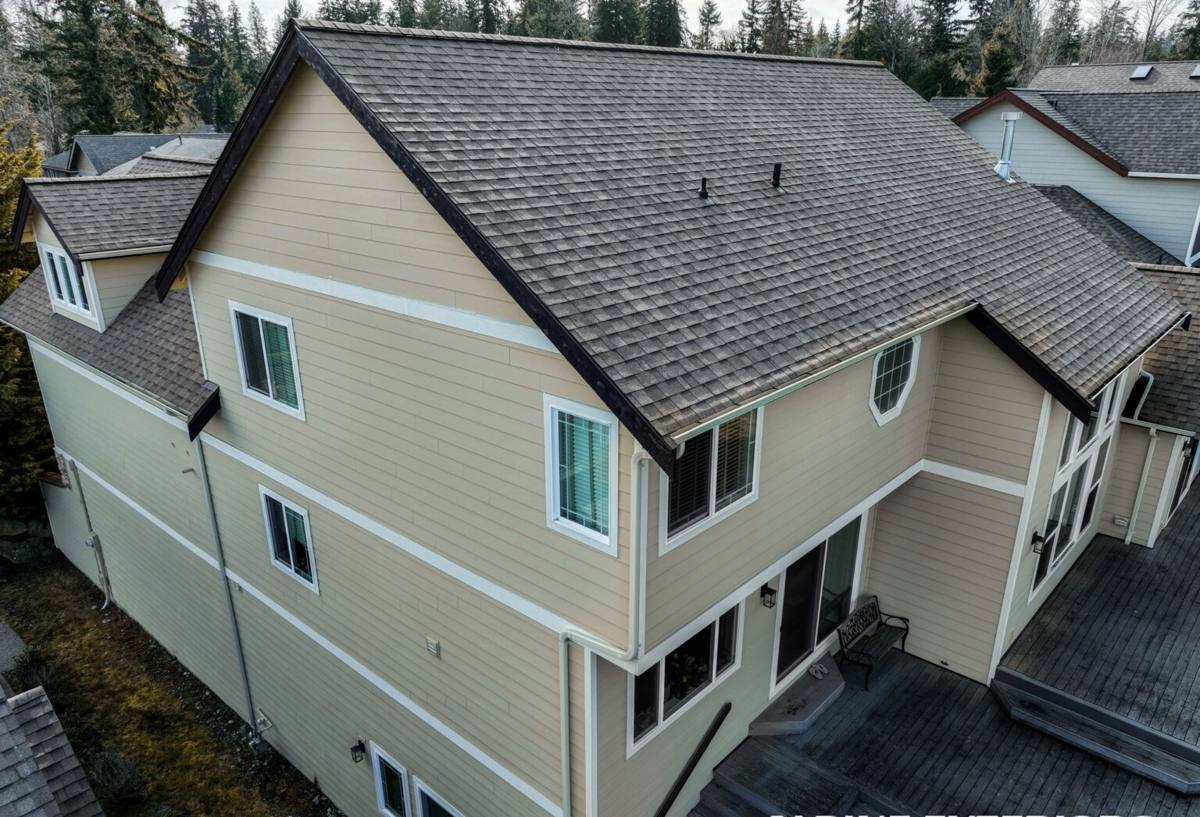
Where Deck Problems Actually Start in This Climate
Most deck failures we get called out to inspect trace back to one of three build-stage decisions, not to the age of the deck or the quality of the lumber alone.
The Ledger Board and Rim Joist Connection
This is the single most common failure point on decks attached to the house. If the ledger isn't properly flashed and separated from the house's water-resistive barrier, rain gets channeled directly into the rim joist and wall framing behind it. In a climate with this much sustained rainfall, that hidden rot can go undetected for years because the surface decking still looks fine.
Fasteners and Hardware
Standard or mismatched fasteners corrode faster here than in drier regions, especially with any exposure to salt-bearing air. Corroding joist hangers, screws, and bolts don't just stain the wood — they lose holding strength, and that's a structural safety issue on stairs, railings, and ledger connections.
Board Selection and Spacing Mistakes
Tight board spacing, or the wrong board profile for a shaded, damp lot, traps moisture and accelerates moss growth and cupping. This is one of the most common ways a deck that was "built to code" still ends up needing early repair.
Choosing Decking Material for a Happy Valley Lot
There's no universally "best" decking material — the right choice depends on how much sun and airflow the deck actually gets, your maintenance appetite, and your budget. Here's how the common options actually perform under Whatcom County's wet, shaded conditions:
| Material | How It Handles This Climate | Maintenance | Relative Cost |
|---|---|---|---|
| Pressure-treated wood | Good if properly sealed and re-coated; prone to moss and mildew in full shade | Annual cleaning, periodic sealing/staining | Lowest upfront |
| Cedar | Naturally rot-resistant but still needs finish maintenance in constant damp | Regular cleaning and refinishing | Mid-range |
| Capped composite | Resists moisture absorption well; textured surfaces reduce slip risk | Occasional washing, no sealing/staining | Higher upfront |
| PVC decking | Fully moisture-resistant; performs well in constant shade and rain | Lowest ongoing maintenance | Highest upfront |
We don't push one material on every homeowner. If a deck gets good sun and airflow, a well-maintained wood deck can perform fine and costs less to build. If the lot is heavily shaded and stays damp most of the year — common in parts of Happy Valley — the extra upfront cost of a composite or PVC product often pays for itself in avoided refinishing and moss cleanup over time. We'll walk your specific lot with you and give you an honest read on which category makes sense before we ever talk product lines.
What a Correctly Built Deck Actually Includes
"Built to code" is a minimum, not a standard. A deck built right for this region includes several details that go beyond the bare code minimum, because the bare minimum assumes an average climate — and this isn't one.
- Ledger board properly flashed and separated from the house sheathing, with counter-flashing that sheds water away from the wall
- Corrosion-resistant, code-rated fasteners and hardware throughout — not just at visible connection points
- Joist tape or equivalent protection on the tops of framing lumber to slow moisture absorption into end grain and fastener holes
- Footings set to the proper frost depth and bearing on stable soil, not just poured to a convenient depth
- Adequate under-deck airflow and drainage so the structure can actually dry out between rain events
- Board spacing and orientation chosen for the specific site's sun/shade exposure
- Guardrails and stair rails built to current baluster spacing and height requirements
- Ledger and post connections rated for the actual span and load, not eyeballed
Our Deck Building Process
1. Site Assessment and Design
We walk the site, look at drainage patterns, sun exposure, tree cover, and how the deck will tie into the house. This is where we talk through material options honestly based on what your specific lot will do to the deck over time — not a generic recommendation.
2. Permitting
We handle the permit application and coordinate inspections through the appropriate local jurisdiction. Decks attached to a house, or built above a certain height off grade, almost always require a permit — skipping this step is one of the most common ways homeowners end up with problems at resale.
3. Framing and Structure
This is where the ledger flashing, footing work, joist protection, and fastener selection all happen. It's also the stage that's invisible once the decking goes down — which is exactly why it has to be right the first time.
4. Decking, Railing, and Stairs
Surface material goes down with attention to spacing and drainage, followed by railings and stairs built to current safety requirements.
5. Final Walkthrough
We walk the finished deck with you, cover basic care for whichever material you chose, and make sure you know what to expect from it through the first wet season.
Permits and Local Requirements
Most decks in unincorporated Whatcom County that attach to the house, or that sit more than roughly 30 inches above grade, require a building permit and inspection. Lots near the lake or on steeper grade may also have setback or drainage considerations that don't apply to a flat interior lot. We deal with these requirements regularly on Happy Valley and Sudden Valley projects, and we handle the paperwork and inspection scheduling as part of the job rather than leaving it to the homeowner to sort out.
Keeping a Happy Valley Deck Sound Year After Year
Even a well-built deck needs some seasonal attention in this climate. A short, consistent maintenance routine is what actually separates a deck that lasts decades from one that needs early repair.
- Clear leaves and debris from between boards and off the surface before fall rains set in
- Sweep or gently wash moss and algae off the surface and stair treads before it builds a slick film
- Check for standing water pooling on the surface after rain — it usually points to a leveling or drainage issue worth addressing early
- Inspect ledger flashing and the ledger-to-house seam annually for gaps or staining
- Re-seal or re-stain wood decking on the manufacturer's recommended schedule, not just when it looks faded
- Check railing and stair connections for any looseness at least once a year
- Keep vegetation and mulch beds from crowding the deck's edge, which traps moisture against the structure
Why a Crew That Already Works in Happy Valley Matters
A deck builder who works this specific area regularly already knows how the local grade, tree cover, and weather pattern behave on these lots — which means fewer surprises during the build and a structure that's designed for the conditions it will actually sit in, not conditions from a general specification sheet. We've built and repaired decks throughout Sudden Valley and the surrounding Whatcom County communities, and we bring that site-specific judgment to every estimate, not just a standard package.
If you're planning a new deck or replacing one that's showing its age, we're happy to come take a look and give you a straightforward, no-pressure estimate — just fill out the form below to get started.