 Sudden Valley Siding
 Windows Built for Alger's Corner of the Pacific Northwest
Alger sits in that stretch of Northwest Washington where lake moisture, coastal weather systems, and heavy tree cover all overlap. Homes here don't fail because the windows were bad on day one — they fail because whoever installed them didn't account for how much water this region actually pushes at a house over a year. Sudden Valley Siding Contractor works this area regularly, and custom windows are one of the jobs we get called back to fix more than almost anything else, usually because a previous install used a one-size-fits-all approach in a climate that doesn't forgive that.
"Custom" here doesn't mean fancy shapes or high-end trim packages, though we do those too. It means the window unit, the flashing detail, and the frame material are all selected and installed to match the specific exposure of that wall — sun side, weather side, ground-level versus second story, near mature trees or open to wind. A stock window ordered off a shelf and shoved into an existing rough opening is how you end up with soft framing five years later.
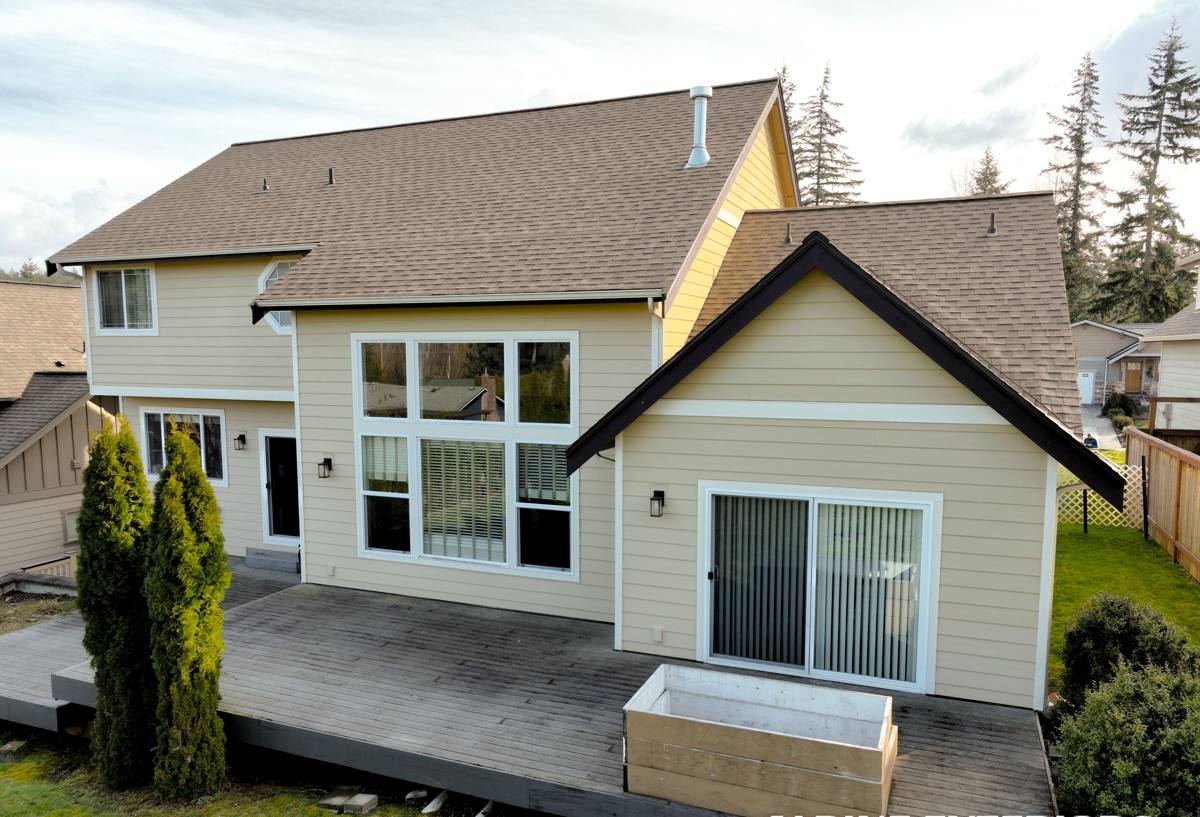
What the Local Climate Actually Does to Windows
The regional climate context around Alger and Sudden Valley is straightforward but relentless: salt-influenced air moving in off the water, long stretches of driving rain rather than gentle drizzle, and a moss season that can run more months than it doesn't. Each of these attacks windows differently.
Salt Air
Airborne salt accelerates corrosion on hardware, cheaper aluminum cladding, and unprotected fasteners. It's not just coastal front-row properties — prevailing wind carries it further inland than most homeowners expect. Over time it pits finishes and can seize up window hardware that isn't rated for it.
Driving Rain
Wind-driven rain doesn't just hit glass — it gets forced sideways and upward under trim and into gaps that would never see water in a calm rainstorm. This is the single biggest cause of rot we find around window openings in this area: not a leaky window itself, but a flashing detail that wasn't built to handle rain moving at an angle.
Moss and Prolonged Dampness
A long moss season means extended periods where wood trim, sills, and surrounding siding simply don't fully dry out between rain events. Moss and algae hold moisture against the surface, which is harder on window frames and trim than a single hard storm. Untreated or poorly sealed wood trim around a window opening is where we see the earliest signs of trouble.
What a Correct Window Job Looks Like Here
A window replacement or new install done right in this area has a few non-negotiables, regardless of the brand or style chosen.
- Proper weather-resistive barrier integration — the window flashing has to tie into the existing wall wrap correctly, not just get caulked over it
- Sloped sill pans so any water that does get past the glass drains back out instead of sitting on the frame
- Flashing tape and sealants rated for sustained wet exposure, not just general-purpose caulk
- Corrosion-resistant fasteners and hardware, especially on walls with more direct wind and moisture exposure
- Correct shimming and squaring so the window doesn't rack or bind as the house settles or the frame material expands and contracts
- Trim and casing sealed on all sides, not just caulked along the visible seam
Skip any one of these and the window itself can be a good product and still fail early. This is why we treat installation quality as equal in importance to the window unit — one without the other doesn't hold up under a full Northwest Washington winter.
Choosing the Right Window Material for an Alger Property
There's no single "best" window material — there's a best fit for the exposure of a given wall and the homeowner's maintenance appetite. Here's how the common options actually compare in this climate, based on what we see holding up and what tends to need attention sooner.
| Material | Moisture Behavior | Maintenance | Typical Trade-off |
|---|---|---|---|
| Vinyl | Won't rot or corrode; seals can wear over time | Low — occasional cleaning | Good value, fewer custom color/finish options |
| Fiberglass | Excellent — very stable in wet/dry cycling | Low | Higher upfront cost, strong long-term performance |
| Wood (clad exterior) | Good if the exterior cladding is intact; vulnerable where cladding is compromised | Higher — exterior clad protects, but any breach needs prompt attention | Best interior appearance, more sensitive installation requirements |
| Aluminum | Prone to corrosion in salt-influenced air unless properly finished/rated | Moderate to high near the coast | Slim sightlines, but our standard is to steer away from it in higher-exposure spots here |
Our default recommendation in Alger and the greater Sudden Valley area leans toward vinyl or fiberglass for most walls, with wood-clad reserved for homeowners who want that specific look and are willing to keep an eye on caulking and finish integrity. We'll walk through the actual walls of the house with you rather than recommend a single material sight unseen — a shaded, wind-sheltered wall doesn't need the same spec as one that takes rain head-on.
Our Process for a Custom Window Job
1. On-Site Assessment
We look at each window opening individually — current condition, signs of past water intrusion, exposure direction, and how the existing wall assembly is put together. This tells us whether it's a straightforward replacement or whether there's hidden framing damage that needs to be addressed first.
2. Measuring and Material Selection
Custom means each opening gets measured on its own, not assumed to match a standard size. We talk through material options based on that specific wall's exposure and your budget, and we're upfront when a cheaper option is genuinely fine for a sheltered opening versus a spot where it's worth spending more.
3. Removal and Opening Prep
Old units come out carefully so we can inspect the rough opening, sill, and surrounding framing for rot or soft wood before anything new goes in. Any compromised material gets replaced — installing a new window into a damaged opening just hides the problem.
4. Flashing and Installation
This is where most of the long-term performance is decided. Sill pan flashing, proper integration with the weather barrier, and correct sealant placement happen here, in that order, every time.
5. Trim, Finish, and Walkthrough
Interior and exterior trim gets finished and sealed, and we walk the job with you — operation, locks, and finish — before we consider it done.
Signs You Need New Windows, Not Just Repairs
- Visible fogging or moisture between double-pane glass — the seal has failed and it won't clear up on its own
- Soft or spongy wood trim around the frame, especially at the bottom corners
- Drafts you can feel even when the window is fully latched
- Difficulty opening, closing, or locking that's gotten worse over the past year or two
- Visible gaps between the frame and the siding or trim
- A noticeable jump in heating costs with no other explanation
Not every one of these means full replacement — sometimes it's a caulking and flashing repair. We'll tell you honestly which situation you're in rather than push a replacement you don't need yet.
Why Hiring a Crew That Already Works Alger Matters
A contractor who mainly works elsewhere and takes an occasional job out here doesn't have the same working knowledge of how this specific stretch of Whatcom County behaves — which wall orientations take the worst of the driving rain, how fast moss builds back up on north-facing trim, or what a salt-air-influenced hardware failure looks like before it's obvious. That knowledge shows up in small decisions: which sealant to spec, how aggressive the flashing detail needs to be, whether a given wall justifies the upgrade to a more moisture-stable frame material.
We're a local crew that treats window and siding work as connected — because they are. A window installed without regard for the siding around it, or siding patched without regard for how it ties into the window flashing, is how call-backs happen. Doing both under one standard is how they don't.
What Custom Windows Typically Cost
Pricing depends on window size, frame material, number of openings, and whether we're dealing with any hidden framing repair once the old unit comes out. Broadly, vinyl custom windows tend to run at the lower end of the range, fiberglass sits in the middle to upper range for its durability, and wood-clad units are typically the most expensive due to material and installation sensitivity. Any reputable contractor should be able to walk you through where your specific job falls and why — a number with no explanation behind it isn't a real estimate.
If you're in Alger or elsewhere around Sudden Valley and want a straight answer on what your windows actually need — repair, partial replacement, or a full custom install — we're happy to take a look. The estimate is free, there's no pressure attached to it, and you'll get a clear explanation of what we find and why we'd recommend what we recommend. Use the form below to get started.