 Sudden Valley Siding
 New-Construction Windows in Columbia: Getting It Right the First Time
When a home in the Columbia area of Sudden Valley is being framed, added onto, or fully re-sided down to the sheathing, that's the window to install new-construction windows instead of replacement units. The two products look similar from the street, but they're installed in completely different ways, and mixing up the approach is one of the most common sources of leaks in Whatcom County homes five or ten years down the road. If you're building new, doing a room addition, or stripping a wall down to the studs for a siding job, this is the page for that specific work.
New-construction windows have a nailing flange built into the frame. That flange gets integrated directly into the wall's weather-resistive barrier and flashing system before siding ever goes on. Done correctly, water that hits the wall has nowhere to go but back out and down, past the window, and off the building. Done poorly — flange caulked instead of properly lapped, flashing tape run in the wrong order, no sill pan — water gets behind the opening and you don't find out until there's rot in the framing.
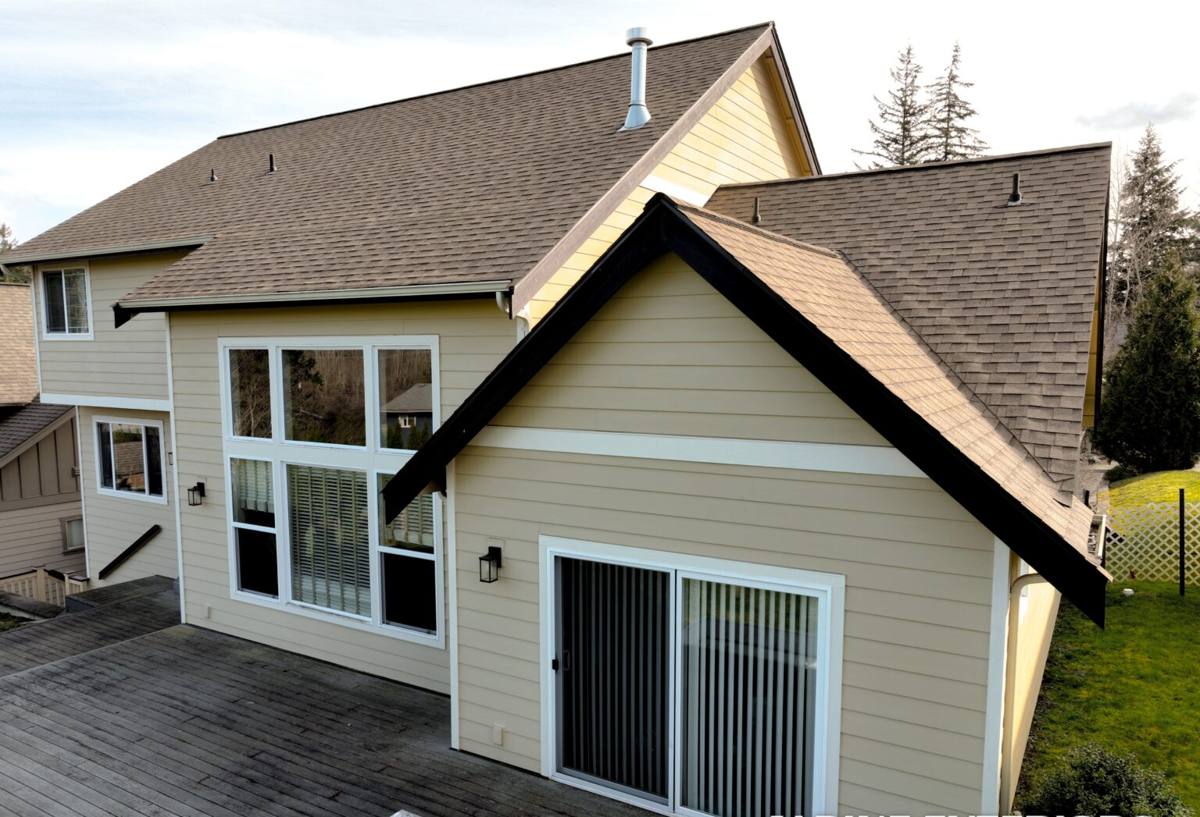
Why Columbia's Weather Makes This Detail Non-Negotiable
Homes around Sudden Valley take a real beating over the course of a year. Salt-laden air moves through the region and slowly works on any exposed or poorly sealed metal and fastener, driving rain comes in sideways during fall and winter storms, and the long, damp moss season keeps north- and west-facing walls wet for weeks at a stretch. None of that is a problem for a window opening that's flashed correctly. All of it is a problem for one that isn't.
Wind-Driven Rain
A window flange sealed with caulk alone might hold back a light shower. It won't hold back rain that's being pushed sideways into the wall by wind, which is a normal weather event here, not a rare one. The flashing has to be layered — like shingles — so gravity and wind both work in your favor rather than against a caulk bead that will eventually crack.
Salt Air
Salt in the air accelerates corrosion on unprotected fasteners and lower-grade flashing metal. It doesn't ruin a well-built window opening, but it does mean fastener choice and flashing material matter more here than they would fifty miles inland.
Moss and Sustained Moisture
Shaded, north-facing walls in Sudden Valley stay damp longer than walls that get afternoon sun, and moss and algae take hold on anything that stays wet. That's mostly a siding and trim issue, but it also means any small gap at a window opening stays wet longer instead of drying out between storms — which is exactly the condition that lets minor water intrusion turn into rot.
What a Correct New-Construction Install Actually Involves
There's a specific order of operations, and skipping or reversing any step is how leaks happen. This isn't proprietary — it's standard trade practice — but it only works if every layer is actually installed correctly and in sequence.
The Sill Pan Comes First
Before the window ever sits in the opening, the rough sill gets a sloped or flat pan flashing so any water that does get past the window has a dedicated path back outside instead of soaking into the framing. This is the step most often skipped on rushed jobs, and it's the one that matters most.
Weather-Resistive Barrier Integration
The house wrap or building paper has to be cut and lapped so it directs water over the top of the flange, not behind it. Side flashing goes over the sill pan and under the wrap; head flashing goes over the top flange and under the wrap above it. Reverse any of those laps and you've built a funnel instead of a drain path.
Fastening and Shimming
The window has to be set plumb, level, and square, then shimmed at the right points so the frame doesn't bow when fasteners are driven. A window that's out of square will bind, won't seal against its own weatherstripping correctly, and puts uneven stress on the glass unit over time.
Sealant as a Backup, Not a Substitute
Sealant belongs at specific points — never as a substitute for correct flashing order. A bead of caulk covering up a flashing mistake will fail; a bead of caulk backing up a correctly flashed opening is just good practice.
Frame Material and Glass: What Fits Sudden Valley Homes
New construction gives you a real choice of frame material, since you're not constrained by an existing opening. For this climate, the trade-offs come down to moisture tolerance, expansion/contraction behavior, and long-term maintenance.
| Frame Material | Moisture Behavior | Maintenance | Typical Fit for Columbia Homes |
|---|---|---|---|
| Vinyl | Doesn't rot or corrode; handles damp conditions well | Low — occasional cleaning | Strong all-around choice for wind-driven rain and salt air exposure |
| Fiberglass | Very stable, minimal expansion/contraction across temperature swings | Low | Good on larger openings or south/west exposures with more temperature cycling |
| Wood-clad | Interior wood needs to stay dry and sealed; exterior clad handles weather | Higher — interior finish upkeep | Best for homeowners who want a wood interior look and are committed to the upkeep |
| Aluminum | Prone to condensation and thermal transfer without a thermal break | Moderate | We generally steer clients away from it for this climate unless it's a specific architectural requirement |
On glass, a dual-pane, low-E unit with argon fill is the baseline we'd recommend for this area — it's a meaningful step up in comfort and condensation resistance over single-pane or basic dual-pane without the coating, and the added cost is modest relative to the life of the window.
Our Process for a Columbia New-Construction Job
- Plan review: We confirm rough opening sizes, header heights, and any egress requirements before the framer even closes in the wall.
- Coordination with framing: Rough openings get checked for square and correct sizing before the weather-resistive barrier goes on.
- Sill pan and flashing installation: Installed in the correct sequence described above, sloped to shed water outward.
- Window setting: Plumb, level, square, properly shimmed, fastened per the manufacturer's schedule to preserve the warranty.
- Head and side flashing tie-in: Integrated with the wall's weather barrier before siding installation begins.
- Interior and exterior trim: Finished after siding to keep sightlines clean and weather details fully covered.
- Final walkthrough: Every window operates, locks, and seals correctly before we call the job done.
Because we handle both windows and siding, there's no gap between trades where responsibility for the flashing detail gets unclear. That coordination is worth more in practice than it sounds — it's usually the seam between two different contractors where mistakes happen.
Mistakes We See — and Build Our Process Around Avoiding
- Flange caulked to the sheathing instead of properly flashed and lapped
- No sill pan, or a sill pan that isn't sloped to drain
- House wrap tucked behind the flange instead of lapped over it, reversing the water path
- Windows fastened before they're checked for square, leading to binding hardware
- Wrong fastener type for the frame material, inviting corrosion in salt-influenced air
- Trim installed tight to the frame with no room for the window to expand and contract seasonally
What New-Construction Windows Typically Cost
Every job is different depending on window count, size, frame material, and access, so treat this as a general planning guide rather than a quote.
| Cost Factor | Why It Moves the Price |
|---|---|
| Frame material (vinyl vs. fiberglass vs. wood-clad) | Material cost and labor complexity both scale up with higher-end frames |
| Glass package (standard dual-pane vs. upgraded low-E/argon) | Better glass costs more per unit but pays back in comfort and condensation resistance |
| Window size and quantity | Larger openings and more units mean more material and labor hours |
| Flashing and sill pan complexity | Standard walls are quicker; complex rooflines or multiple wall planes add time |
| Timing with framing/siding schedule | Coordinated scheduling with other trades keeps labor efficient; last-minute changes add cost |
Why Hire a Crew That Already Works in Sudden Valley
A window opening that's flashed correctly on paper can still fail if the crew doesn't understand how the local weather actually loads that wall. We work in Sudden Valley and the surrounding Whatcom County area regularly, which means we're not guessing at how wind-driven rain hits a given exposure or how long a shaded wall stays damp during moss season — we've seen it, and we build the flashing detail with that in mind rather than following a generic checklist. That local familiarity is also why we coordinate directly with framers and other trades on new-construction jobs in this area instead of showing up cold to install windows in a wall we don't know.
If you're building, adding on, or planning a full re-side in the Columbia area and need new-construction windows done right from the framing stage forward, we'd be glad to take a look at your plans and walk the site. Reach out below for a free, no-pressure estimate — there's no obligation, just a straight answer on what your project needs.