 Sudden Valley Siding
 Building a Deck That Actually Holds Up in Barkley
Barkley sits inside the Sudden Valley community in Whatcom County, tucked against the timber and water that make this part of Washington beautiful — and hard on outdoor structures. A deck built here doesn't fail because of bad luck. It fails because it was built to a generic spec instead of a Pacific Northwest one. Salt-tinged marine air, driving rain that comes in sideways off the water, and a moss season that can stretch from October well into spring all work on wood, fasteners, and finishes year-round, not just in a couple of wet months.
A deck that's going to last in this neighborhood needs to be designed and built with that reality in mind from the framing up, not patched for it after the fact with a coat of sealer every couple of summers.
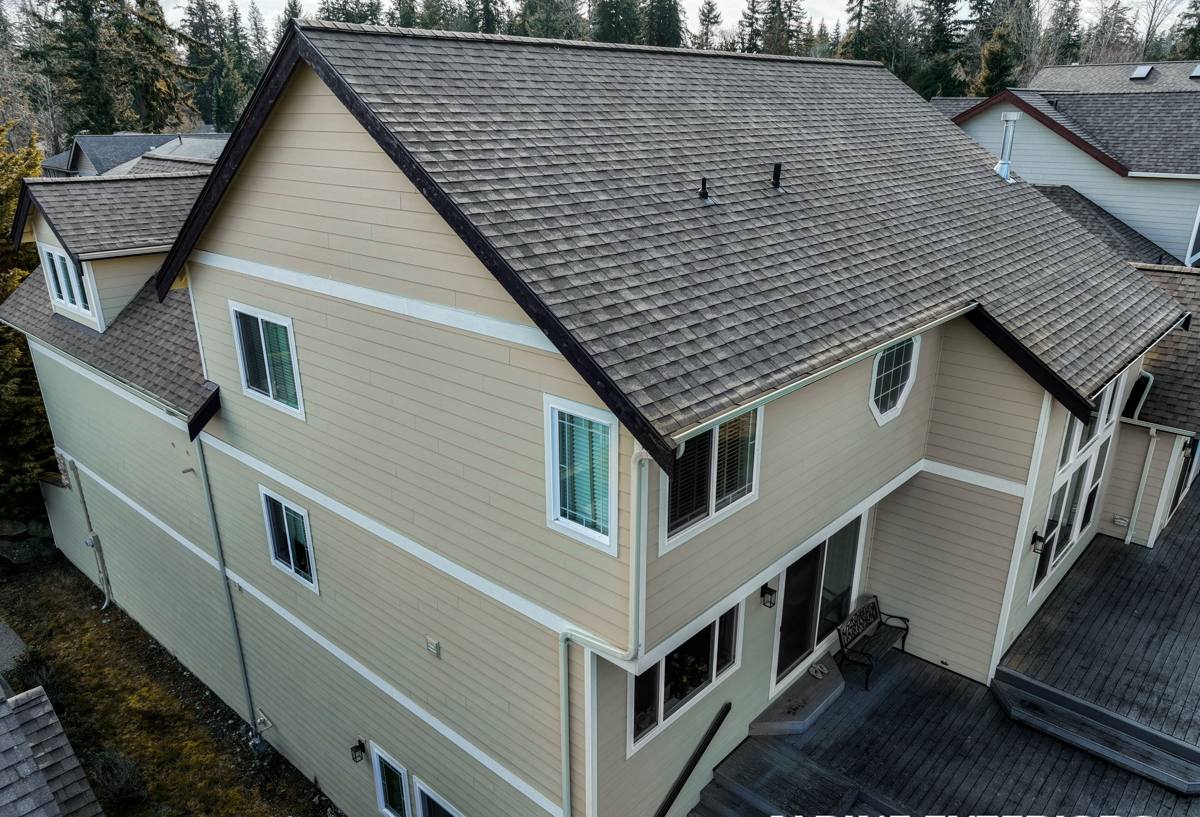
What This Climate Does to an Outdoor Structure Over Time
Most deck problems we get called out for in this area trace back to the same handful of causes, and they're all climate-driven:
- Trapped moisture at ledger boards, joist tops, and post bases where water sits instead of draining
- Moss and algae growth on horizontal surfaces that stay shaded or damp for long stretches
- Fastener corrosion where the wrong grade of hardware was used against treated lumber
- Wood movement and checking from repeated wet-dry cycling through the seasons
- Finish failure on surfaces that never fully dry out between rain events
None of this is exotic — it's ordinary weather doing what ordinary weather does to a structure that spends all year outside. The difference between a deck that looks tired at year five and one that still looks solid at year fifteen usually comes down to a small number of build decisions made before the first board went down.
Why Moss Is More Than a Cosmetic Problem
Moss on a deck surface isn't just an eyesore — it holds moisture against the wood or composite cap, stays wet longer than bare boards, and turns walking surfaces slick in exactly the season when everyone's out in boots. A deck designed with drainage and airflow in mind sheds moss growth far more slowly than one built flat and tight to the ground, which matters a lot in a neighborhood that sees a genuinely long wet season.
Choosing Decking Material for a Whatcom County Yard
There's no single "right" material for every Barkley property — it depends on budget, how much upkeep you want to do, and how exposed the site is. Here's how the common options actually compare in this climate:
| Material | How it handles this climate | Upkeep | Typical lifespan here |
|---|---|---|---|
| Pressure-treated lumber | Good if properly sealed and drained; can cup or check without maintenance | Annual cleaning, resealing every 2-3 years | 15-20 years with upkeep |
| Cedar | Naturally rot-resistant, handles moisture well, needs finish upkeep to hold its color | Cleaning and refinishing every 2-3 years | 15-25 years |
| Composite decking | Doesn't absorb moisture or rot; capped boards resist staining and moss better than wood | Periodic washing, no sealing or staining | 25-30+ years |
| Uncapped composite | More moisture-resistant than wood but can still stain or grow moss if not cleaned | More frequent washing than capped composite | 20-25 years |
We won't push everyone toward the most expensive option. A well-detailed pressure-treated or cedar deck, drained and finished correctly, can serve a Barkley family well for a couple of decades. What we do steer clients away from is any material paired with a build that ignores drainage — that combination shortens the life of even the best decking on the market.
What a Correctly Built Deck Involves
The visible decking is the smallest part of the job. Most of what determines whether a deck survives this climate happens underneath, where nobody looks after the ribbon-cutting.
Ledger and House Connection
Where a deck attaches to the house is the single most common source of hidden rot on older decks in this area. Proper flashing behind and above the ledger board, with a drainage gap and correct fastener spacing, keeps water from working its way behind the siding and into the framing where it can sit unseen for years.
Framing and Joist Protection
Joist tops and cut ends absorb water faster than any other part of the frame. Capping or taping exposed joist tops and sealing cut ends before assembly is a small step during construction that prevents the slow rot that otherwise shows up as soft spots five or six years later.
Post Bases and Footings
Posts set directly in or against wet soil, or resting flush on concrete without a standoff, wick moisture up into the wood. Post bases that hold the post above the footing surface, combined with footings set to the correct depth for this soil and freeze-thaw pattern, keep the structural posts dry at the point where failure is hardest to spot.
Fasteners and Hardware
Modern pressure-treated lumber is corrosive to the wrong grade of metal. Hardware and fasteners rated for treated lumber contact are non-negotiable here — mismatched fasteners are one of the most common causes of premature hardware failure we see on decks that are otherwise in decent shape.
Drainage and Grading
Decking spacing, joist spacing, and the ground slope underneath all affect how fast water moves off and out from under the structure. A deck built flat with no attention to underside airflow stays damp longer after every rain, which is exactly the condition moss and rot need.
Our Deck Building Process in Barkley
We run the same disciplined process on every deck we build in this neighborhood, adjusted for the specific site conditions of the lot:
- Site walk and design conversation — sun exposure, drainage path, tree cover, and how the deck will actually be used
- Material selection — matched to budget, maintenance appetite, and exposure on that specific lot
- Permitting — pulled and handled correctly for the jurisdiction before work starts
- Ledger and flashing detail — the connection point gets built to prevent the most common failure mode first
- Framing with moisture management built in — joist protection, correct fastener grade, post base standoffs
- Decking installation — proper spacing and fastening for the chosen material
- Finish and walkthrough — railing, stairs, and a final walk so you know how to maintain it going forward
Nothing here is unusual for the trade — it's simply not skipped, which is where a lot of shortcuts happen on lower-bid jobs.
Maintenance Reality: What Owning a Deck Here Actually Looks Like
No deck material is maintenance-free in Whatcom County, no matter what the marketing says. What changes by material is how much and how often:
- Wood decks need periodic cleaning and resealing to keep the finish protecting the surface through the wet season
- All decking benefits from an annual wash to knock back moss and algae before it establishes
- Gaps between boards should stay clear of debris that traps moisture against the wood or composite
- Areas under heavy shade or tree cover will need attention more often than open, sun-exposed sections
We're upfront about this during the design conversation rather than after the sale — knowing the maintenance commitment up front is part of choosing the right material for your household.
Permits and Local Code Considerations
Deck construction in Whatcom County is subject to permitting requirements tied to size, height, and attachment to the house, and Sudden Valley properties may carry additional community guidelines on top of county code. We handle the permitting process as part of the build rather than leaving it for the homeowner to sort out, and we build to the structural requirements that apply to this area's snow and wind loading, not a generic national minimum.
Why a Crew That Already Works Barkley Matters
A contractor who's built and repaired decks in this specific area already knows how the drainage runs on typical Sudden Valley lots, how much shade the tree cover creates, and which build details actually matter for this climate versus which ones are marketing. That's the difference between a deck detailed for the Pacific Northwest and one detailed for a climate that doesn't get this much rain or this long a moss season. It shows up years later in which decks are still solid and which ones need early repair.
Cost Factors to Expect
Every deck project prices out differently based on size, material, height off the ground, and site access, but a few factors consistently move the number more than homeowners expect:
| Factor | Why it matters |
|---|---|
| Material choice | Composite costs more upfront than wood but less in long-term upkeep |
| Height and stairs | Elevated decks require more structural framing, footings, and railing |
| Site access | Sloped or wooded lots common in this area can add labor for material handling |
| Ledger and flashing detail | Doing this correctly costs more than skipping it, and prevents the most expensive failure mode |
| Railing and finish choices | Custom railing, lighting, or built-ins add to both material and labor |
We'll walk through these factors specifically for your property during an estimate rather than quoting off a generic per-square-foot number that doesn't account for your lot.
If you're planning a new deck or replacing one that's showing its age in Barkley, we're happy to take a look and give you a straightforward, no-pressure estimate — just fill out the form below.