 Sudden Valley Siding
 Storm Damage Roof Repair in Acme: The Local Reality
When a windstorm or heavy rain system moves through the Sudden Valley area, homes out in Acme often take it harder than a straightforward "check the roof for a few missing shingles" job would suggest. Acme is a quieter, more rural stretch of Whatcom County, set among tall trees and open exposure to the weather that rolls in off the water and up through the valleys. That combination of wind, rain volume, and tree cover means storm damage here tends to show up in more places than homeowners expect: not just the obvious missing shingle, but hidden flashing lifts, saturated underlayment, and debris strikes that don't announce themselves until a leak shows up on the ceiling weeks later.
A storm damage roof repair done right isn't a patch job. It's a full look at the roof system — decking, underlayment, flashing, ventilation, and the roofing material itself — followed by a repair that matches the original construction closely enough that it holds up the next time the weather turns. That's the standard we hold every Acme repair to.
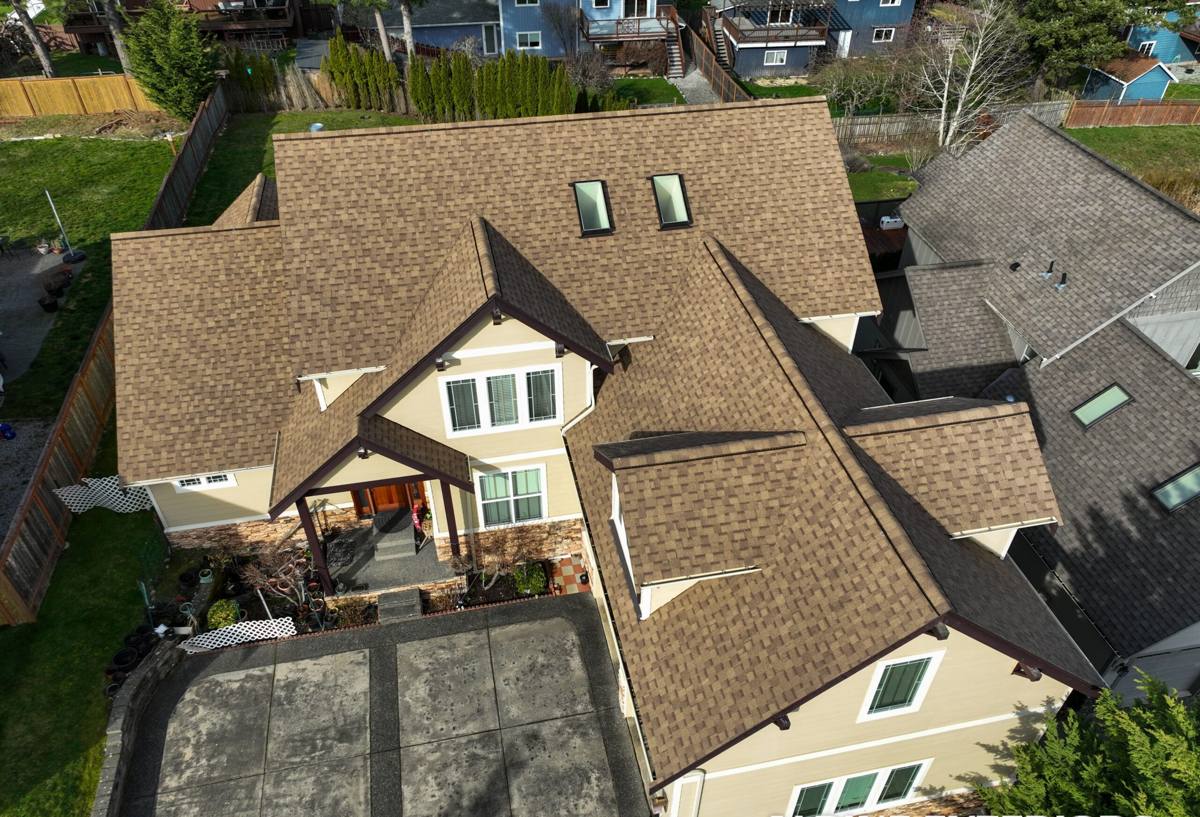
Why Storms Hit Acme Roofs a Little Differently
Whatcom County sits close enough to the water that even homes well inland, like those around Sudden Valley and out toward Acme, get a steady dose of marine air. That air carries moisture and a fine load of salt that settles on roofing surfaces year-round, which is a slower but real contributor to corrosion on exposed metal flashing, fasteners, and gutter hardware. On its own that's a background factor. Combined with a real storm, it's part of why fasteners and flashing seams that were already weakening from salt exposure are often the first things to fail when wind gets under a roof edge.
The second factor is trees. Acme's more wooded, rural character means a lot of roofs sit under or near mature conifers. Wind events don't just strip shingles — they drop branches and, in the worst storms, whole limbs, onto roof planes. That kind of impact damage is different from wind-lift damage: it can crack decking, punch through underlayment, and crush shingles in a concentrated spot rather than peeling them back at an edge. Both patterns show up regularly in this area, and a repair crew needs to know how to diagnose each one correctly rather than assuming every storm call is the same kind of damage.
The third factor is how long moisture sits once damage happens. Rural properties with more tree canopy dry out more slowly after a storm, and Whatcom County's long, wet stretch of the year gives any exposed decking or underlayment more time to soak before a homeowner even notices a problem. That's a big part of why fast response after a storm matters as much as the quality of the eventual repair.
What a Correct Storm Damage Repair Actually Involves
A Full Inspection Before Any Repair Starts
Storm damage is rarely limited to what's visible from the ground. A correct inspection means getting on the roof (or using a close-up aerial look when access or safety is a concern) to check every plane, not just the side the wind hit. We look at shingle or panel condition, flashing at every penetration and valley, the state of the decking underneath where damage is suspected, and signs of water having already worked its way past the surface layer. Skipping this step is how homeowners end up paying for the same storm twice — once for a quick patch, and again a year later when an unnoticed leak has done its damage.
Matching Materials, Not Just Covering the Hole
A repair should blend into the existing roof, both for appearance and for performance. That means sourcing shingles or panels that match the existing material's type, weight, and where possible, color and age-weathering as closely as reasonably achievable, and installing them with the same nailing pattern and exposure the original roof was built with. A mismatched patch isn't just a cosmetic issue — different materials expand, contract, and shed water differently, which can create a new weak point right at the repair line.
Flashing and Underlayment: Where Most Repeat Leaks Start
Most storm-related leaks that come back after a "repair" trace to flashing or underlayment that wasn't actually replaced — just tucked back into place. Step flashing, valley flashing, and pipe boot flashing all take direct hits from wind-driven rain, and once the seal is compromised, water finds a way in regardless of how good the shingles above look. Any storm repair we do treats compromised flashing and saturated underlayment as parts that get replaced, not reused.
Our Process for Acme Storm Repairs
1. Initial Call and Emergency Mitigation
If a roof is actively leaking or has an open area exposed to weather, the first priority is stopping further water intrusion — usually a properly secured tarp — before anything else. This buys time to do the repair right instead of rushing a permanent fix under pressure.
2. On-Site Assessment and Documentation
We inspect the full roof, not just the reported damage area, and document what we find with photos and clear notes. This documentation matters for two reasons: it gives the homeowner an honest picture of what's actually needed, and it gives an insurance adjuster something concrete to work from if a claim is involved.
3. A Written Scope Before Any Work Begins
You get a clear, written explanation of what's damaged, what needs to be repaired versus replaced, and why — before we start. No surprise add-ons once the roof is opened up, unless something genuinely unexpected turns up underneath, in which case we stop and explain it before proceeding.
4. The Repair Itself
Damaged materials come off, decking is checked and replaced where it's soft or delaminated, new underlayment and flashing go in at any disturbed area, and matching roofing material is installed to spec. We don't consider a storm repair finished until the surrounding area — not just the damaged spot — has been checked for related wear that the same storm may have caused.
5. Final Walkthrough and Cleanup
We walk the completed repair with the homeowner, point out exactly what was done, and clear the site of debris, old material, and stray fasteners — an important step on wooded properties where nails or scrap in the yard are a real hazard.
Common Storm Damage We See in Acme
| Damage Type | Typical Cause | What It Looks Like | Urgency |
|---|---|---|---|
| Wind-lifted or missing shingles | Gusts catching an edge or ridge | Bare patches, shingles found in the yard | High — exposed decking soaks fast |
| Impact damage from limbs/debris | Falling branches during high wind | Cracked or crushed shingles, dented panels | High if decking is punctured |
| Flashing separation | Wind-driven rain and freeze-thaw cycling | Leaks near chimneys, valleys, skylights | Moderate to high — hard to see from ground |
| Granule loss / surface wear | Driving rain and long-term weathering | Shingle surface looks patchy or thin | Lower short-term, but shortens roof life |
| Saturated or delaminated decking | Prolonged leak before repair | Soft spots, sagging, interior water stains | High — structural concern |
Repair or Replace? The Cost Factors
Not every storm-damaged roof needs full replacement, and not every roof can be responsibly patched. The honest answer depends on a few factors we walk through with every homeowner rather than defaulting to the most expensive option.
| Factor | Why It Matters |
|---|---|
| Age of the existing roof | A roof already near the end of its expected life may not be worth patching if damage is significant — replacement can be the better long-term value |
| Size and location of the damaged area | Isolated, localized damage on an otherwise sound roof is usually a good repair candidate |
| Extent of decking damage | Widespread soft or rotted decking often signals problems beyond the storm itself |
| Material availability | Older or discontinued shingle lines can be hard to match exactly, which affects repair feasibility |
| Insurance coverage | Claim outcomes vary by policy and adjuster; we document damage clearly either way |
As a rough guide, a straightforward localized storm repair on an otherwise healthy roof typically runs in the low-to-mid hundreds of dollars, while more extensive damage involving decking replacement or multiple roof planes climbs into the low thousands. Full replacement is its own separate conversation and estimate. We'll always tell you plainly which category your roof falls into.
Moss, Moisture, and the Long-Term Health of the Roof
Whatcom County's long, wet stretch of the year — especially the shaded, tree-covered lots common around Acme — makes for a genuinely long moss season. Moss isn't just cosmetic. It holds moisture against the roof surface, works its way under shingle tabs as it grows, and can lift material enough to give wind-driven rain a way in during the next storm. After any storm repair, we also check for moss buildup and drainage issues nearby, because a repair installed next to an actively moss-choked section of roof won't hold up as well as one on a roof that's been properly maintained.
Gutters and downspouts matter here too. A storm that knocks debris loose often fills gutters at the same time, and clogged gutters back water up under the roof edge exactly where storm damage is most common. Part of doing this job right is checking that water has somewhere to go once the repair is done.
Why Hiring a Crew That Already Works in Acme Matters
Storm damage repair is time-sensitive work, and a crew that's unfamiliar with the area loses time figuring out access on rural properties, navigating longer driveways, or accounting for well and septic layouts that affect where equipment and materials can go. A crew that already works in and around Sudden Valley and Acme knows the terrain, has a realistic sense of drive times when a roof needs to be tarped the same day, and is familiar with the county's permitting expectations for repair versus replacement work.
Just as important is knowing what "normal" looks like for roofs in this specific area. A repair crew that only occasionally works out this way may not immediately recognize the difference between typical moss staining and an active leak path, or between old salt-air corrosion on flashing and fresh storm damage. That local pattern recognition is part of what keeps a repair accurate instead of guesswork.
Questions Worth Asking Any Contractor Before You Hire
- Will you inspect the entire roof, or only the specific area I reported?
- Do you replace flashing and underlayment at the repair site, or only the visible shingles?
- Can you provide written documentation for an insurance claim?
- What's your realistic response time for emergency tarping after a storm?
- Do you carry liability insurance and worker's compensation coverage?
- Will the repair materials match my existing roof, and how do you source them?
What To Do in the First 48 Hours After a Storm
What a homeowner does immediately after a storm affects how much damage a leak causes before it's repaired. This isn't about climbing on the roof yourself — it's about the practical steps that make the eventual repair faster and cheaper.
- Check the attic or top-floor ceilings for water stains, drips, or damp insulation
- Look at the yard and gutters for shingle granules, shingle pieces, or flashing debris
- Photograph any visible roof damage from the ground, along with interior water damage
- Move furniture or belongings away from any active leak and place a container to catch water
- Avoid walking on a wet or storm-damaged roof yourself — it's more slippery and unstable than it looks
- Call for an inspection promptly, even if the damage looks minor — small openings let in a lot of water over a wet stretch of weather
If a recent storm has left you wondering whether your Acme home's roof took damage, we're glad to take a look. We offer a free, no-pressure estimate — just fill out the form below and we'll get in touch to schedule a time that works.